
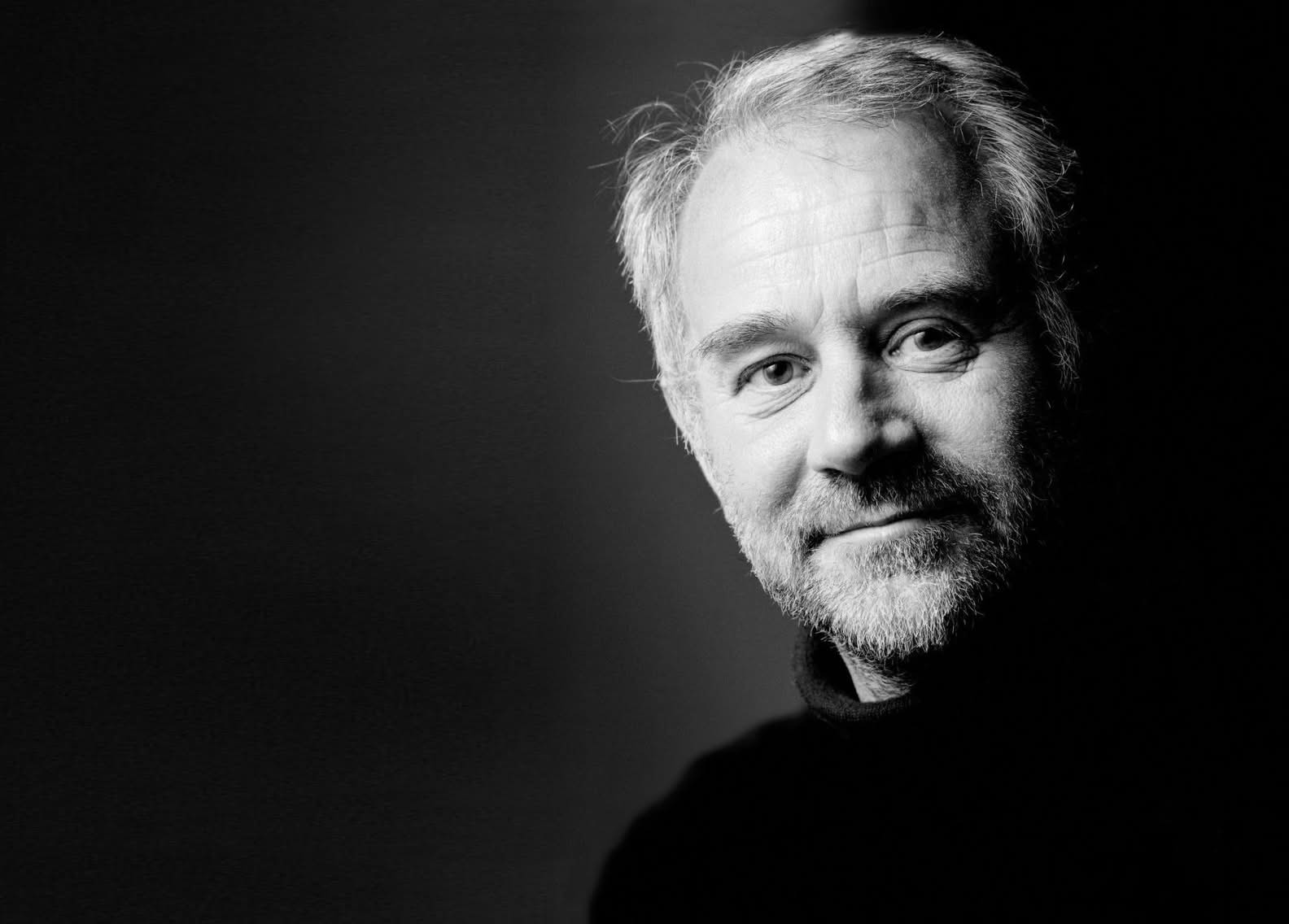
Erik Magnussen (1940-2014) was a Danish ceramicist, sculptor and industrial designer. His approach to design and art was pragmatic, uncomplicated and characterised by simple solutions where form follows function. Magnussen’s background as a ceramicist was fundamental to his entire career and work, and although industrial design and technical solutions eventually became his forte, he saw himself first and foremost as a ceramicist.
Magnussen grew up in Copenhagen, where he showed a creative talent from an early age. The young Magnussen was challenged by dyslexia and, as a result, the principal at his school allowed him to focus on ceramics, giving him unlimited access to the school’s pictorial art room. His grandfather was a well-known art dealer and a friend of many of the great Danish artists of the time. His father was an engineer specialising in heat treatment of steel. He was also a test driver for a number of European motorcycle manufacturers, so the young Magnussen was imbued with both creativity and technical knowledge from an early age.
Magnussen studied ceramics at the Royal Academy in Copenhagen, from which he graduated in 1960 with a medal – the highest honour awarded to only one student per year. He then established his own workshop and was employed as an artist at Bing & Grøndahl’s porcelain factory, where he developed a series of epoch-making, modern jugs and sets. At the same time, Magnussen experimented with art and sculptures in clay and iron, testing the possibilities and limitations of the materials.
Concurrently with teaching at the Royal Danish Academy of Architecture, Magnussen became interested in designing everyday objects meant for serial production. His interest in technical solutions led to a portfolio comprising much more than ceramics; from lamps, door handles, furniture and cutlery to technical equipment for sailboats and a special mixing tool for cancer medication. However, Magnussen’s background as a ceramicist was evident throughout his career, where he continued to experiment with porcelain and the possibilities offered by the material in other, less traditional product groups. Throughout his life, Magnussen also continued to model all his ideas by hand before drawing them.
Erik Magnussen became the youngest person to receive the prestigious Danish Lunning Prize in 1967, at the age of only 27. He also won numerous ID Awards, a Red Dot Award, an iF Prize, the Best Design Gold Prize and the Bindesbøll Medal, and was named Honorary Royal Designer for Industry at The Royal Society of Art in London.
Magnussen owned and ran his own design studio until his death in 2014.
“I would never create a design based on aesthetics alone. Aesthetics is not a function as such. When we find that something is beautiful, it’s often a matter of habit because we’ve experienced certain proportions and forms so often that we’ve become accustomed to them. That’s why we find them beautiful. For me, aesthetics is always related to the functional aspect of design.
Erik Magnussen