
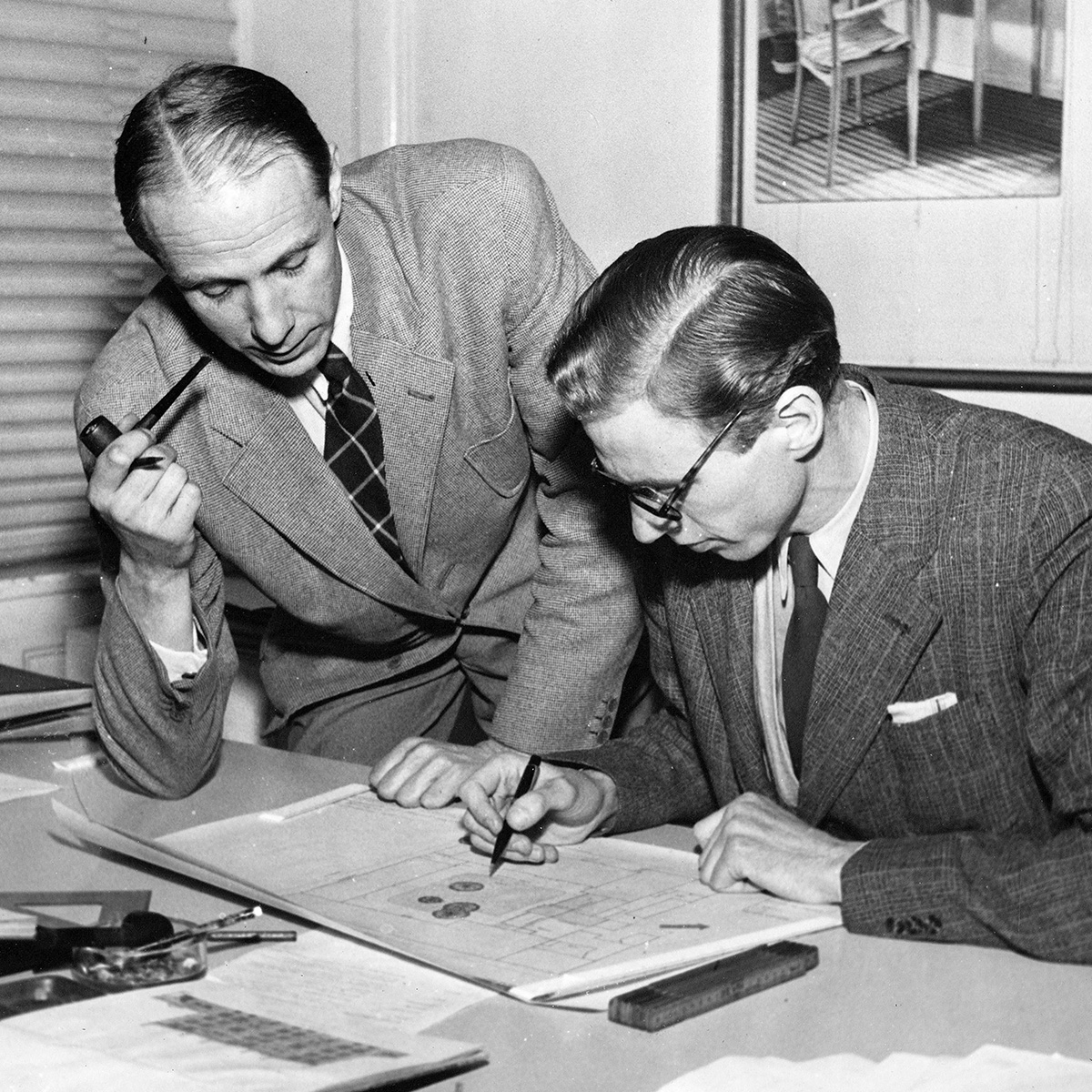
Hvidt & Mølgaard was the Copenhagen design partnership of Peter Hvidt (1916–1986) and Orla Mølgaard-Nielsen (1907–1993). Renowned for the simplicity and craftsmanship of their work, the duo became one of the defining names of Danish mid-century design, with furniture that combined traditional cabinetmaking with new industrial techniques. Today several of their designs are back in production with &Tradition, in close collaboration with the two families.
Background
Hvidt met Mølgaard-Nielsen at Kunsthåndværkerskolens Snedkerskole in Copenhagen, where he began as his student and later taught alongside him. The two formed an instant, close friendship, and their first success as a design duo came when they entered and won the Swedish Slöjdföreningen’s competition in 1943. In 1944 they founded their joint studio in Copenhagen, which remained active for three decades. Mølgaard-Nielsen was also a teacher of Hans J. Wegner.
Design approach
Hvidt & Mølgaard stripped their furniture of anything superfluous, but used their technical skill to maximise comfort and function. They were early to explore laminated, steam-bent wood and furniture that could be shipped flat, and they approached construction in an unorthodox way. Their pieces often have a sculptural quality, with slender frames and carefully balanced proportions.
Key designs
For Fritz Hansen they designed the AX chair (1950) in laminated wood, the start of a series of chairs, tables and sofas. After years of experimenting with a laminated frame inspired by old wooden tennis rackets, they released the X lounge chair in 1959, often seen as their peak as furniture designers. Its matching X coffee table has been reissued from the family archives.
The Boomerang lounge chair (1956) pairs a hand-polished wooden frame with slender brass legs, and the Drawn chair, also known as Model 316, dates from the same year. Other designs now produced by &Tradition include the Pinwheel table (1953), made of six smaller tables that slot together, the foldable Drop Leaf tables (1956) and the Tripod floor lamp, later joined by a table lamp version.
The Guild shelf, with its undulating form in solid oak or walnut, goes back to the family home Peter Hvidt designed in Klampenborg in 1952. It was put into general production for the first time by &Tradition.
Beyond furniture
The duo also worked on a larger scale, acting as aesthetic consultants on Danish bridge projects such as the new Little Belt Bridge, opened in 1970. Their furniture has been shown at museums including MoMA in New York and the Victoria and Albert Museum in London.
By Editorial Team, ScandinavianDesign.com
Design by Hvidt & Mølgaard
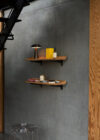
Hvidt & Mølgaard’s Guild Shelf – Danish Design Classic by &Tradition
Extracting the essence of craftsmanship: Hvidt & Mølgaard’s Guild shelf is infused with historical sentiment. …
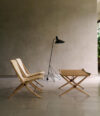
A fusion of timeless craftsmanship and elegant design, Hvidt & Mølgaard’s X coffee table – &Tradition
A fusion of timeless craftsmanship and elegant design, Hvidt & Mølgaard’s X coffee table is …
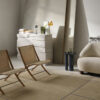
X Lounge Chair by Hvidt & Mølgaard – &Tradition
Showcasing an intriguing relationship between material and concept, the X lounge chair represents Hvidt & …
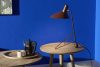
Tripod Table Lamp by Hvidt & Mølgaard for &Tradition
Tripod, a table lamp built from powder-coated steel with brass details, reflects the clean minimalism …
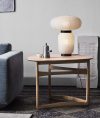
Drop Leaf by Hvidt & Mølgaard – &Tradition
An easily foldable lounge table that provides flexibility. Looking to create a versatile piece that …
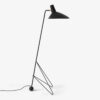
Tripod by Hvidt & Mølgaard – &Tradition
Introducing Tripod, a floor lamp from Hvidt & Mølgaard in production for the first time. …
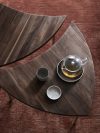
Pinwheel by Hvidt & Mølgaard – &Tradition
Introducing Pinwheel, a multipurpose table that works Iindividually or as a set. Slim and shapely, …
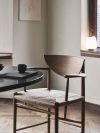
Drawn by Hvidt & Mølgaard – &Tradition
Drawn’s understated design looks humble, but it is imbued with warmth. By the time Hvidt …
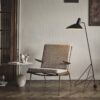
Boomerang by Hvidt & Mølgaard – &Tradition
Debuted in 1956, the Boomerang’s exacting design continues to delight today. This mid-century classic lounge …