

Tapio Wirkkala – The Finnish Designer Who Made Nature Industrial
Tapio Wirkkala (1915–1985) was the most internationally recognised Finnish designer of the postwar period and among the most versatile practitioners in twentieth-century applied arts. His output spanned glass, ceramics, furniture, metalwork, graphic design and sculpture — work unified not by consistent formal language but by an underlying method: the translation of observed natural phenomena into forms capable of industrial production. His collaboration with Iittala glassworks, sustained over four decades and resulting in more than 400 designs, remains the most sustained and productive partnership between a designer and manufacturer in Finnish design history.
Formation and Early Recognition
Wirkkala was born in Hanko, a coastal town in southern Finland, in 1915. He studied ornamental sculpture at the Central School of Arts and Crafts in Helsinki, graduating in 1936. His training was in fine art — modelling, carving, relief work — rather than industrial design, which barely existed as a distinct discipline in Finland at that time. This sculptural foundation proved formative: Wirkkala approached design problems through three-dimensional form-making rather than through drawings or technical specification. He worked by building models, testing proportions in clay or plaster, and only subsequently translating those forms into production-ready designs.
His breakthrough came in 1946 when he won first prize in a competition organised by Iittala glassworks. The winning design, the Kantarelli vase, takes its name from the chanterelle mushroom and demonstrates Wirkkala’s characteristic approach — organic form realised through controlled industrial process. The vase’s rippled surface and asymmetrical profile evoke natural growth while remaining wholly legible as a designed object. Iittala put Kantarelli into production and invited Wirkkala to join as a design consultant, beginning a collaboration that would define both parties’ identities.
Iittala and the Development of a Glass Language
Wirkkala’s work for Iittala between 1946 and 1985 represents one of the most sustained explorations of glass as an expressive medium in modern design. His designs ranged from thin-walled drinking vessels to heavy sculptural pieces, from transparent optical glass to textured surfaces that caught and diffused light. What unified this diversity was Wirkkala’s attention to how glass behaves — its viscosity when molten, its capacity to hold air bubbles, its refractive properties, the way it can be cut, ground and polished after cooling.
The Tapio glassware series (1954) exemplifies this material intelligence. Wirkkala developed what he termed “stick blowing” — a technique in which controlled air streams are introduced during the blowing process to create regular patterns of bubbles within the glass wall. The result is drinking glasses and bowls that appear to contain frozen water droplets, their surfaces animated by internal incident. The technique required close collaboration with Iittala’s master glassblowers to achieve consistency in production, and the series became one of the company’s signature products.
Ultima Thule (1968) represents Wirkkala’s most technically ambitious glass design. The collection’s surfaces — deeply textured, irregular, resembling melting ice or eroded rock — were developed over thousands of hours of experimentation. Wirkkala created the master moulds by casting molten glass onto graphite surfaces and allowing it to cool naturally, capturing the accidental textures that resulted. These unique forms were then translated into production moulds through a painstaking process of measurement and reproduction. The technical challenge was to maintain the appearance of natural accident while achieving sufficient consistency for serial production. Ultima Thule succeeded because it preserved the visual intensity of Wirkkala’s sculptural prototypes while functioning as tableware. The collection remains in production and is among Iittala’s most commercially successful designs.
Natural Forms and Industrial Translation
Wirkkala’s relationship with the Finnish landscape was not sentimental or decorative — it was analytical. He spent extended periods in Lapland, observing ice formations, lichen patterns, water erosion and seasonal light. These observations fed directly into his work, but always through a process of abstraction and formal reduction. A design might begin with a sketch of a weathered stone or a photograph of lake ice, but by the time it reached production it had been stripped to essential geometry, translated into a form that could be moulded, blown or pressed.
This approach distinguished Wirkkala from contemporaries who applied nature motifs superficially. His work does not depict nature — it operates through the same formal principles: asymmetry within overall balance, textured surfaces that respond to changing light, forms that suggest growth or erosion without literal representation. The method proved adaptable across materials: the same formal thinking that produced glass vessels also generated laminated wood furniture, cast bronze sculptures and carved jewelry.
Range Beyond Glass
Wirkkala’s versatility extended to projects that tested the conventional boundaries of design practice. He designed Finnish markka banknotes in 1955, translating national identity into security printing through stylised natural motifs and carefully balanced typography. He created commemorative postage stamps for the 1952 Helsinki Olympics, bringing the same attention to composition and legibility that he applied to three-dimensional objects. The Finlandia vodka bottle (1970), in production until 1999, brought his characteristic ice-surface texture to commercial packaging and became one of the most recognisable spirits bottles internationally.
His furniture designs, primarily in laminated wood for Asko, demonstrate structural clarity and an understanding of how plywood behaves under stress — bending, laminating, shaping. His jewelry and metalwork, often in silver or bronze, show the same formal vocabulary as his glass: organic profiles, textured surfaces, minimal ornament. His puukko knife design — a traditional Finnish utility blade — acknowledged vernacular craft while refining proportions and detailing for contemporary production.
Recognition and Working Method
Wirkkala received six Grand Prix awards at the Milan Triennale between 1951 and 1960, the Lunning Prize in 1951, Finland’s Pro Finlandia Medal, and Sweden’s Prince Eugen Medal. His work was exhibited internationally and entered museum collections including MoMA New York, the V&A London and Finland’s Design Museum. This recognition reflected not only the quality of individual pieces but Wirkkala’s demonstration that Finnish design could operate at the highest international standard while retaining distinct regional character.
His working method was famously unconventional. He maintained a remote studio hut in the Finnish wilderness, inaccessible by road, where prototypes and materials were delivered by helicopter. This isolation was not romantic retreat but practical necessity — Wirkkala required direct engagement with the landscape that informed his work. He made models, carved wood, worked with his hands. The results were sent to manufacturers for technical development and production. This division between conceptual development in isolation and industrial realisation through collaboration proved remarkably productive.
Legacy and Continued Production
Wirkkala died in 1985, leaving a body of work that spans sculpture, industrial design and applied arts. His marriage to ceramic artist Rut Bryk represented a creative partnership — both worked in related materials and shared a commitment to translating natural observation into designed form. Bryk’s ceramic reliefs and Wirkkala’s glass sculptures occupied adjacent territories and were often exhibited together.
Iittala continues to produce Ultima Thule, Kantarelli and several dozen other Wirkkala designs. This sustained commercial life — glass pieces designed in the 1950s and 1960s remaining in active production sixty years later — testifies to formal decisions that transcended period taste. Wirkkala’s work does not read as “mid-century” or “Scandinavian” in any limiting sense. It reads as considered response to material properties and observed natural form — concerns that remain relevant regardless of stylistic context.
His influence on subsequent Finnish designers is substantial but diffuse. Few have attempted to replicate his specific formal language, but many have absorbed his method: careful material study, sustained observation of nature, willingness to work across disciplines, and insistence that industrial production need not compromise artistic ambition. These principles continue to shape Finnish design practice and position Wirkkala as a foundational figure whose work demonstrated possibilities that remain actively explored.
More designs by Tapio Wirkkala:
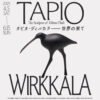
Tapio Wirkkala showcased in Japan on the artist’s 110th anniversary
The Sculptor of Ultima Thule presents the work of Tapio Wirkkala – master of form …
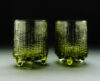
The Ultima Thule shot glass celebrates Tapio Wirkkala’s 110th birthday
Special edition: available while supplies last, so act fast! The Ultima Thule shot glass celebrates …

The glass ice platter by Tapio Wirkkala in 1976
ICE FLOE The Ice Floe, designed by Tapio Wirkkala, is truly something amazing. It’s a …
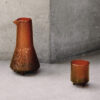
Ultima Thule special edition colour: copper
Tapio Wirkkala defied the conventions of glassblowing with his iconic Ultima Thule collection. Inspired by …

Ultima Thule vases celebrate its 55th Anniversary by Iittala
In 2023, the Ultima Thule collection by Finnish designer Tapio Wirkkala celebrates its 55th anniversary. …

Tapio Wirkkala – Form 5/10 2022 – 6/10 2024 @ Espoo Museum of Modern Art
Tapio Wirkkala, Neliö (detail), 1950s. Tapio Wirkkala Rut Bryk Foundation Collection / EMMA © Ari …