
Ole Wanscher – Respect for Materials and the Pursuit of Timeless Proportion
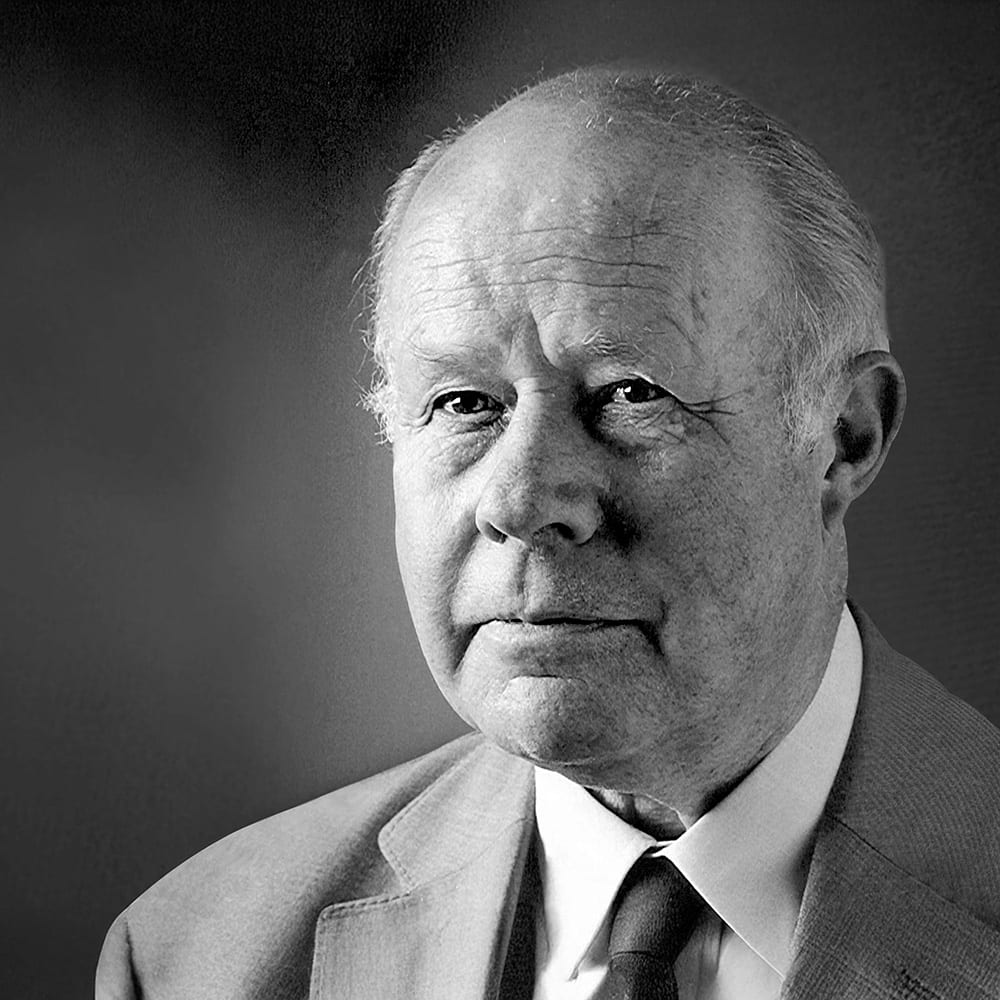
Ole Wanscher (1903–1985) was a Danish furniture designer and architect whose work represents a direct continuation of the principles established by Kaare Klint while extending them toward greater formal refinement and international historical reference. As both practitioner and educator — eventually succeeding Klint as professor at the Royal Danish Academy of Fine Arts — Wanscher shaped Danish furniture design through built example and through pedagogical influence over successive generations of designers. His furniture, particularly the Colonial Chair and related pieces from the late 1940s and 1950s, demonstrates how rigorous attention to proportion, material quality and construction method could produce designs that transcended fashion and remained relevant across decades.
Formation Under Kaare Klint
Wanscher was born in 1903 and studied furniture design at the Royal Danish Academy of Fine Arts under Kaare Klint, the figure who established the analytical, measurement-based approach that became foundational to Danish furniture design. Klint’s method — studying historical furniture to extract underlying proportional systems, then applying those principles to contemporary needs — shaped Wanscher’s entire practice. Following graduation, Wanscher worked in Klint’s design studio, gaining direct experience in how those principles translated into production furniture.
This apprenticeship proved formative. Wanscher absorbed Klint’s conviction that furniture design was a branch of architecture rather than decorative arts — that chairs, tables and cabinets should be conceived through the same rigorous formal analysis applied to buildings. He learned to measure historical furniture systematically, to understand joinery methods through direct study of construction, and to prioritise function and durability over novelty or self-expression. These lessons remained central to his subsequent independent practice.
Independent Practice and Travel Study
Establishing his own studio in the 1930s, Wanscher undertook extended study trips through Egypt and Europe, examining furniture traditions across cultures and periods. These travels — uncommon for Danish designers of his generation — exposed him to formal vocabularies beyond the European canon that dominated Klint’s teaching. Egyptian furniture, English colonial pieces, French directoire chairs: Wanscher studied diverse traditions, seeking underlying principles of proportion, structure and material use that could inform contemporary design.
This comparative approach distinguished Wanscher from contemporaries who drew primarily on a narrower range of historical precedents. His willingness to find value in varied visual expressions — while maintaining analytical rigour about what made specific examples successful — allowed him to develop furniture that referenced multiple traditions without pastiche. The Colonial Chair, his most celebrated design, demonstrates this synthesis: the piece suggests English colonial furniture in its proportions and cane work, but operates through Danish constructional logic and material restraint.
Furniture as Architecture and Slim Dimensions
Wanscher’s conviction that furniture design constituted a branch of architecture manifested in his emphasis on structural clarity, proportional systems and spatial relationships. He approached a chair not as an isolated object but as an element within a room — its dimensions, visual weight and formal character calibrated to architectural context. This orientation led to his characteristic pursuit of slim dimensions and resilient forms: furniture that achieved necessary strength through precise proportion and sound joinery rather than through excess material.
The Colonial Chair (1949) exemplifies this approach. Constructed in mahogany with cane seat and back, the chair features slender turned posts, minimal frame elements, and careful articulation of joints. Every component is sized for its structural role without excess. The result is a chair that appears almost fragile but proves remarkably stable and durable — a quality that the Danish newspaper Politiken captured in 1958 when describing Wanscher furniture as “an adventure every day, and will be so even several hundred years from now, for this is how long it lasts.”
The Colonial Sofa extended these principles to larger seating furniture. Where many sofas of the period achieved comfort through substantial upholstery and heavy frames, Wanscher’s design maintained the slim proportions of the chair while providing multi-person seating. The piece demonstrates how architectural thinking — conceiving furniture through proportional systems rather than accumulation of padding — could produce seating that was both visually light and functionally adequate.
Post-War Production and Democratic Design
Wanscher’s most productive period coincided with Denmark’s postwar reconstruction and the emergence of “design for everyone” philosophy. The late 1940s through early 1960s saw Danish designers pursuing furniture that could be industrially produced, affordably priced and widely distributed — moving beyond the custom workshop production that had dominated pre-war practice. Wanscher engaged with this shift while maintaining his commitment to material quality and construction standards.
He designed several pieces specifically for industrial production, working with manufacturers to develop furniture that could be made efficiently without compromising joinery quality or finish standards. This required adapting workshop methods to factory contexts: standardising dimensions, reducing hand-fitting operations, developing jigs and fixtures that ensured consistency. Wanscher’s background in both design and teaching — understanding furniture intellectually as well as practically — equipped him to navigate these adaptations successfully.
His interest in industrially produced yet high-quality furniture reflected broader Danish design culture in this period. Unlike contemporaries in other countries who treated mass production and quality as contradictory aims, Danish designers pursued industrial methods that could maintain craft standards. Wanscher’s contribution to this effort was demonstrating that even furniture referencing historical precedents — pieces that might seem inherently workshop-oriented — could be adapted to serial production if underlying proportional and structural logic was sound.
Teaching and Academic Influence
Wanscher’s pedagogical career paralleled his design practice and proved equally significant. He eventually succeeded Kaare Klint as professor at the Royal Danish Academy of Fine Arts, a position that gave him sustained influence over Danish furniture design education. His teaching extended Klint’s analytical method while incorporating broader historical reference and encouraging students to develop individual positions within that framework.
Students in Wanscher’s classes learned to measure and draw historical furniture, to understand joinery through direct observation and making, and to conceive new designs through systematic proportion and structural logic rather than through styling or formal invention. This rigorous approach produced designers who understood furniture as a discipline with accumulated knowledge and methods rather than as a field where personal expression took precedence over functional and constructional concerns.
The influence of this pedagogy extended beyond individual students to shape Danish furniture design culture more broadly. Wanscher’s position at the Academy, combined with his successful design practice and international recognition, established a model of designer-educator whose work demonstrated principles taught in the classroom. This integration of practice and pedagogy — designing furniture that exemplified analytical methods while teaching those methods to subsequent generations — proved essential to maintaining coherence in Danish furniture design across decades of stylistic change elsewhere.
International Recognition and Milan Triennale
Wanscher received the Copenhagen Carpenters’ Guild Annual Award, an honour that acknowledged his contribution to Danish craft traditions. More significantly for international reputation, he earned a gold medal at the Milan Triennale in 1960 — recognition that positioned his work alongside leading European designers and confirmed that Danish furniture design had achieved parity with more established production centres.
The Triennale success opened export markets and established Wanscher’s reputation beyond Scandinavia. His furniture began appearing in international design publications, was specified by architects for institutional and residential projects, and entered the general discourse about mid-century modernism. This visibility contributed to broader recognition of Danish furniture design as a distinct approach — rigorous, material-focused, historically informed without being derivative — that offered an alternative to both Bauhaus rationalism and American commercial modernism.
Legacy and Continued Relevance
Wanscher died in 1985, leaving a body of work that amounts to several dozen furniture designs and decades of teaching influence. His furniture remains in production through Danish manufacturers including Carl Hansen & Søn, who reissued multiple Wanscher pieces in the 2010s following renewed interest in mid-century Danish design. Vintage examples, particularly early Colonial Chairs and related pieces, are collected internationally and command substantial prices reflecting both scarcity and sustained formal relevance.
His influence on subsequent Danish furniture designers operates through method rather than formal quotation. Few contemporary designers replicate Wanscher’s specific aesthetic, but many have absorbed his approach: systematic study of historical precedents, rigorous attention to proportion and joinery, conviction that furniture design constitutes serious intellectual work rather than styling exercise. These principles continue to distinguish Danish furniture design from more fashion-oriented production elsewhere and position Wanscher as a foundational figure who demonstrated how historical knowledge and analytical method could inform contemporary practice without producing pastiche or academic irrelevance.
More design by Ole Wanscher:
The OW series by Ole Wanscher presented in nature’s own colours
Carl Hansen & Søn presents the OW series in Terra leather, which is created in …

Danish Design in the 20th Century @ Design Museum Danmark
Danish Design in the 20th Century – How Danish Design Became World Famous Danish Modern …

Beak Chair design by Ole Wanscher – Carl Hansen & Søn
Beak Chair by Ole Wanscher now features luxurious New Zealand lambskin upholstery from Carl Hansen …
OW2000 Egyptian Stool by Ole Wanscher – Carl Hansen & Søn
The OW2000 Egyptian Stool was designed by Ole Wanscher in 1957 The influence of his …

T-Chair by Ole Wanscher from 1958 by Carl Hansen & Søn
Carl Hansen & Søn is now adding the sculptural OW58 T-Chair by Danish designer Ole …

The Danish Chair @ Design Museum Danmark
The Danish Chair is a wunderkammer of chairs. In the exhibition, Designmuseum Danmark tells the …

Ole Wanscher – Danish Furniture Designer and Kaare Klint’s Successor
Ole Wanscher – Respect for Materials and the Pursuit of Timeless Proportion Ole Wanscher (1903–1985) …