
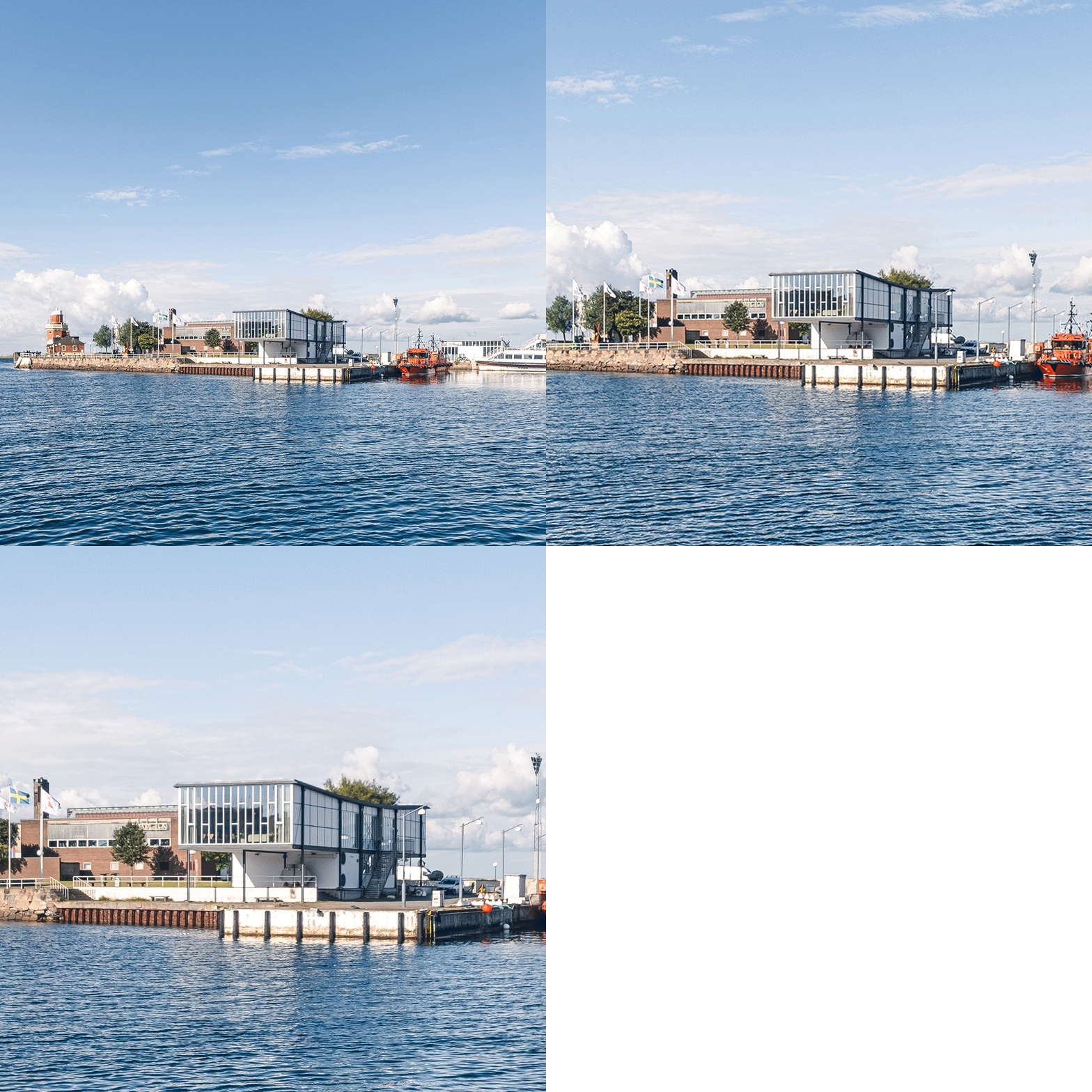
FOJAB has moved into the iconic pavilion designed for the H55 Helsingborg Exhibition
But how do you actually turn a famous and beloved exhibition pavilion into an office?
About fifteen architects and engineers currently work at FOJAB’s Helsingborg office, and the company has its sights set on expansion. So when the already cramped office was asked by the City of Helsingborg if it wanted to move to larger premises in the form of the famous pavilion out on the Parapeten pier, it didn’t take long to decide.
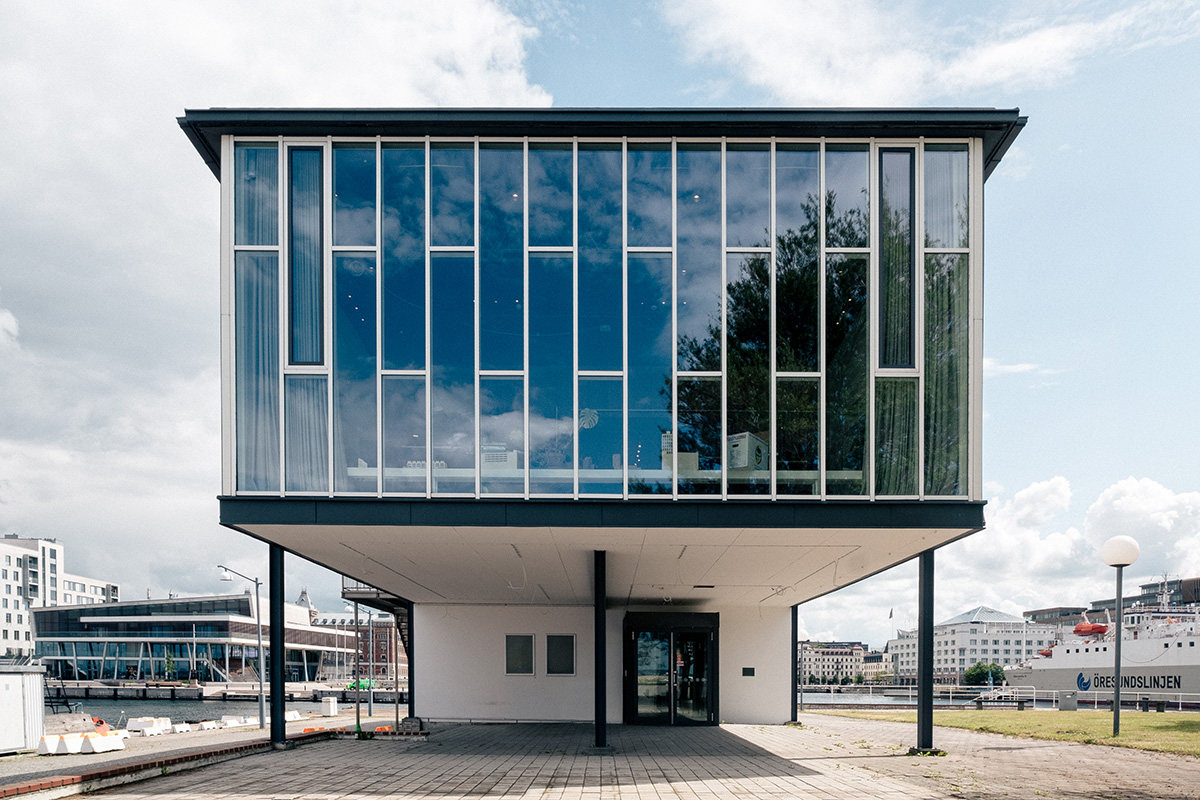
“It was an opportunity we obviously couldn’t pass up. It’s a truly unique building with views in four directions, clearly visible from the city center.” “We saw the potential for a fantastic work environment, as well as for hosting clients and organizing external events,” says Rebecca Saaby Mehlum, office manager at FOJAB in Helsingborg.
The H55 Pavilion was designed by architect Carl-Axel Acking for the 1955 City Fair. Three copies were built, which were dismantled after the fair. When it was time for a new city fair in 1999, a replica of the well-known pavilion was erected out on the pier; it has remained there ever since and, over the years, has been used as a restaurant, a banquet hall, and an exhibition space, among other things. And now, it serves as an architectural firm.
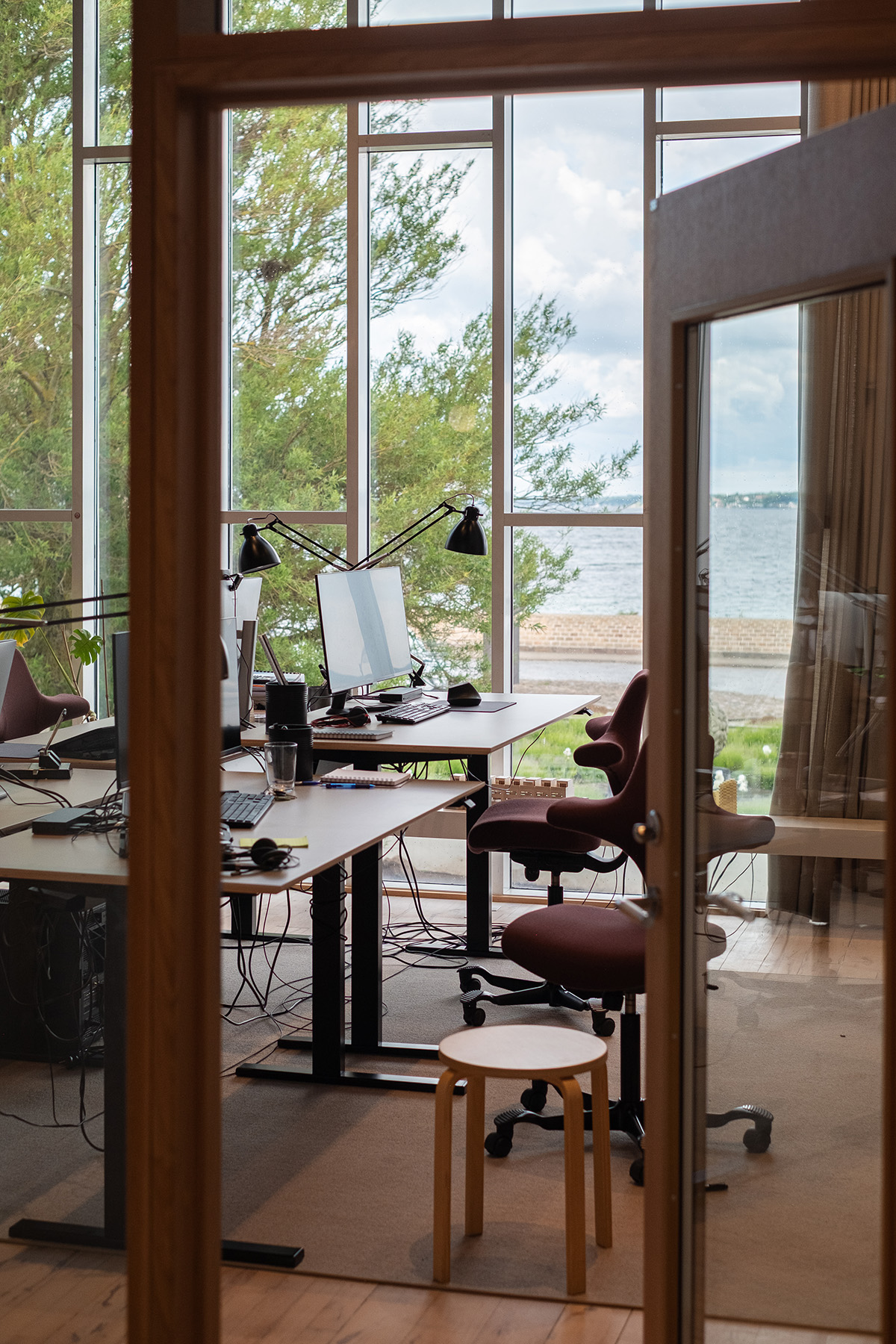
FOJAB carried out the work to convert the 400-square-meter exhibition hall into office space on its own. All employees were invited to contribute ideas for different solutions. The main challenge was to maintain the sense of space on the large, open upper floor, even as new rooms were created.
“We didn’t want to compromise on the view of the sea and the magical light. The solution was two longitudinal corridors and glass-enclosed meeting rooms, so that the sightlines are preserved,” says Kristin Henriksson, architect and interior designer at FOJAB.
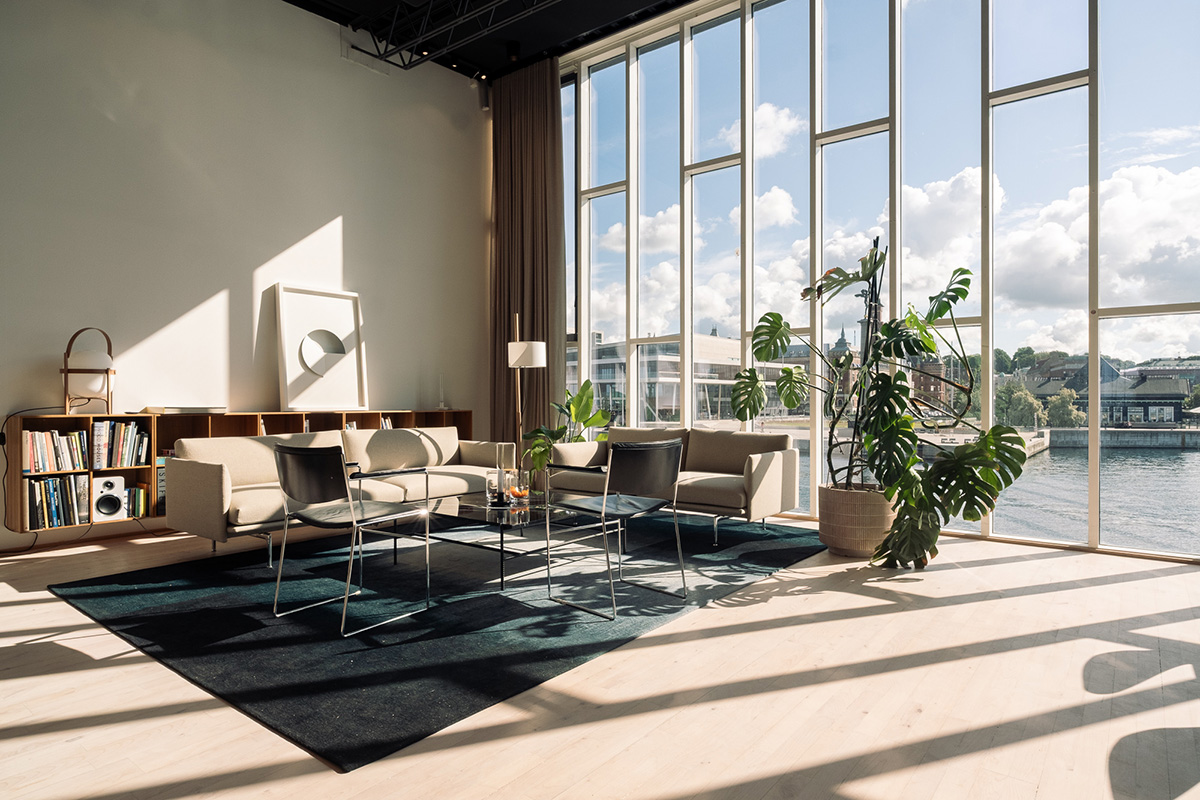
Much of the original features remain: the white walls, the limestone floor in the entryway, and the wooden floor upstairs. Other elements have been added, such as a warm brown-red hue in the smaller rooms, countertops made of Öland stone, and oak wood paneling, to make the spaces feel more vibrant and warmer.
– There is a beautiful simplicity to the building and a rhythm in the window arrangement that we’ve tried to build upon. This is reflected in the wood paneling and even in the tilework in the restrooms. The materials were chosen with a long-term perspective in mind; they’re high-quality and, in our view, resonate with the building’s spirit,” says Kristin.
Most of the furnishings are reused, either from the old office or purchased secondhand. The rugs and ambient lighting are from Dahl Agenturer as part of a newly launched partnership.
“We borrow rugs and lamps in exchange for the exposure; our office becomes their showroom,” Kristin explains.
There has been a great deal of interest in the renovation; many residents of Helsingborg have a special connection to the H55 Pavilion.
– Working with a famous building and giving it a new purpose is a special responsibility—not only to manage it successfully but also to elevate it even further. That’s why it’s especially rewarding to see the reaction when clients and other visitors walk up the stairs and see the transformation. ”Wow,” is what we often hear, says office manager Rebecca Saaby Mehlum.
https://fojab.se/en/topical/the-h55-pavilion-has-become-an-architecture-firm/