
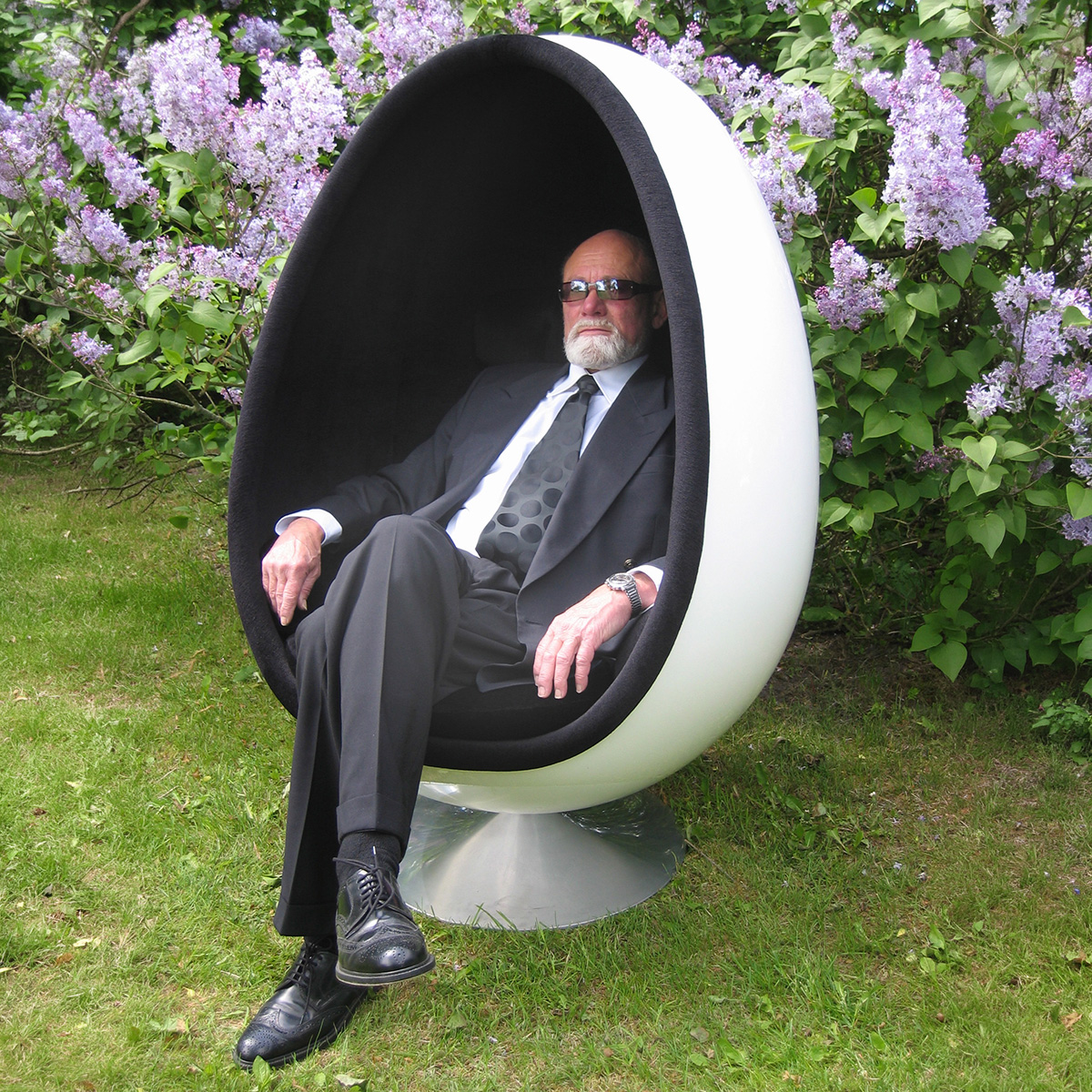
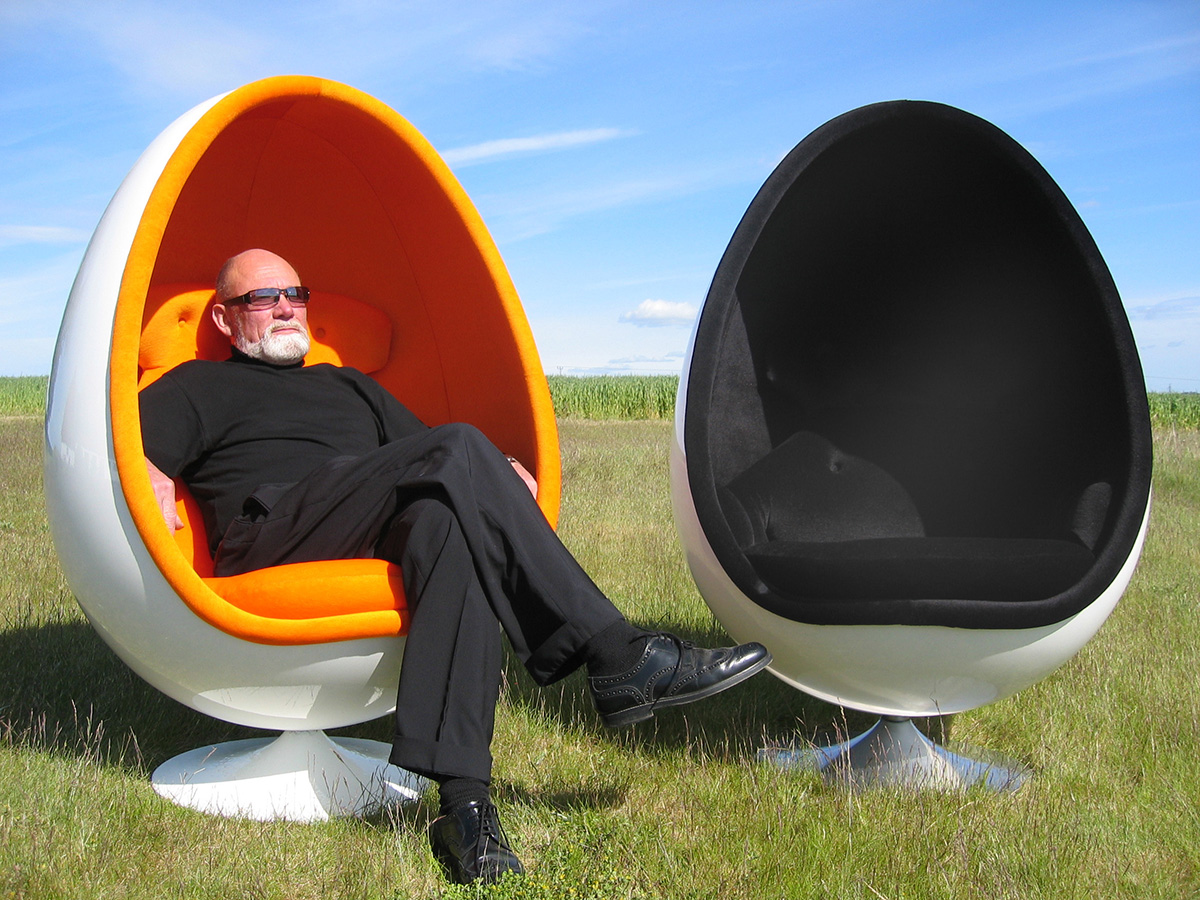
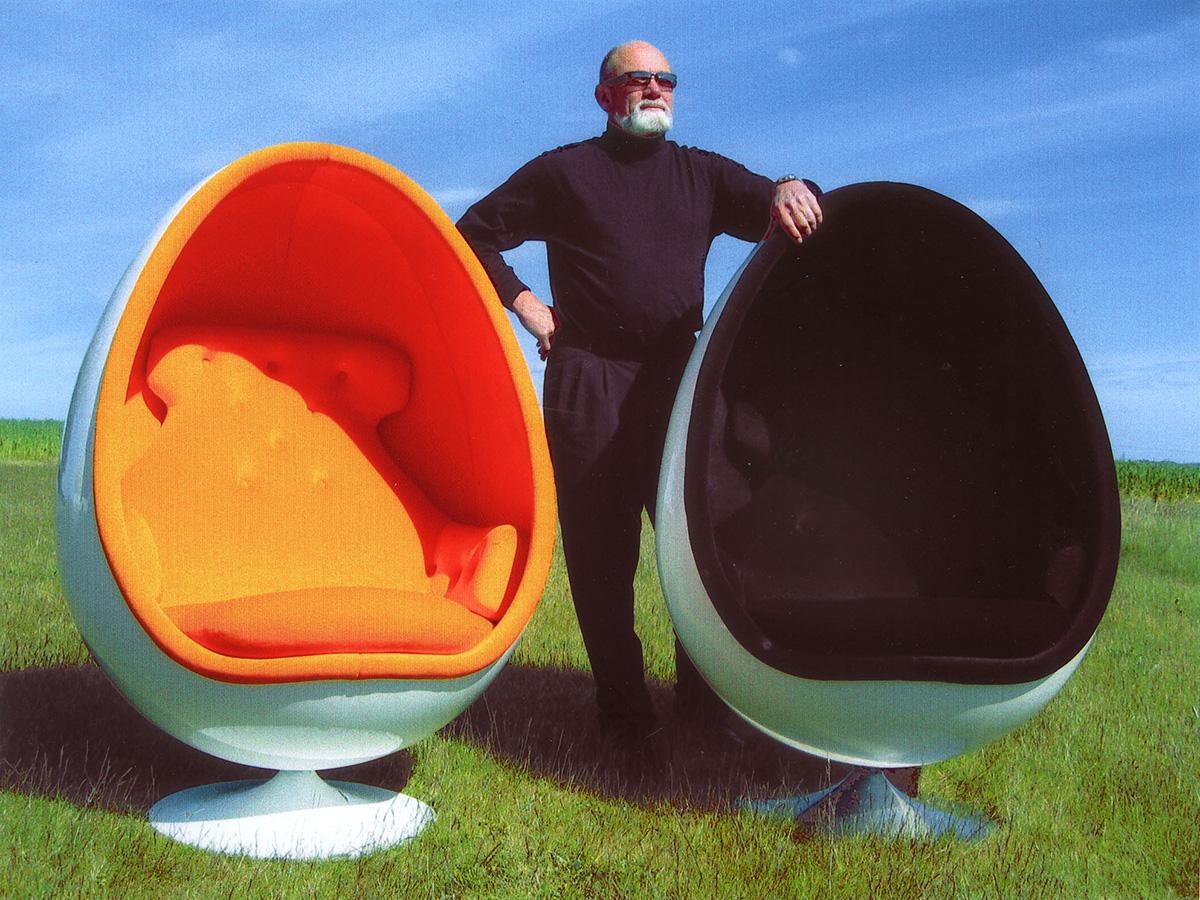
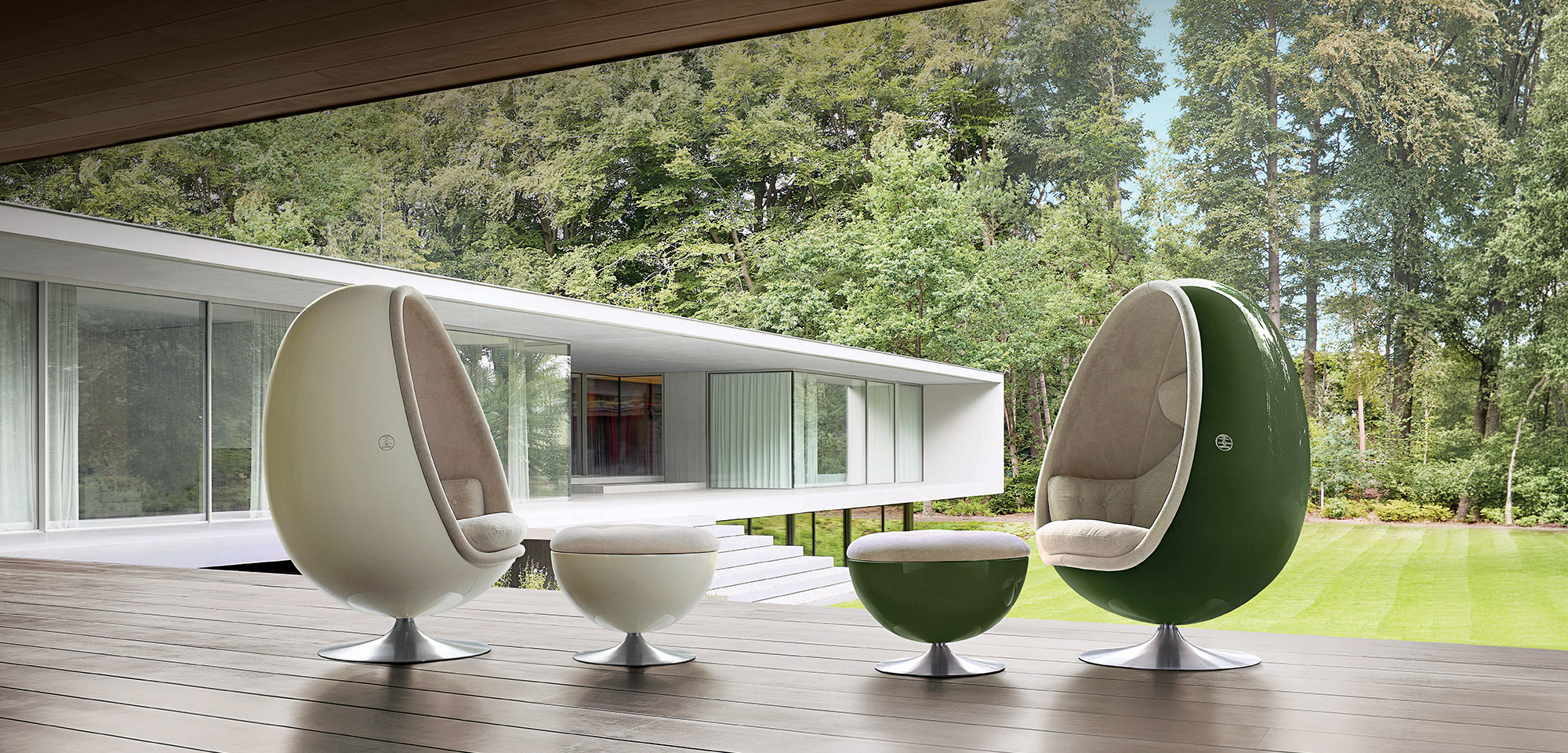
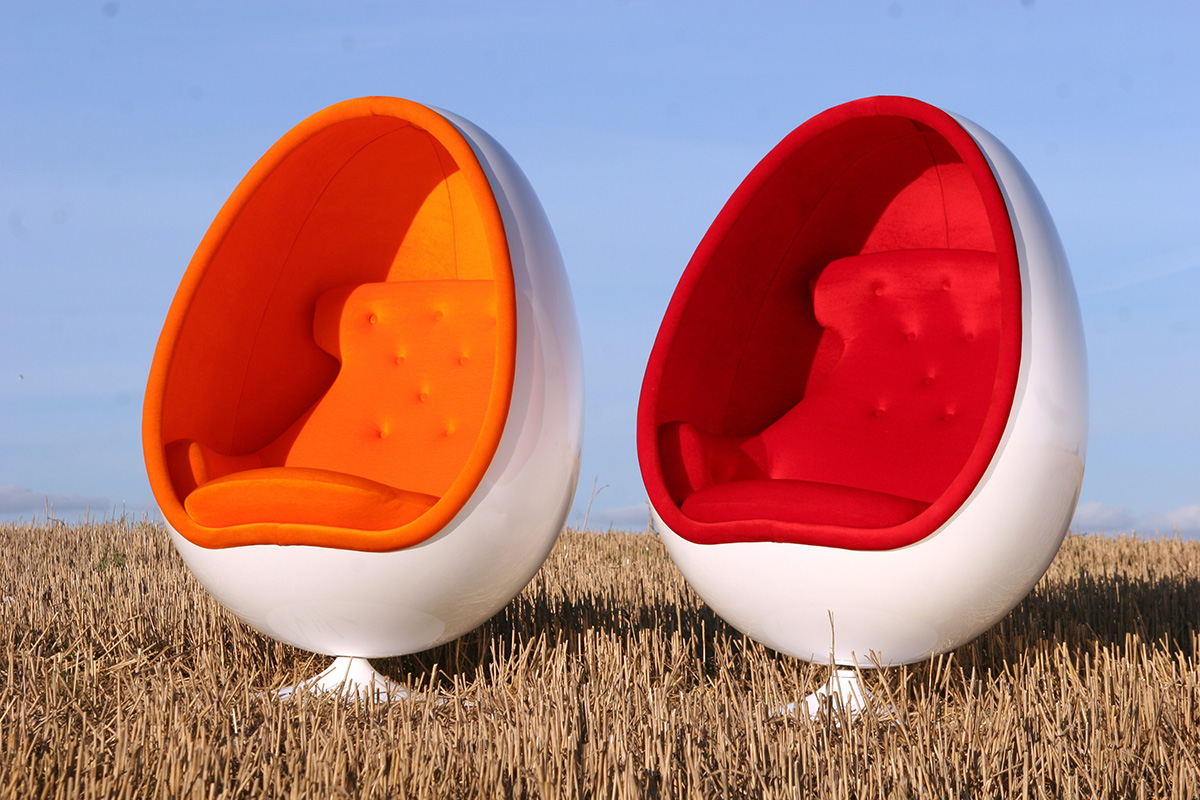
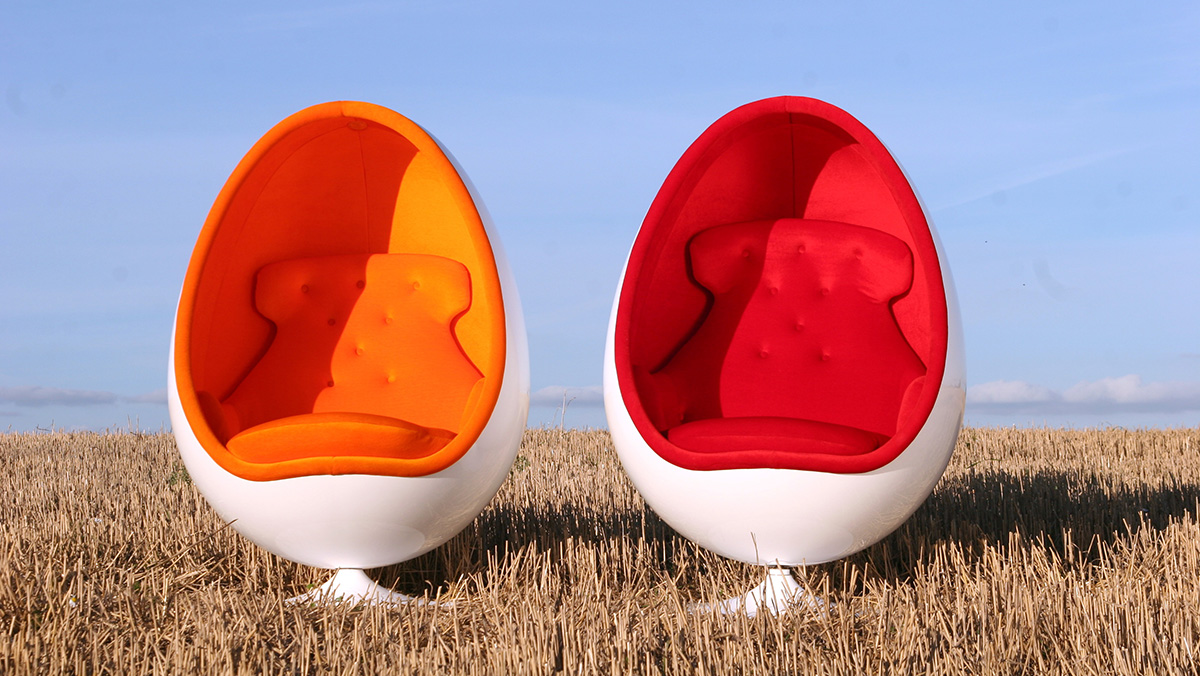
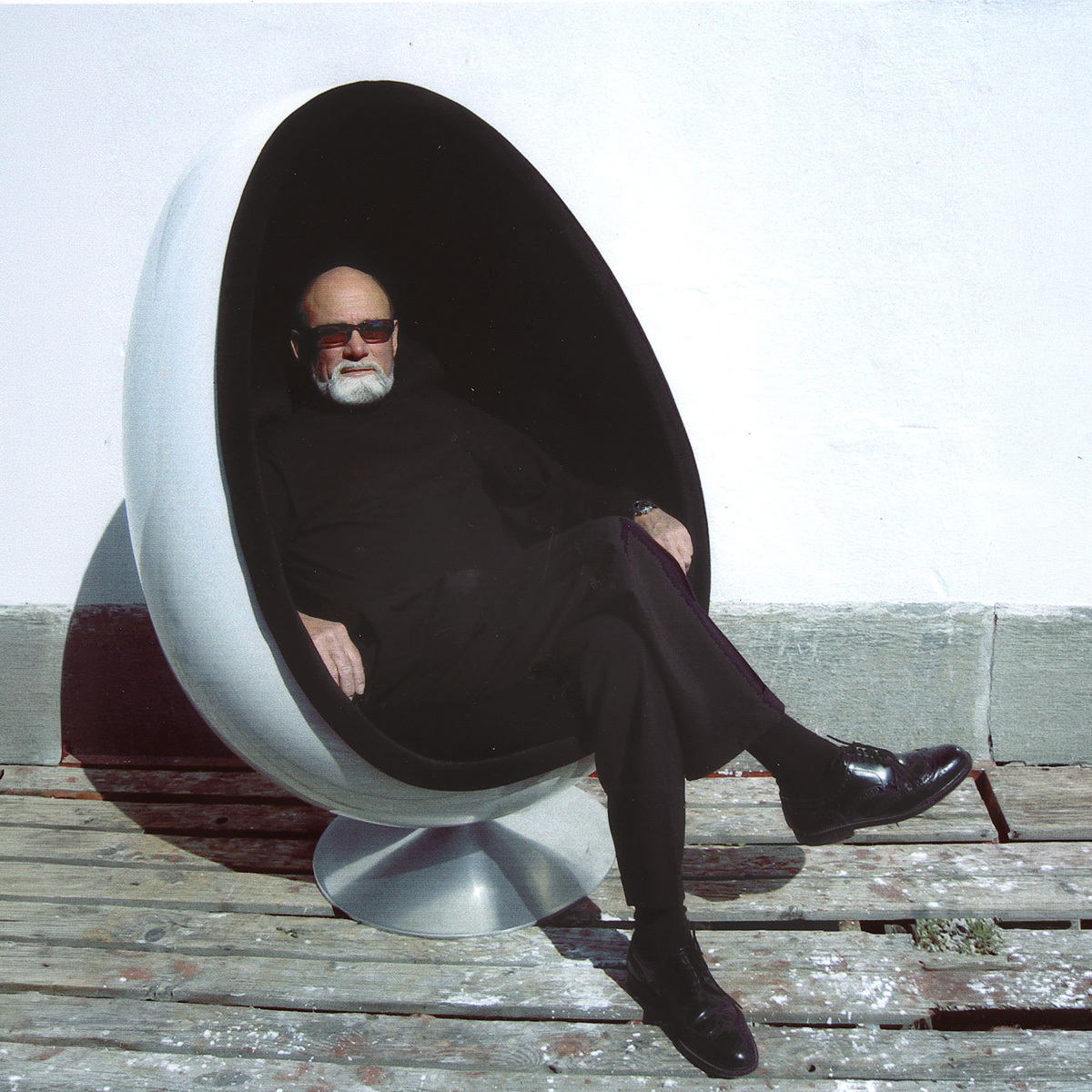
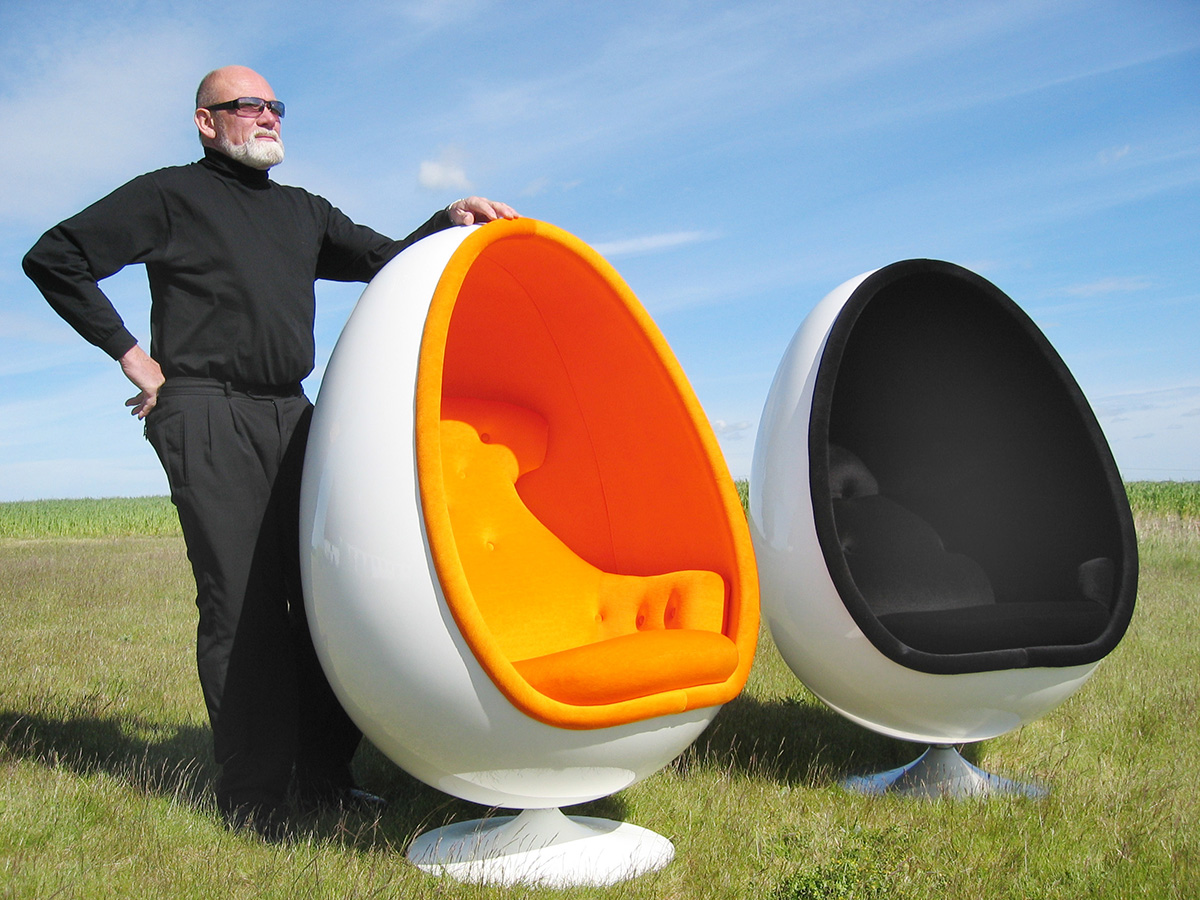
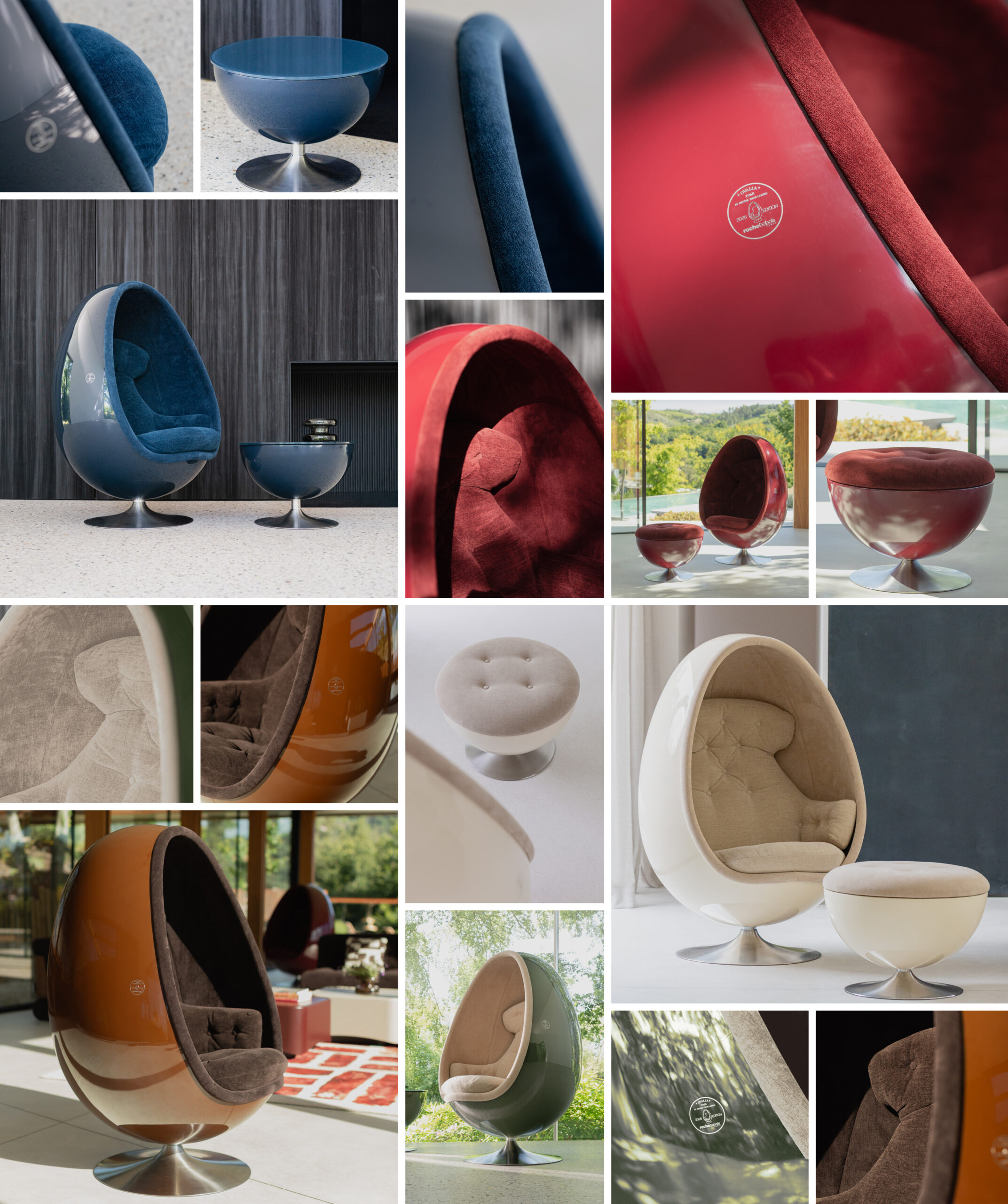
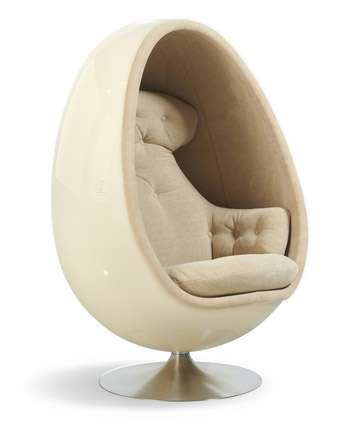
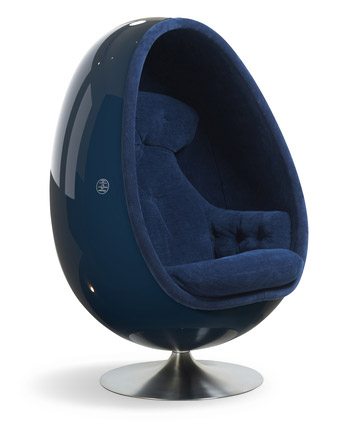
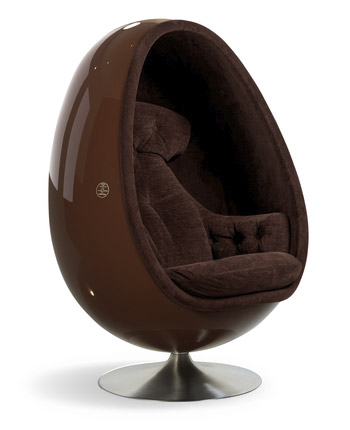
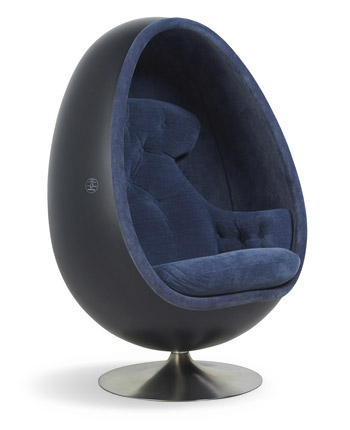
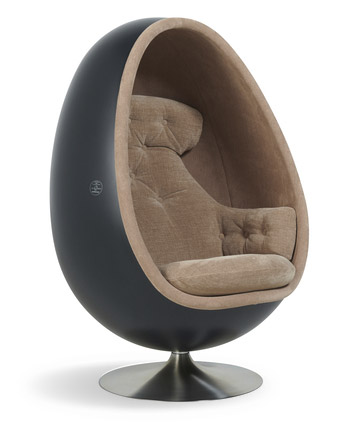
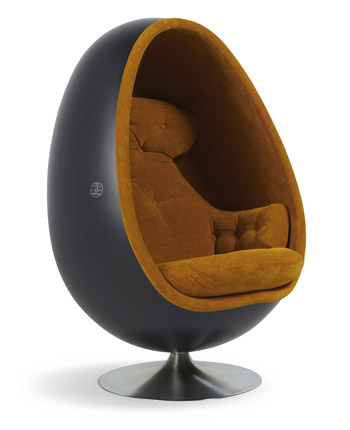
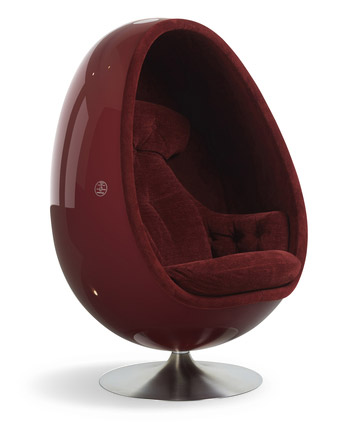
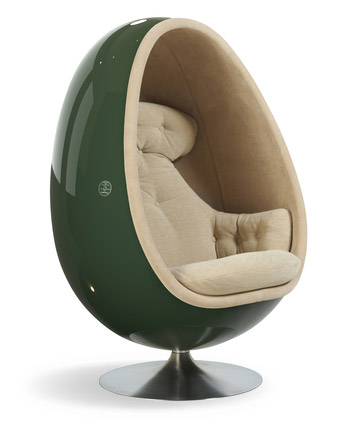
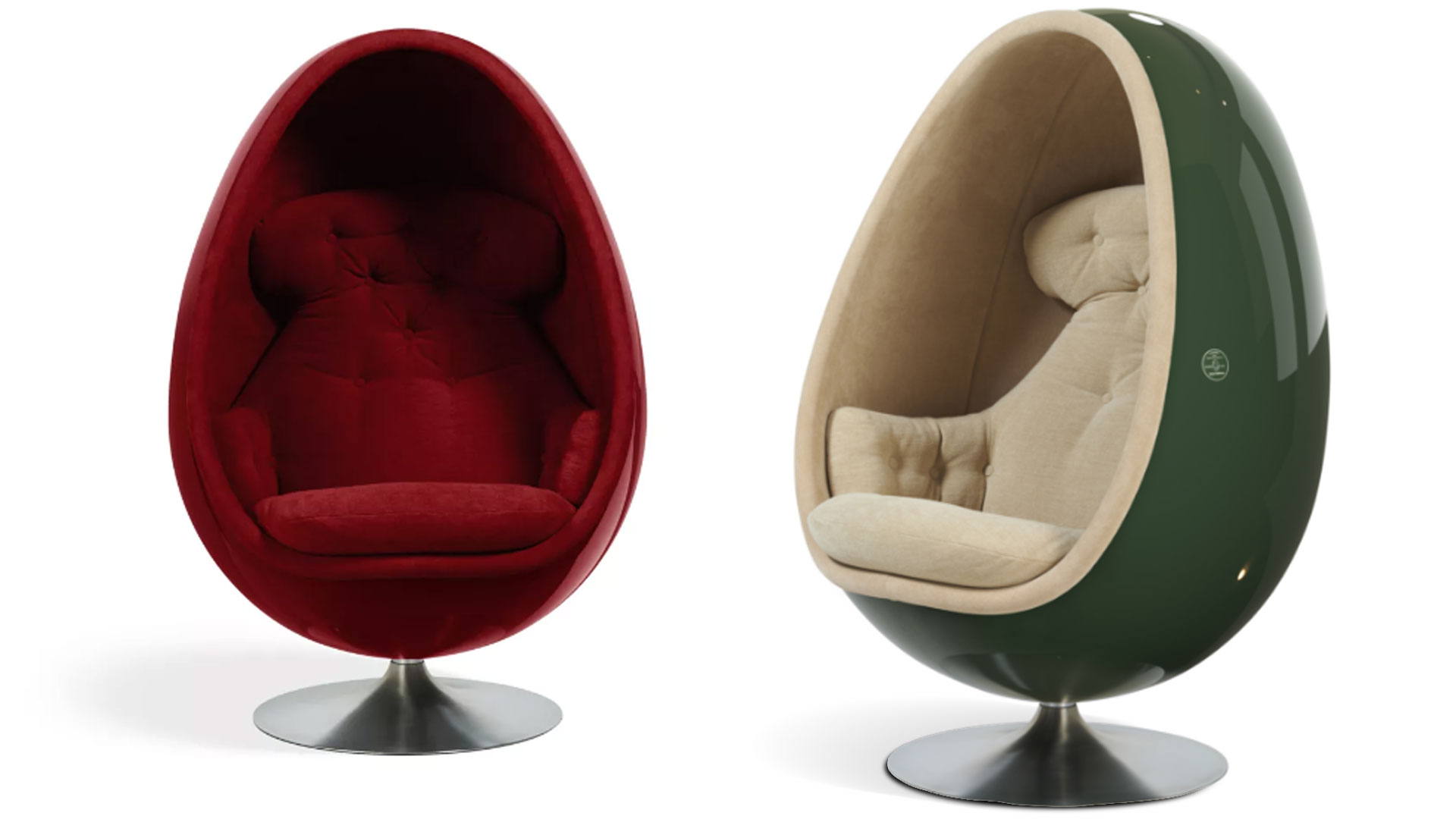
Roche Bobois has reissued Ovalia, the egg-shaped armchair Danish designer Henrik Thor-Larsen presented at the Scandinavian Furniture Fair in Copenhagen in 1968. The 2026 edition keeps the original fibreglass silhouette. It adds new shell colours, a wider choice of fabrics, a matching footrest and a coffee table.
The 2026 edition
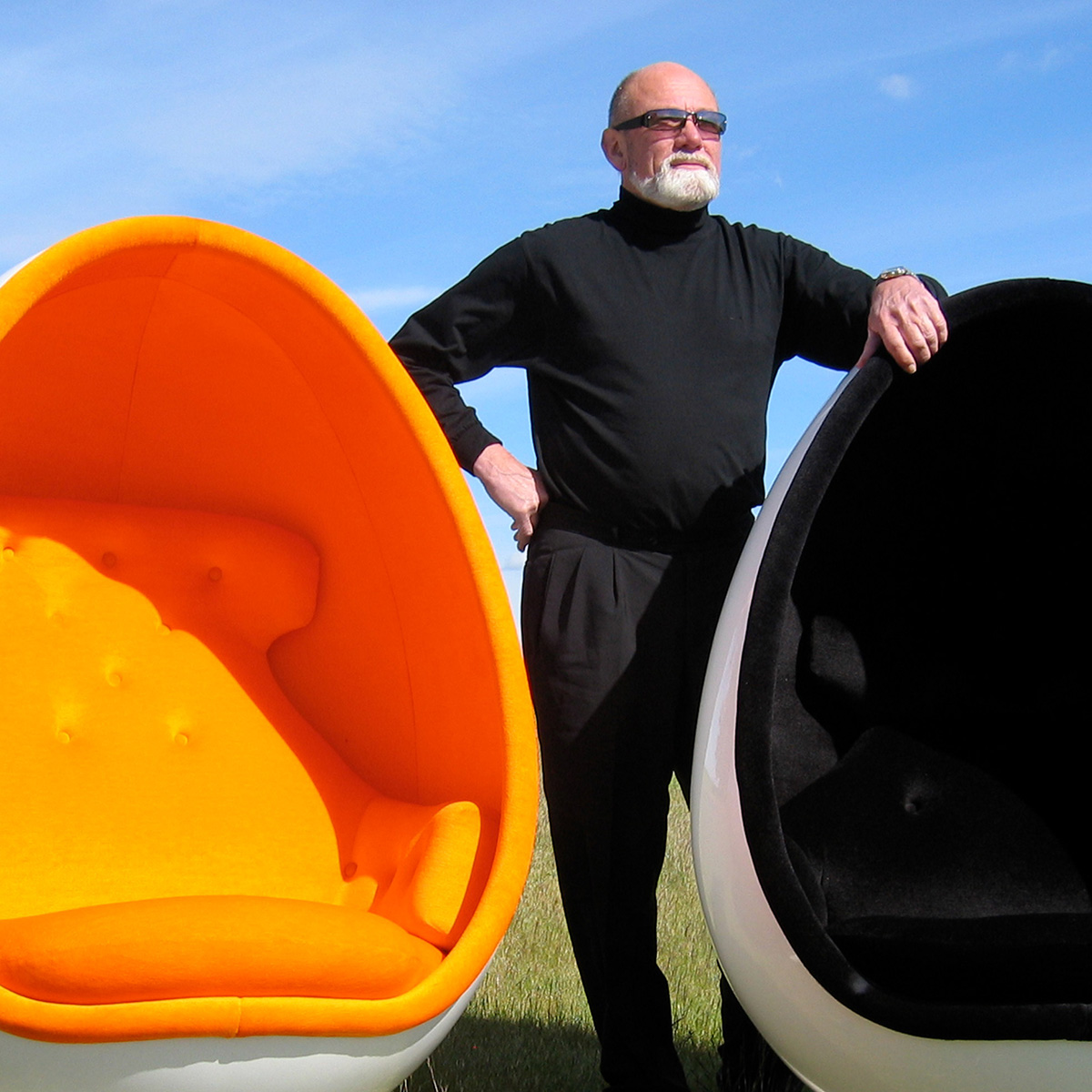
The shell comes in six exclusive colours, each with a high-gloss or matt lacquer finish. The seating has been reworked inside: the backrest has a new angle, the seat rests on elastic webbing, and a headrest is now built into the upholstery. A magnetic holder in the shell keeps a smartphone within reach for listening, watching or taking calls. Each armchair carries a medallion with the designer’s name and the date of the edition.
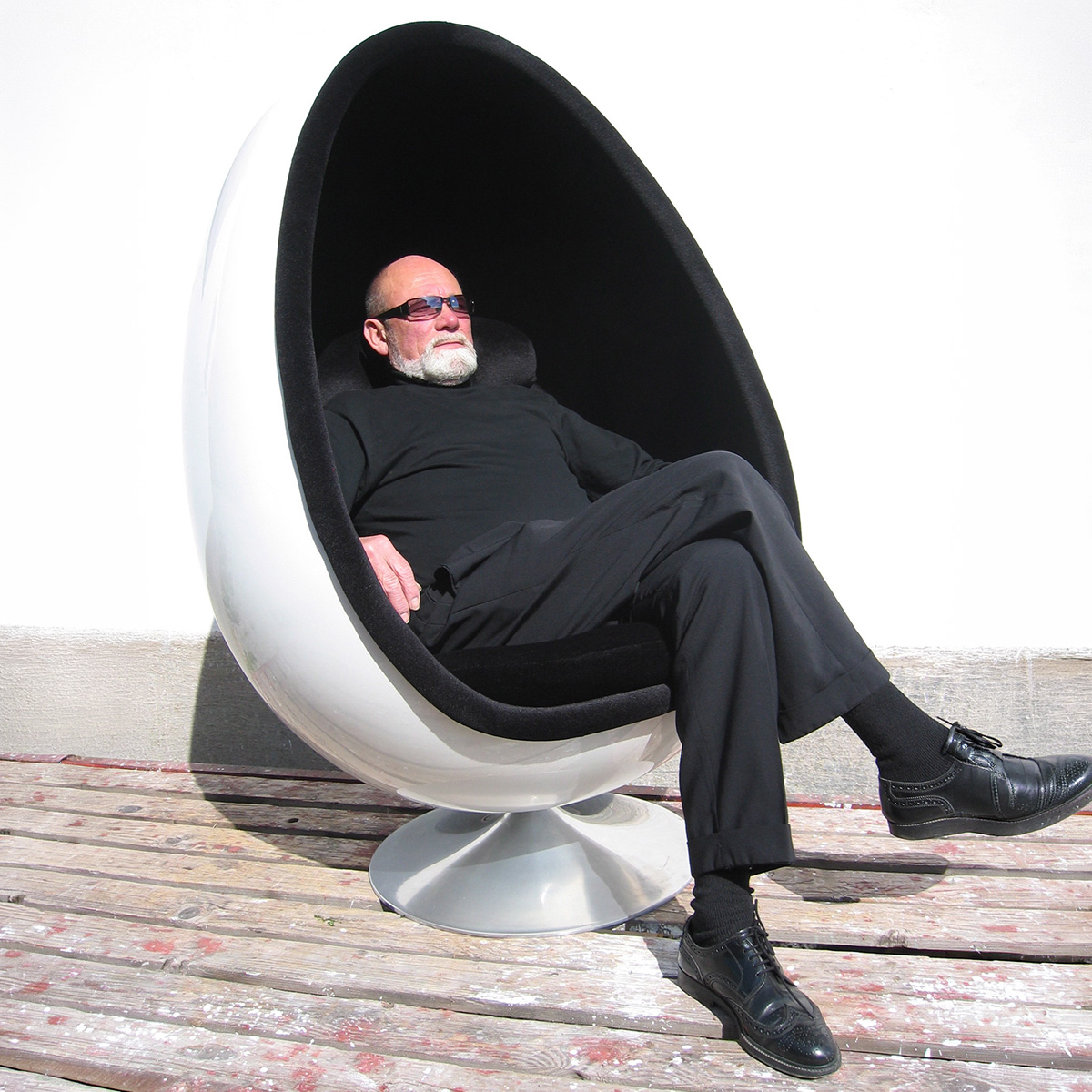
The armchair measures W92 × H131 × D93 cm. The footrest stands on a satin chrome base and measures H41 × Ø62 cm.
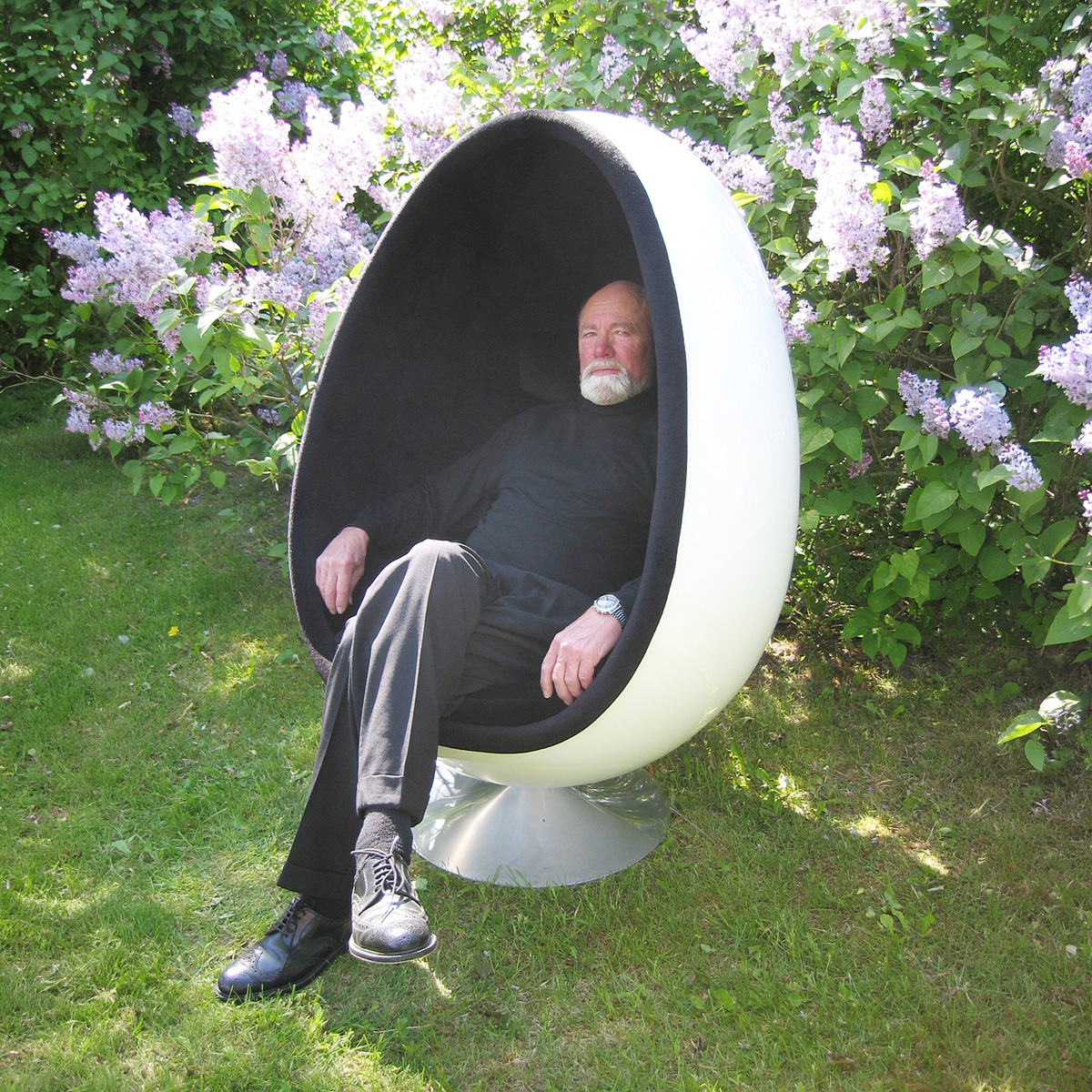
“Ovalia was designed as a protective cocoon,” says Henrik Thor-Larsen.
From racing car to Saab Sonett
Henrik Thor-Larsen was born in Roskilde in 1932. He trained as a graphic designer, but cars held his interest. He built a sports car with a glass-fibre reinforced polyester body and raced it, paying for the project by working at a petrol station alongside his studies.
The car led to his first industrial commission. Malmö Flygindustri, which built the Saab Sonett, saw a glass-fibre chair he had made and ordered a pilot series of 20. In 1968 a full order followed, worth 1.3 million kronor, which guaranteed a year of serial production. Thor-Larsen made the Sonett’s seats and instrument panels until the car was discontinued. He then took over the production moulds and made spare parts. His workshop moved from a building awaiting demolition in Malmö to premises in Tottarp, outside Staffanstorp.
The making of Ovalia
The Saab orders came unevenly, and Thor-Larsen needed another product to keep production running. Before Ovalia, he had already designed an egg-shaped oil tank, meant to sit on a lawn almost like a sculpture. “The egg shape was still in my head,” he told Polymervärlden in 1999. Since the Sonett seats were upholstered, he already had upholsterers on hand.
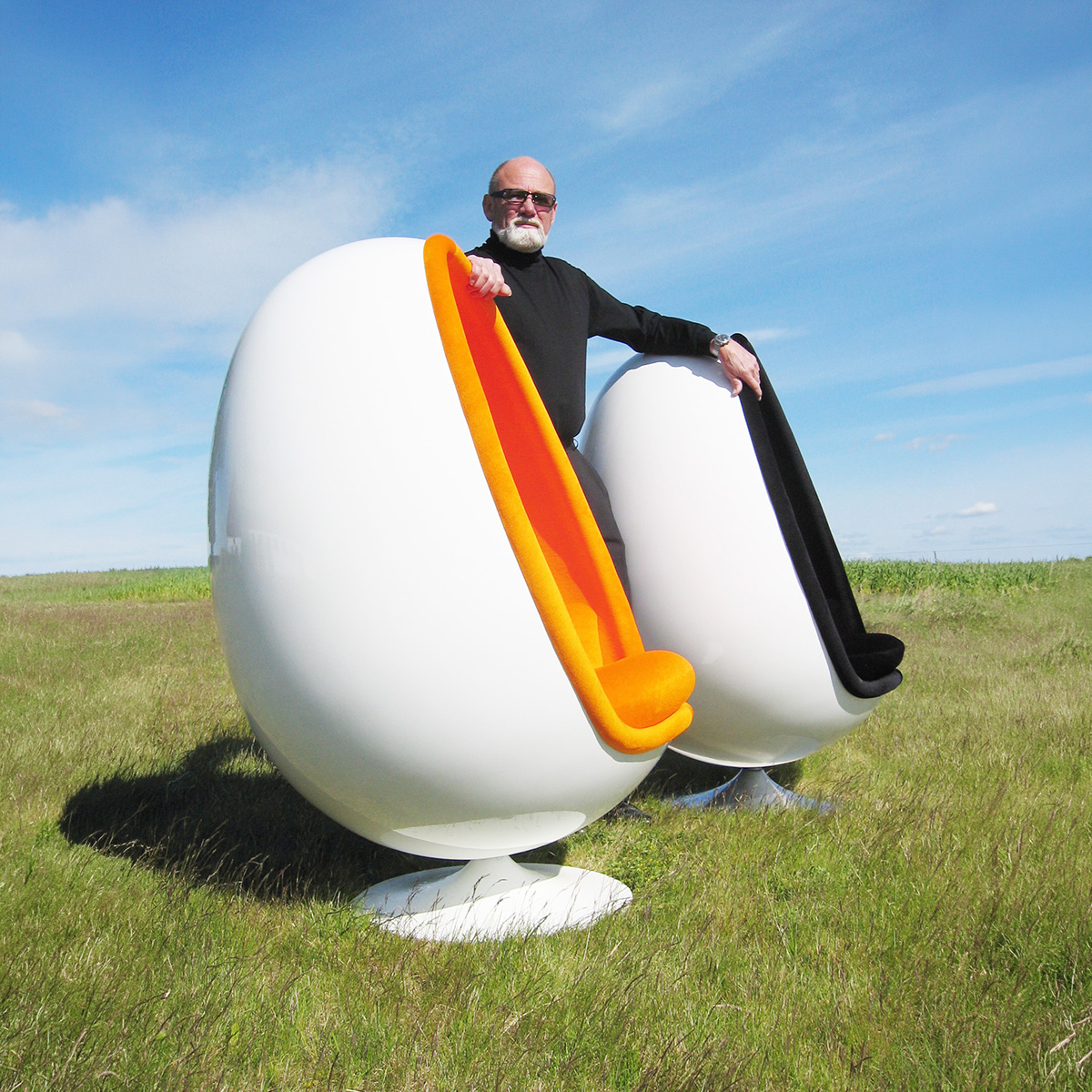
Ovalia was hand-laid as a single large shell. It was lined inside with soft cellular plastic and then covered in fabric, and stereo speakers were built in. The first examples also had interior lighting on a movable arm. That feature was dropped because the light never received Swedish electrical safety approval.
Success, and copies
Thor-Larsen took the chair to the furniture fair in Copenhagen. The first order was for 100 chairs, from a department store in Germany, and orders from around the world followed. Over eight years about 3,000 chairs were sold. His American retailer took 500 chairs on test and then had the design copied and produced himself. Thor-Larsen had never patented Ovalia.
The chair was manufactured by Torlan in Staffanstorp, Sweden. Nationalmuseum in Stockholm holds an early example in its collection. The museum names Eero Aarnio‘s Ball Chair, shown in 1966, as a likely reference point. In 2005 production resumed through Thor-Larsen’s own company, Ovalia.
Beyond the chair
Ovalia financed further experiments in glass-fibre furniture:
- Puzzle (1971): a modular system of eight panels that could build an entire wall with sofas, chairs and daybeds.
- Boomerang (1973): a combination system of tables, chairs and end panels that could be wall-mounted or built into booths.
- A glass-fibre bed.
Thor-Larsen left furniture at the end of the 1970s. At its peak his company employed 24 people. He later produced an igloo-shaped earth cellar from 1982 until he sold the business in 1994.
About Roche Bobois
Roche Bobois is a French furniture company that makes made-to-order designs in small European workshops and has around 265 showrooms worldwide. The company describes the Ovalia reissue as a continuation of its long relationship with Scandinavian design.
By Editorial Team, ScandinavianDesign.com
Images and content courtesy of Henrik Thor-Larsen & Roche Bobois