
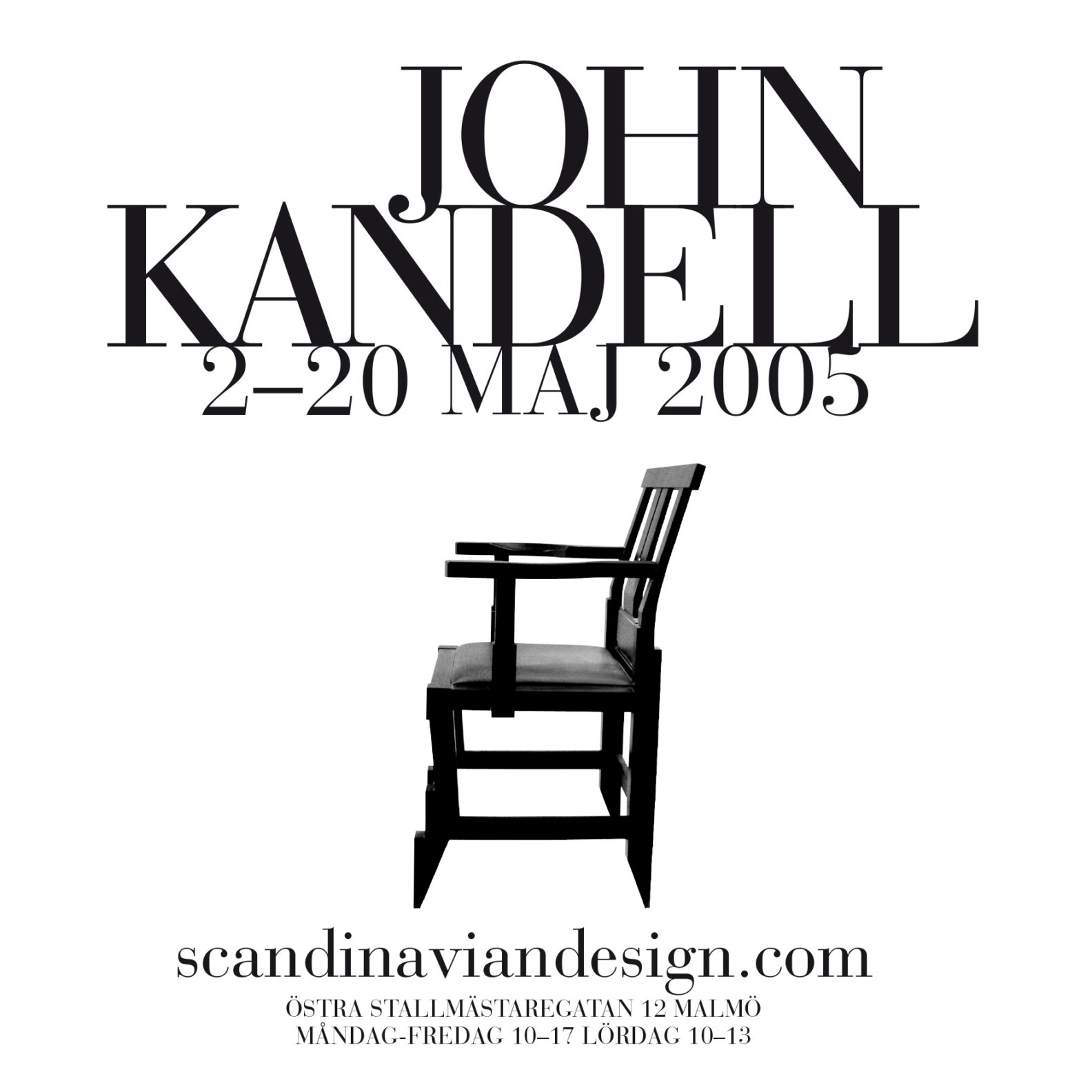
ScandinavianDesign.com is opening its small gallery at Östra Stallmästaregatan 12 in Slottsstaden, Malmö, to visitors with an interest in design.
The first exhibition, open to the public from Monday 2 May, presents works by furniture designer, interior architect and “balance artist” John Kandell (1925–1991).
On display are chairs, Pilaster shelving units and a raw-sawn mahogany bookcase produced by Källemo, as well as a number of watercolours and drawings in private ownership, along with a unique wall cabinet on loan from Sven Lundh.
With this inaugural exhibition, Malmö gains a small and compelling gallery dedicated to presenting exhibitions of high-quality Scandinavian design.
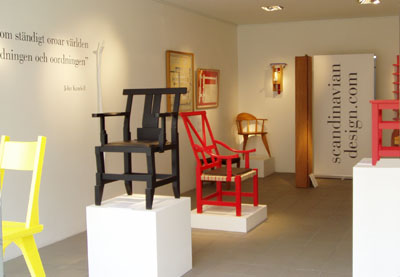
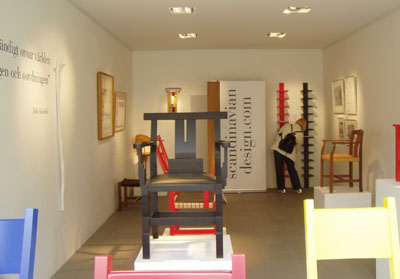
Reflections on John Kandell, 1925–1991
The first time I met John Kandell he was thoroughly irritable and claimed to be tired of everything to do with furniture. He had worked with, among others, Sven Ivar Lind during a number of formative years, and became a teacher at Konstfack in the early 1950s. His father was an artist based in Helsingborg; his older brother Axel was a SAR architect; and John himself was both an artist and an architect. In the latter capacity he became one of the most significant figures of the latter half of the 20th century.
During the 1960s and 70s he periodically lost interest in designing furniture. He felt it was hopeless to try to improve furniture culture in competition with all the flat-pack products dominating the market at the time. In most architectural circles he was regarded as the architect’s architect.
It was during that hiatus that I first met John Kandell, sometime in the mid-1970s. A second meeting, in his small exhibition room and his wife Ulla’s weaving studio in the Södermalm district of Stockholm, brought us closer, though not yet all the way. Through Ulla’s involvement I was eventually invited to their home, and from that point until the end of his life we shared a warm and lasting friendship. He became part of my own education in the art of seeing.
During the 1980s he produced some of the finest furniture of his era — chairs above all, but also the occasional shelving piece, of which the Pilaster shelf has already entered the canon. It is no coincidence that Pilaster and the Camilla chair were proposed by Nationalmuseum to represent furniture in a series of commemorative stamps issued by the Swedish Post Office to mark the Government’s designation of 2005 as the Year of Design.
The PimPim chair and the Victory armchair were his last works. Victory, with its V-sign in the backrest.
John Kandell, alone or in collaboration with his brother Axel, was frequently recognised for his interior and architectural work. In 1989 he was awarded the Swedish State Artist’s Salary.
Sven Lundh, Värnamo, April 2005
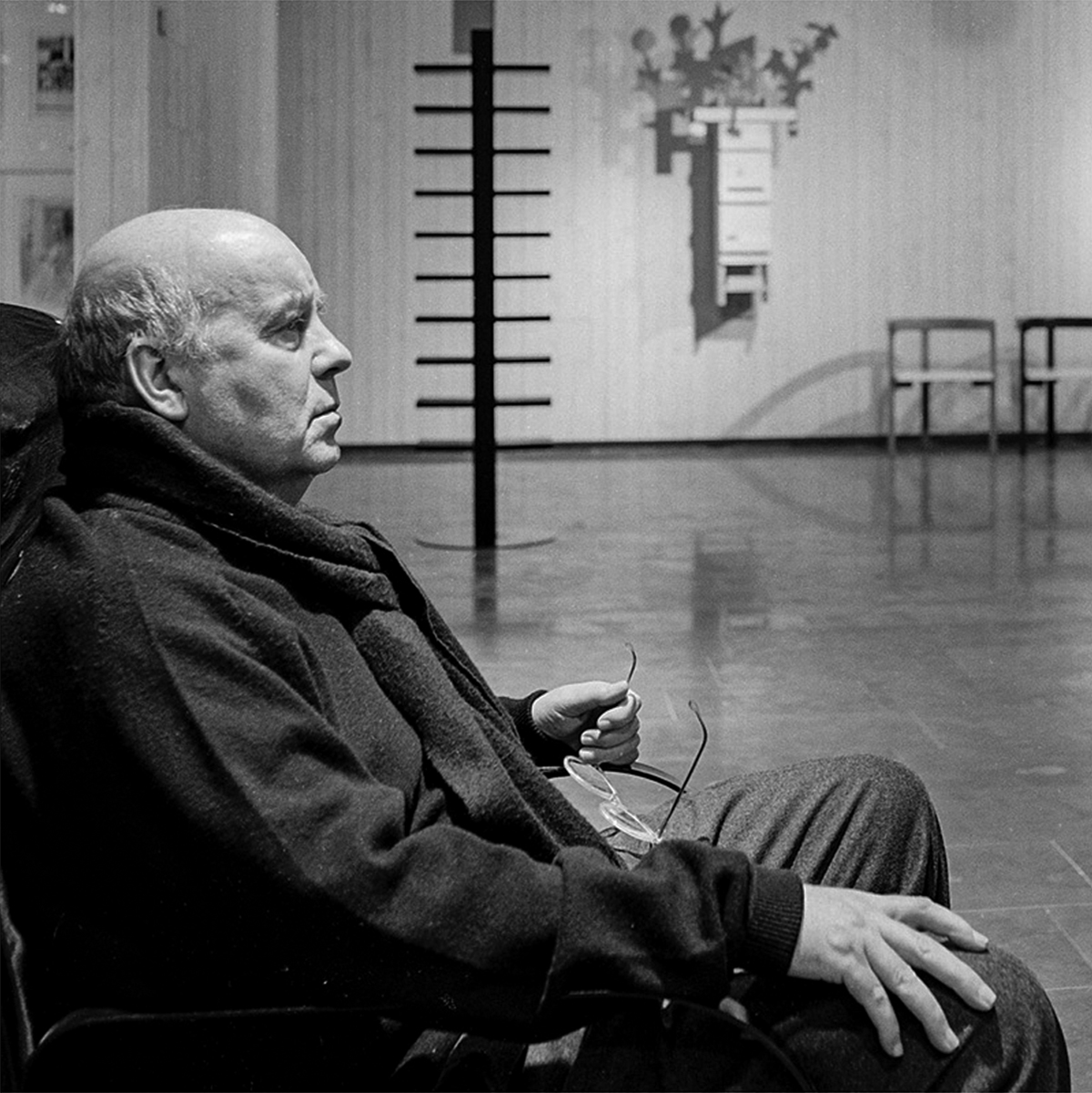
John Kandell, 1925–1991
John Kandell was one of Sweden’s most original furniture makers. His output ranges from classically austere armchairs to highly individual cabinets that resemble sculptures more than functional objects.
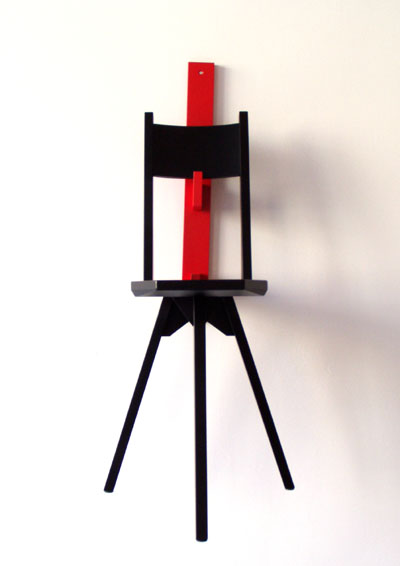
In 1982 came the three-legged milking stool that was given the name Camilla. Its origins in the vernacular milking stool are easier to visualise if one imagines the Camilla chair a little lower, with more elongated legs.
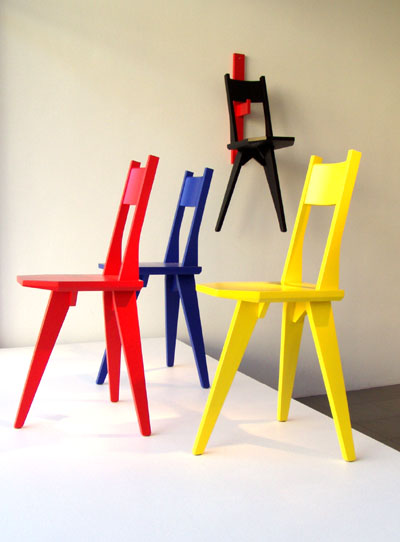
CAMILLA, 1982, John Kandell Beech; natural or stained in standard colour.
One of the highlights is the Solitär armchair. In it, a rigorous formal structure coexists with a playful line. Folk robustness meets Chinese character, baroque ascent meets measured strength. It is a throne that both shocked and won over committed admirers. It would give rise to successors more talkative and more wilful, while pointing to the wealth of possibilities within that framework. But Solitär contains great concentration. It confirms John as a solitaire. From Gunilla Lundahl’s book John Kandell, Raster Förlag, 1993.
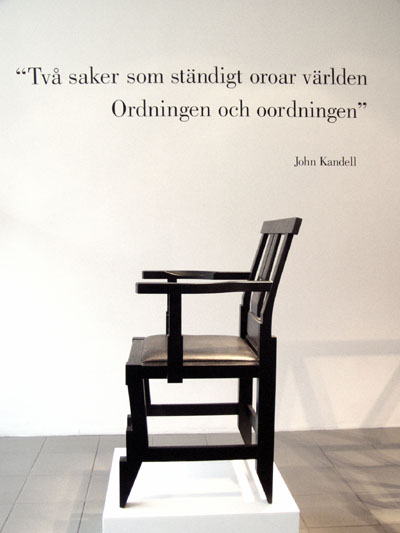
SOLITÄR, 1988, John Kandell Beech; natural or stained in standard colour. Leather.
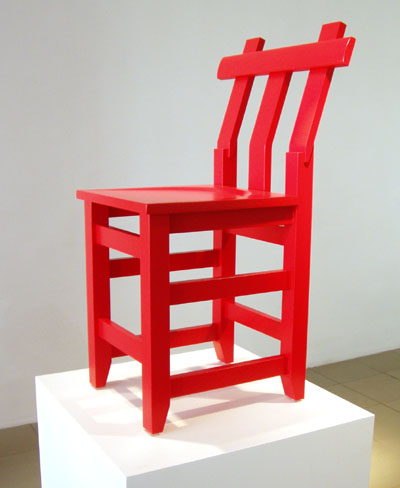
PimPim John Kandell worked on the model throughout 1990 and felt that PimPim came close to his idea of the chair as sculpture. The chair was shown at the furniture fair in February 1991, but in light of Kandell’s death in January of that year, Källemo chose to postpone its launch to a later occasion. No occasion could be more fitting than the Year of Design 2005 to present a true “Kandeller.”
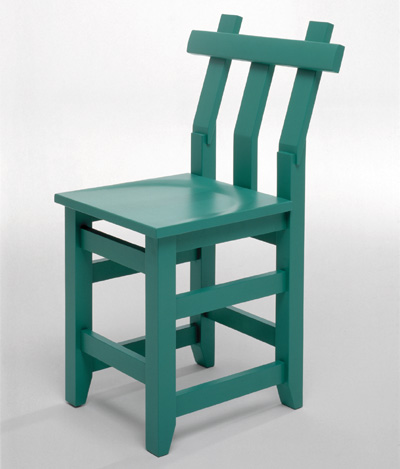
The PimPim chair is available in the two colours John Kandell specified: cadmium red and green. Edition of 360 copies, numbered 1/360–360/360, plus 15 copies marked HC 1/15–15/15. Each chair carries an engraved plate and a burn-stamp. With every chair comes a first-day cover bearing all the design stamps, cancelled on the day of issue, 27 January 2005. Also included is a booklet about Kandell and his work — “There must always be an Olga. Otherwise it won’t be right” — with texts by architectural writer Gunilla Lundahl and Nina Öhman, curator at Thielska Galleriet.
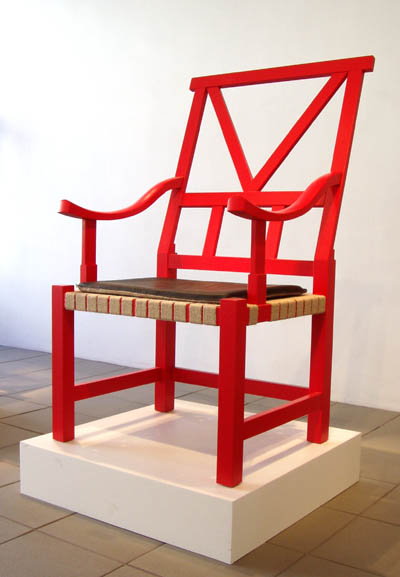
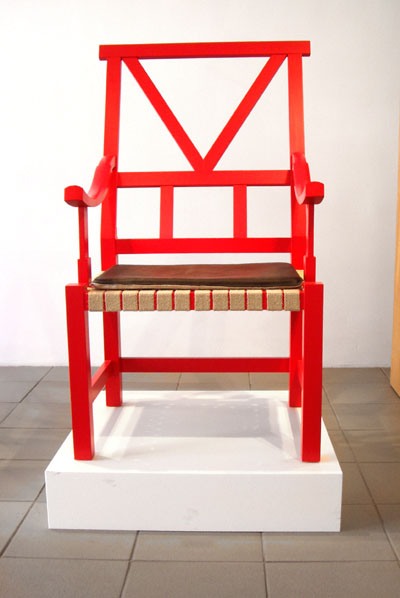
John’s last piece of furniture before cancer took him was Victory. Brilliantly red. Solid and comfortable. With a V-sign in the armchair’s back. He could at last feel like the victor. Rest a moment in his own ability. Settle into generous simplicity. The lady with the dog had yielded a little of her colour. And there was an amused glint in his eye. From Gunilla Lundahl’s book John Kandell, Raster Förlag, 1993.
VICTORY, 1990, John Kandell Beech; natural, red, white or black. Natural saddlecloth in prime hemp. Loose cushion in leather.
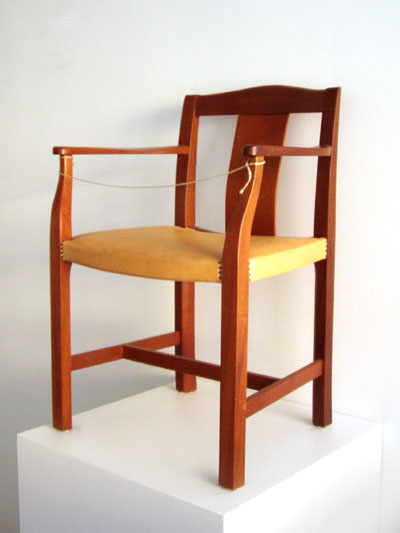
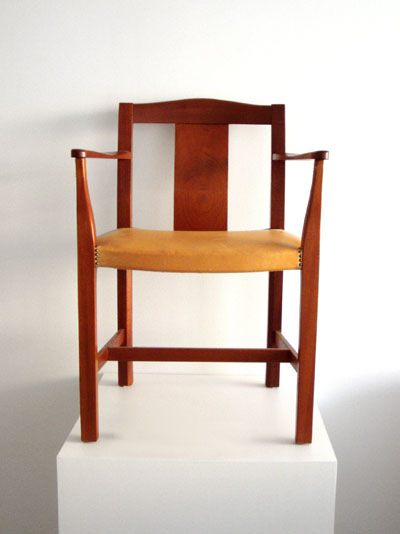
John’s mahogany armchair was originally made by him for an exhibition with Hantverkarna in Stockholm — an association similar to the Danish Snedkerlaget.
Källemo produced a new batch of the chair for a commission by Landstingsförbundet in Stockholm in the mid-1980s.
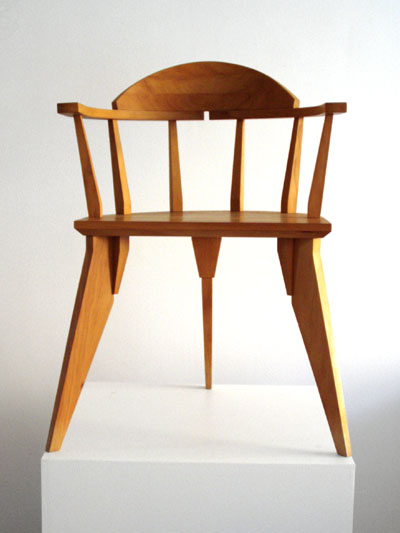
Värmlandsstolen.