
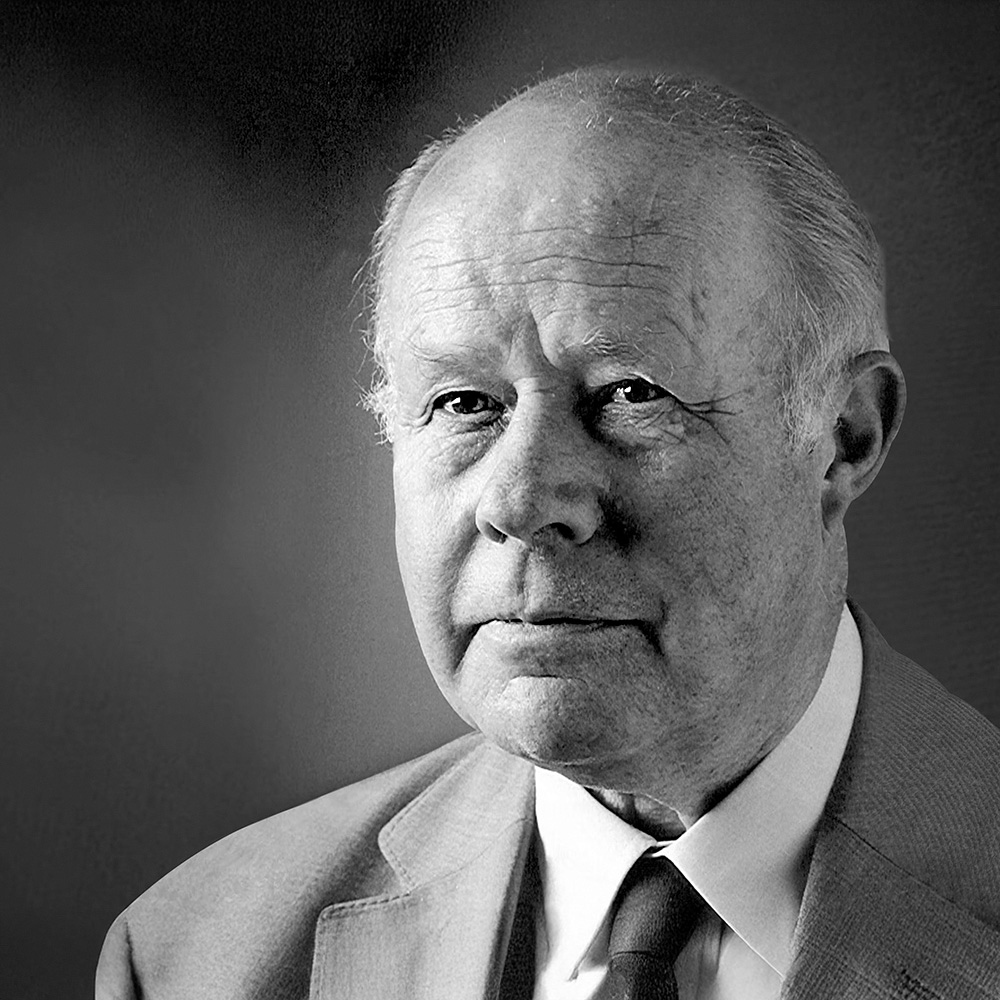
Ole Wanscher (1903–1985) was a Danish furniture designer and architect who carried the principles of Kaare Klint toward greater formal refinement and a wider range of historical reference. As a designer and as Klint’s successor as professor at the Royal Danish Academy of Fine Arts, he shaped Danish furniture through both built example and teaching. His furniture, above all the Colonial Chair, shows how rigorous attention to proportion, material and construction can outlast fashion.
Formation under Kaare Klint
Wanscher studied furniture design at the Royal Danish Academy of Fine Arts under Klint, whose method was to analyse historical furniture, extract its proportional systems and apply them to contemporary needs. After graduating, he worked in Klint’s studio. From Klint he took the conviction that furniture design is a branch of architecture rather than decorative art. He also learned to measure historical pieces systematically, to understand joinery by studying construction directly, and to put function and durability before novelty.
Independent practice and travel
After opening his own studio in the 1930s, Wanscher made extended study trips through Egypt and Europe, which was uncommon for Danish designers of his generation. He studied Egyptian furniture, English colonial pieces and French Directoire chairs, looking for the principles of proportion, structure and material behind them. This let him draw on several traditions without pastiche. The Colonial Chair suggests English colonial furniture in its proportions and cane work, but follows Danish constructional logic and restraint.
Slim dimensions, resilient forms
Wanscher treated a chair as an element of a room, its dimensions and visual weight calibrated to the architecture around it. He sought strength through precise proportion and sound joinery rather than excess material.
The Colonial Chair (1949), in mahogany with cane seat and back, has slender turned posts, a minimal frame and carefully articulated joints. It looks almost fragile but is stable and durable. In 1958 the Danish newspaper Politiken described Wanscher furniture as “an adventure every day, and will be so even several hundred years from now, for this is how long it lasts.” The Colonial Sofa carries the chair’s slim proportions over to multi-person seating, where most sofas of the period relied on heavy frames and thick upholstery.
Industrial production
Wanscher’s most productive years, the late 1940s to the early 1960s, coincided with Denmark’s post-war push for furniture that was industrially produced, affordable and widely available. He designed several pieces for industrial production, working with manufacturers to standardise dimensions, reduce hand-fitting and develop jigs for consistency, without lowering joinery or finish standards. In doing so he showed that even furniture rooted in historical precedent could be made in series if its proportional and structural logic was sound.
Teaching
As professor, Wanscher extended Klint’s analytical method while broadening its historical range and encouraging students to develop their own positions. His students measured and drew historical furniture, studied joinery by observation and making, and designed through proportion and structural logic rather than styling. Practising what he taught, he set a model of the designer-educator that helped keep Danish furniture design coherent across decades of stylistic change elsewhere.
Recognition and legacy
Wanscher received the Copenhagen Carpenters’ Guild Annual Award and, in 1960, a gold medal at the Milan Triennale. The Triennale opened export markets, and his furniture appeared in international publications and was specified by architects for institutional and residential projects. This helped establish Danish furniture design as a distinct alternative to both Bauhaus rationalism and American commercial modernism.
He left several dozen furniture designs. Carl Hansen & Søn reissued multiple Wanscher pieces in the 2010s, and early vintage Colonial Chairs are collected internationally at substantial prices. His influence today lies less in his specific forms than in his method: systematic study of precedent, rigorous proportion and joinery, and furniture design as serious intellectual work.
Design by Ole Wanscher
The OW series by Ole Wanscher presented in nature’s own colours
Carl Hansen & Søn presents the OW series in Terra leather, which is created in …
Danish Design in the 20th Century @ Design Museum Danmark
Danish Design in the 20th Century – How Danish Design Became World Famous Danish Modern …

Beak Chair design by Ole Wanscher – Carl Hansen & Søn
Beak Chair by Ole Wanscher now features luxurious New Zealand lambskin upholstery from Carl Hansen …

OW2000 Egyptian Stool by Ole Wanscher – Carl Hansen & Søn
The OW2000 Egyptian Stool was designed by Ole Wanscher in 1957 The influence of his …

T-Chair by Ole Wanscher from 1958 by Carl Hansen & Søn
Carl Hansen & Søn is now adding the sculptural OW58 T-Chair by Danish designer Ole …

The Danish Chair @ Design Museum Danmark
The Danish Chair is a wunderkammer of chairs. In the exhibition, Designmuseum Danmark tells the …