From Industrial Pine to Customizable Joinery—Olle Sahlqvist’s Master’s Thesis
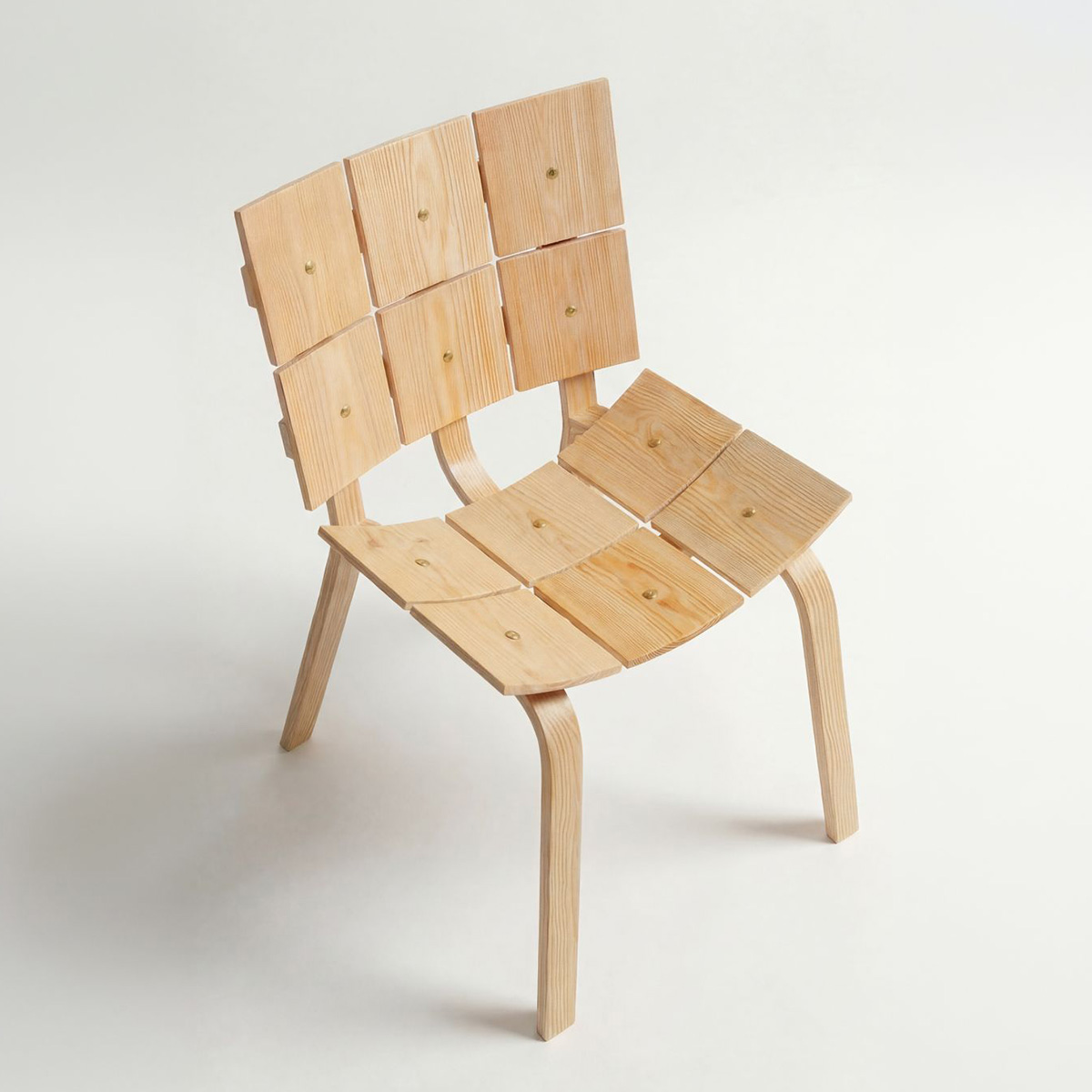
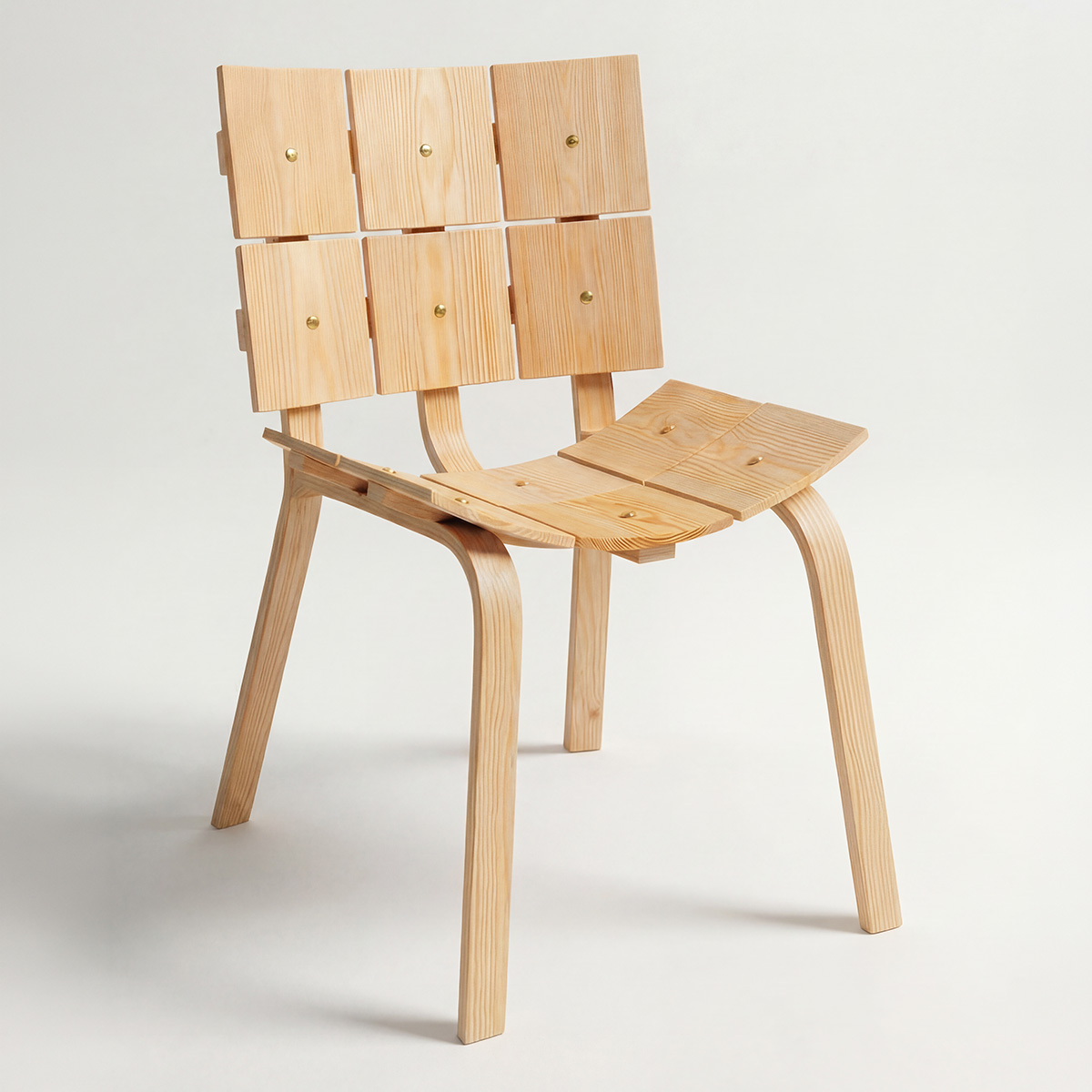
Wood dries and curves naturally. Rather than imposing a fixed form, Olle Sahlqvist’s ÅKE chair follows the wood’s inherent logic—a study emerging from his Master’s thesis on industrial pine processing.
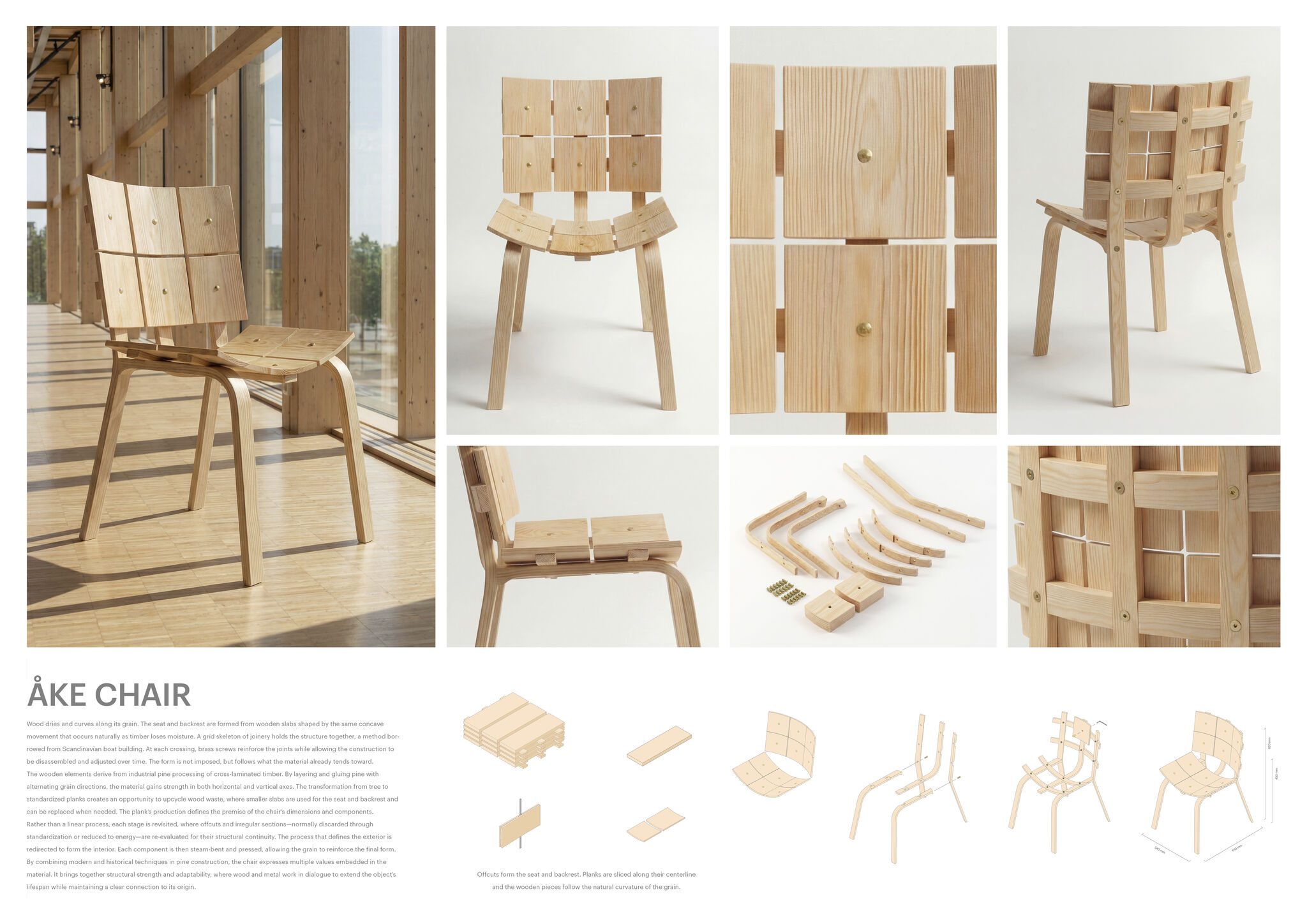
The chair rests on a wooden grid system borrowed from Scandinavian boat building, with brass screws at each joint allowing full disassembly and component replacement over time.
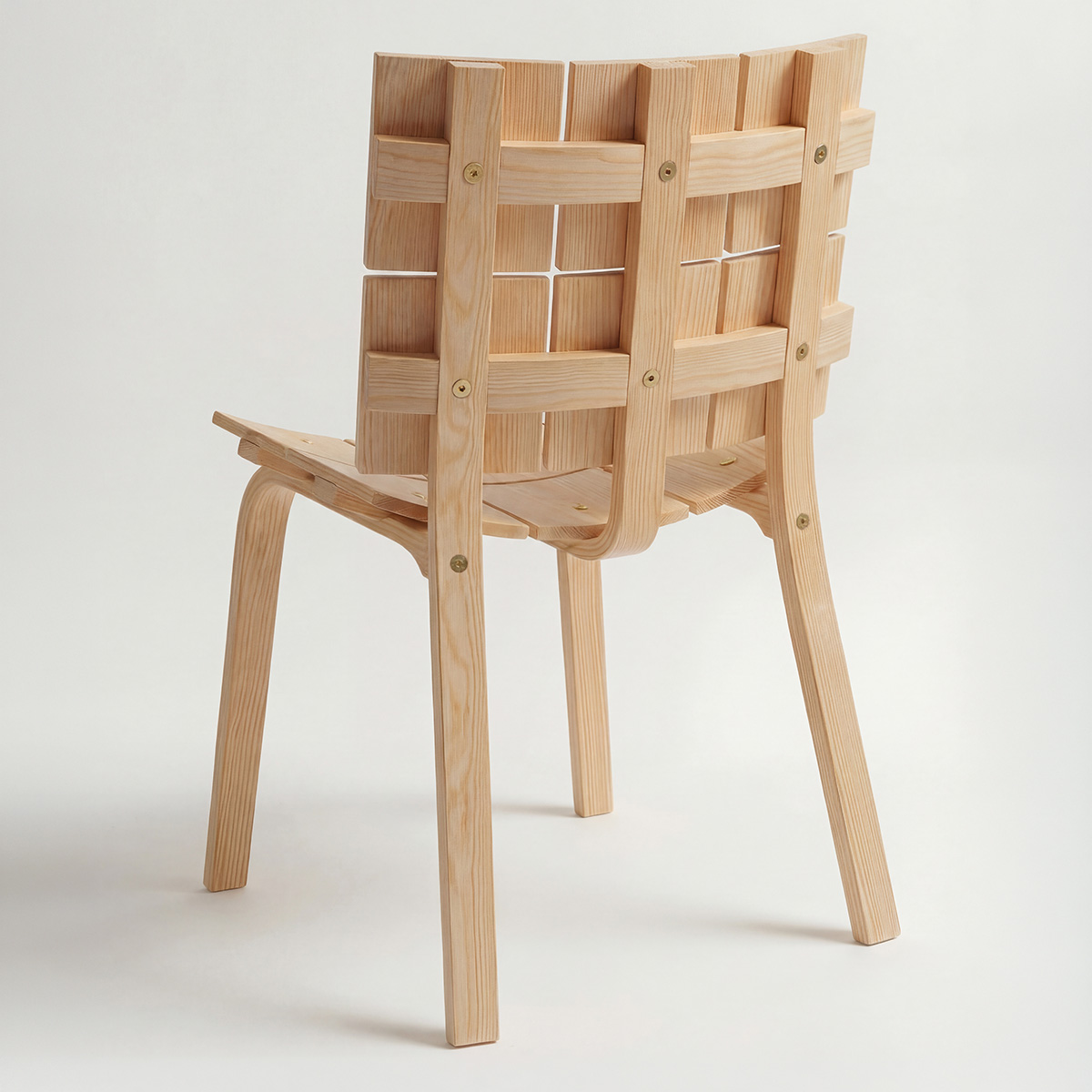
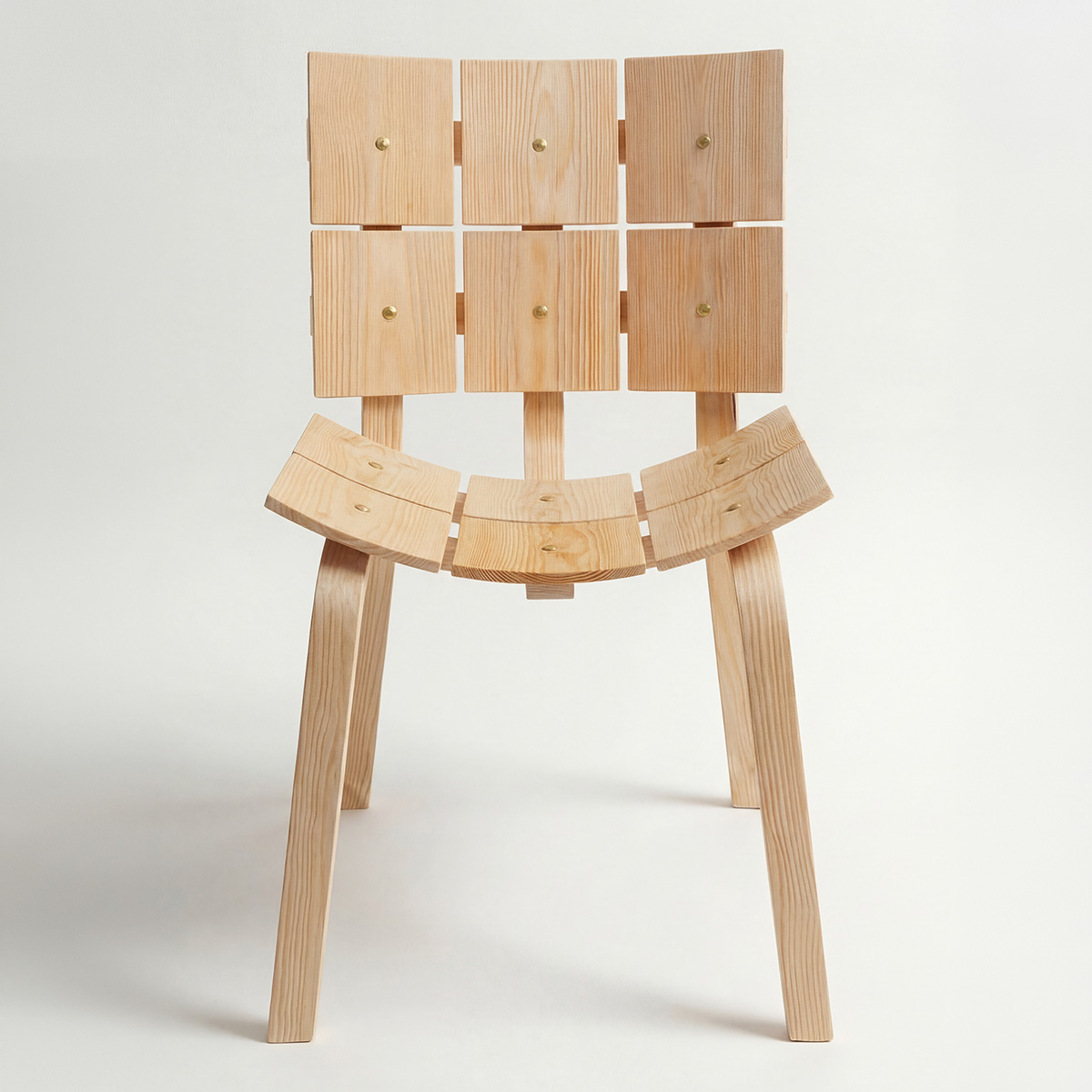
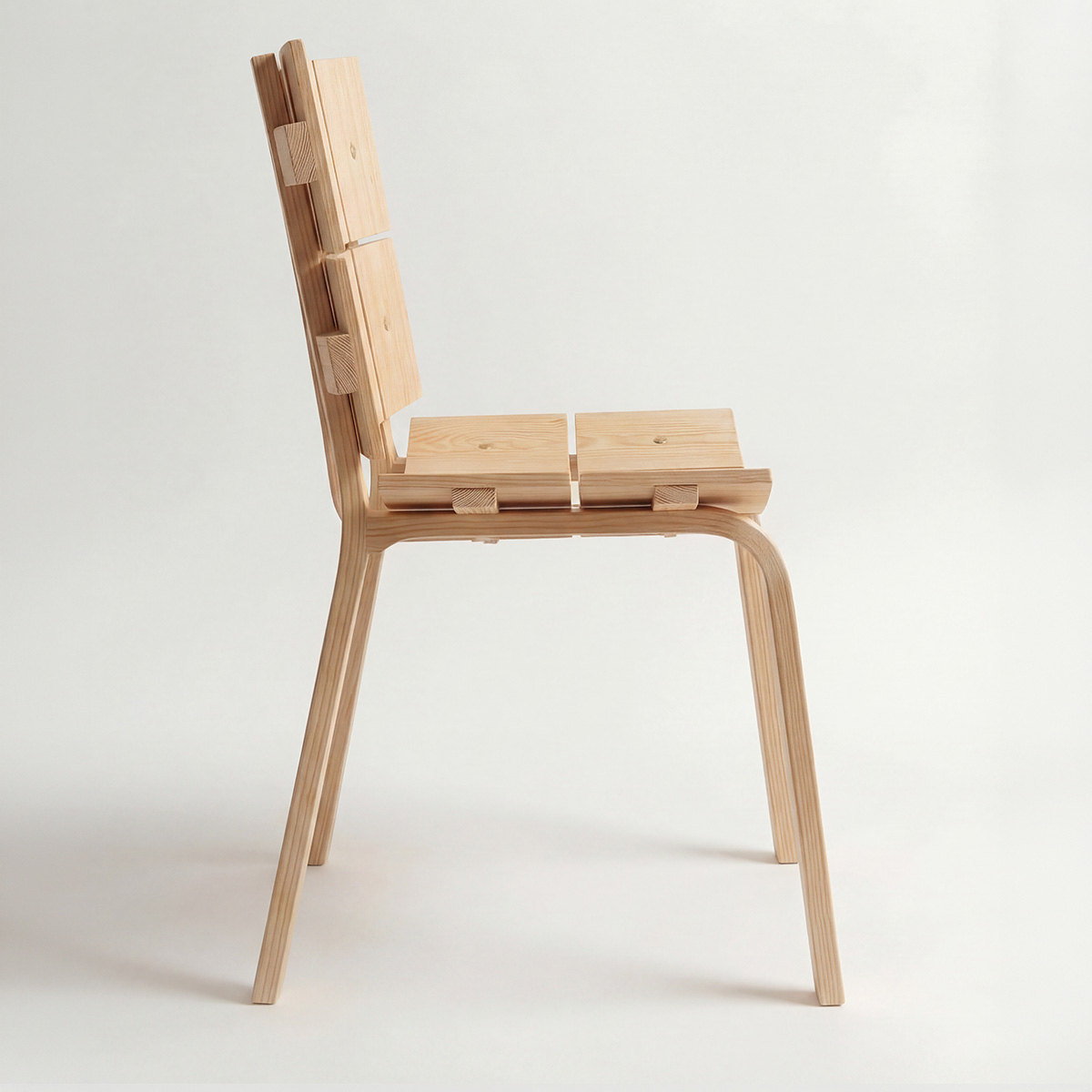
The seat and backrest are formed from wooden slabs shaped by the same concave movement that occurs as timber loses moisture. Form follows material nature, not designer intent.
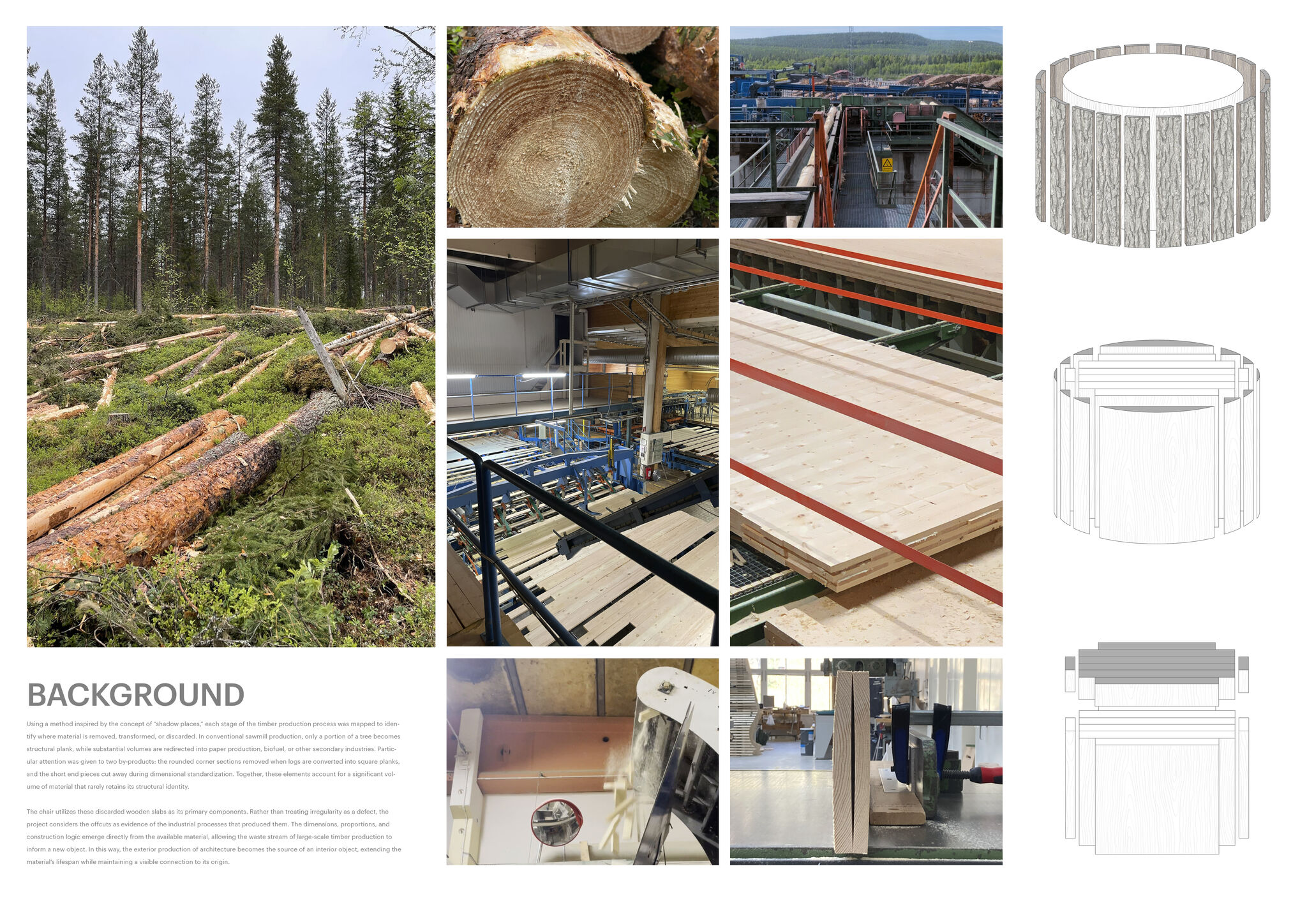
Cross-laminated pine—typically producing waste and irregular offcuts—becomes the chair’s structural vocabulary. Sahlqvist inverted conventional production: instead of designing a form then manufacturing it, he let the plank’s production define the chair’s dimensions and components. Offcuts and discarded sections are re-evaluated for their structural continuity. What industry normally wastes becomes the interior structure.
Each component is steam-bent and pressed, allowing grain to reinforce final form. This technique merges modern methods with historical boat-building knowledge, creating a chair that expresses multiple values: structural strength, adaptability, and connection to material origin.
The ÅKE chair reveals the inefficiency embedded in linear furniture production. Smaller slabs can be replaced; the brass-jointed frame endures. Nothing is locked into obsolescence. By reconsidering what industrial pine processing actually produces, Sahlqvist shows a path toward upcycling at scale—and toward understanding that wood movement is not a problem but a known quantity to work with.