
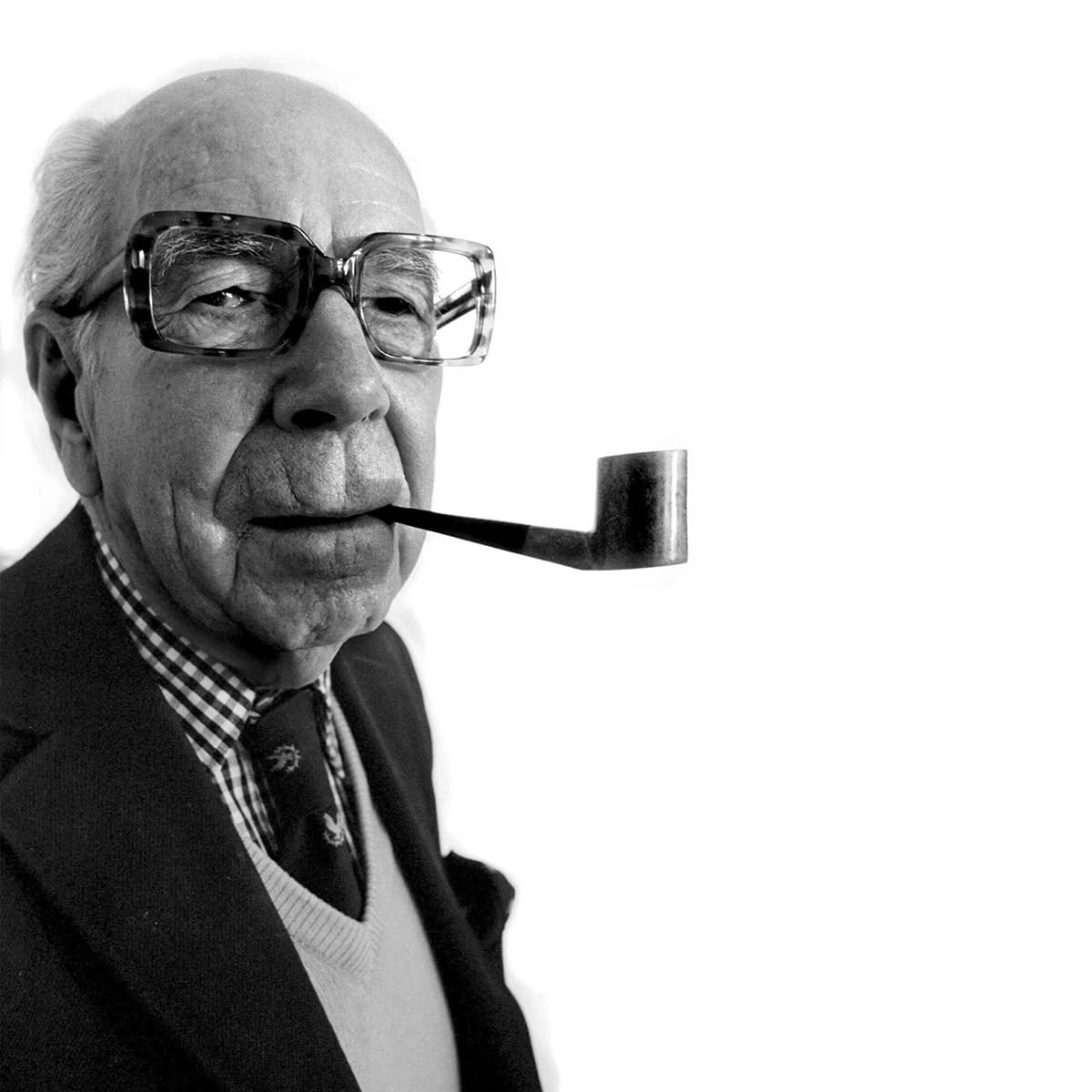
Sigvard Bernadotte was born a Prince of Sweden and Duke of Uppland in 1907, the second son of the future King Gustaf VI Adolf. He studied political science and art history at Uppsala University before enrolling at Konstfack in 1930, and in December that year signed a design contract with Georg Jensen that remained unbroken for the rest of his career. In 1934 he married Erica Patzek, a commoner; under Swedish law at the time this cost him his place in the line of succession and his princely and ducal titles, and from then on he worked and was known simply as “Mr. Sigvard Bernadotte.”
Georg Jensen and industrial design
Beyond silver — where he renewed Georg Jensen’s collection through the 1930s — Bernadotte worked across ceramics, glass, tin, plastic and textiles, and designed furniture, interiors and even a poster for Sweden’s first sound film. His career split into two long partnerships: Bernadotte & Bjørn, founded with the Danish designer Acton Bjørn in Copenhagen in 1950, and his own Bernadotte Design in Stockholm from 1964. Between the two studios, he and his staff worked on everything from thermos flasks to plastic kitchen implements, eyeglass frames and the Facit Private typewriter.
Everyday Sweden
Few members of the Bernadotte family shaped everyday Swedish life as directly as Sigvard did. His Margrethe mixing bowls for the Danish company Rosti, named for his niece Queen Margrethe II of Denmark, are still sold today; his redesign of the Marabou chocolate logo in the 1960s still appears on the wrapper; and Stockholm’s blue metro carriages took their colour after consultation with him.
Recognition
Bernadotte was a founding member of the Swedish industrial designers’ society SID and served for many years as president of ICSID, the International Council of Societies of Industrial Design. His work was the subject of a retrospective at Form/Design Center in Malmö in 1998, and he was awarded the Prince Eugen Medal in 1997, five years before his death in Stockholm in 2002, at 94.
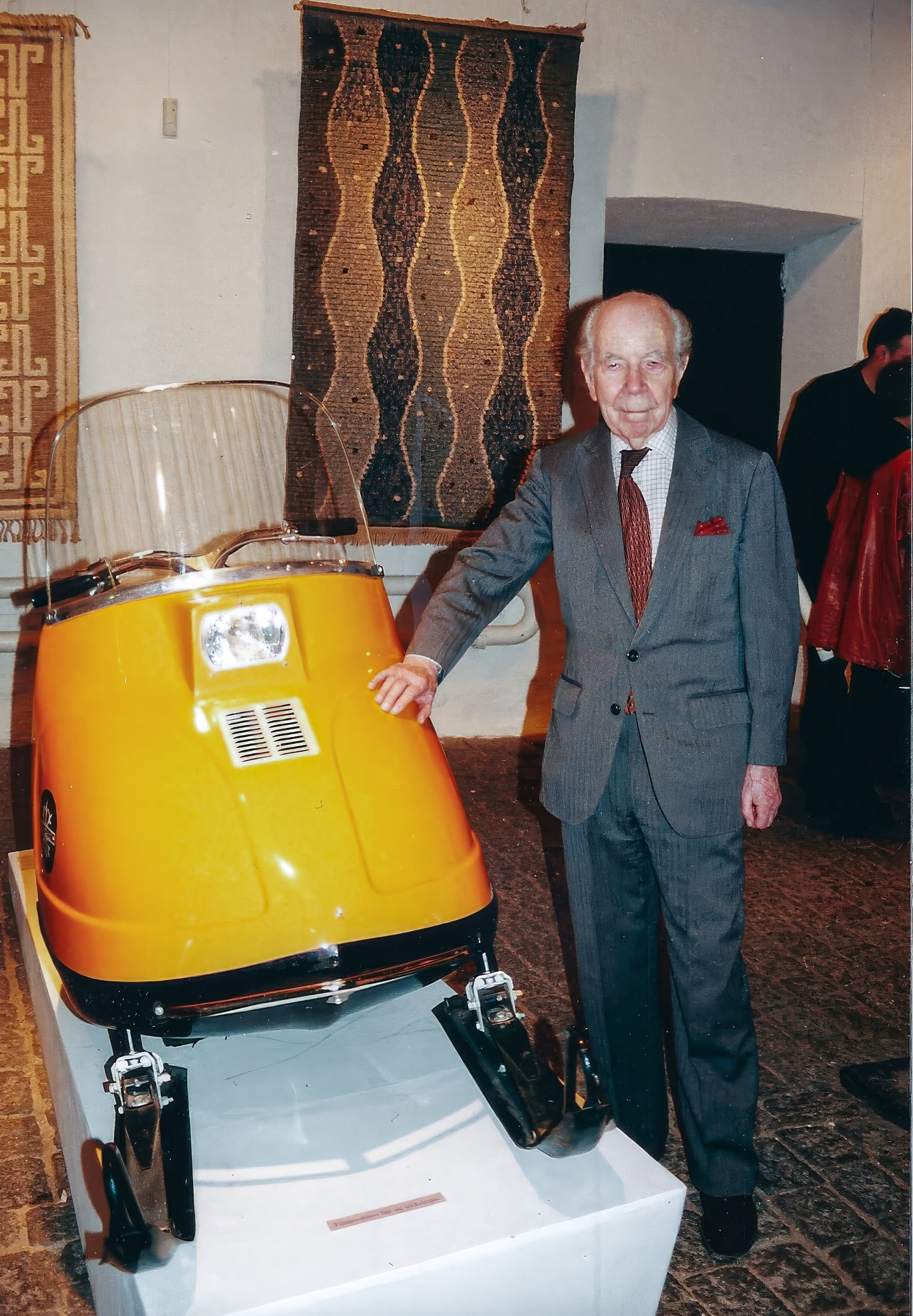
Sigvard Bernadotte at Form Design/Center 1997.
Photo: Ola Marton