
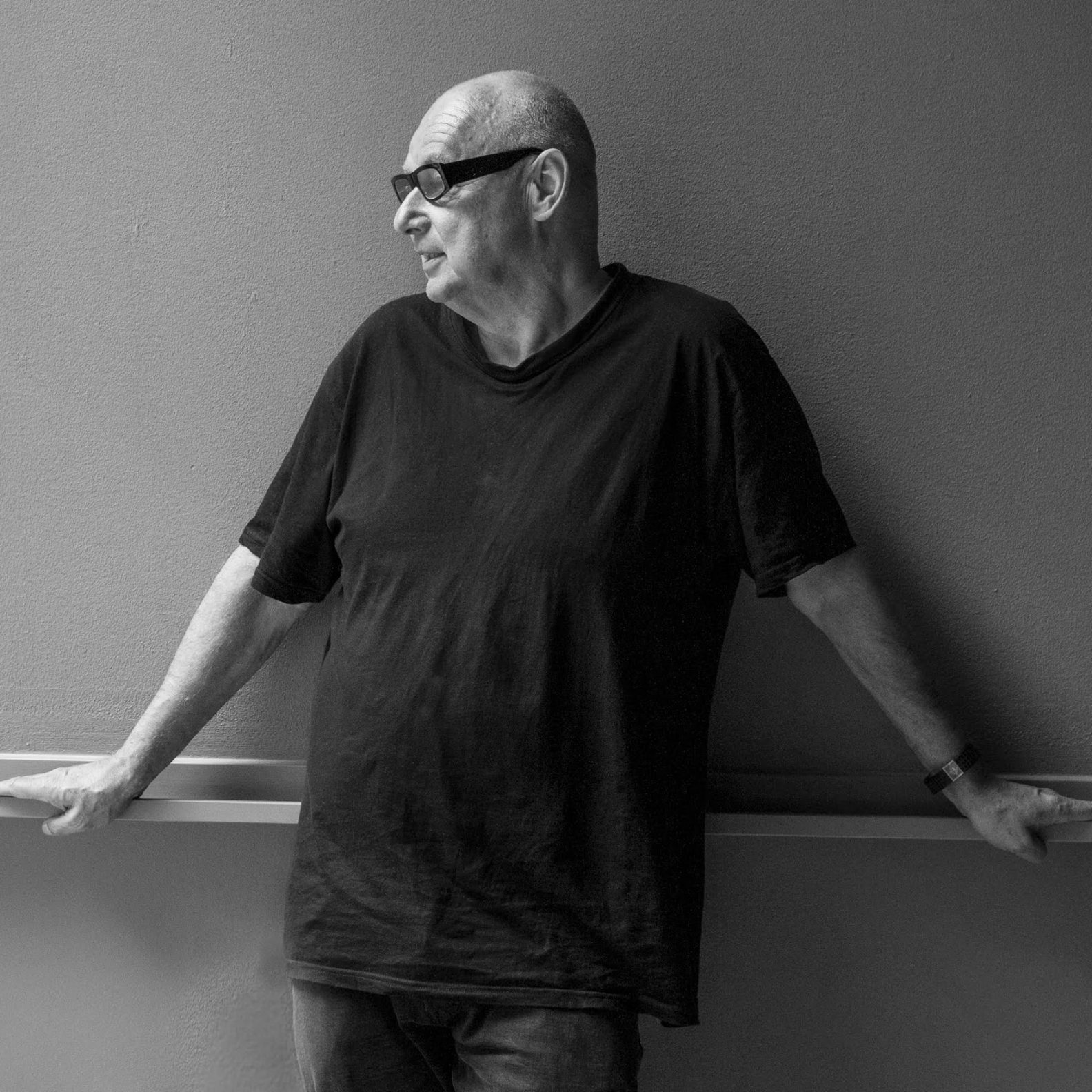
Gert Wingårdh and the Architecture of Material Richness — Concrete, Craft and Detail
Gert Wingårdh (b. 1951) is Sweden’s most publicly recognised contemporary architect and the only practitioner to have received the Kasper Salin Prize — Swedish architecture’s most prestigious professional honour — five times.
Over a career spanning more than four decades and encompassing nearly a thousand projects, Wingårdh has established a practice characterised by material richness, carefully crafted detail and willingness to engage with architectural challenges across scales — from signage programmes to urban plans, from private villas to national embassies.
Based in Gothenburg since establishing his office in 1977, his work demonstrates sustained engagement with Western Swedish architectural culture while achieving international reach through commissions in Europe, North America and Asia.
Early Practice and Breakthrough Projects
Wingårdh established his architectural office in Gothenburg in 1977, entering professional practice during a period when Swedish architecture was navigating between late modernist orthodoxy and emerging postmodern alternatives. His early projects — primarily residential work and smaller institutional commissions — demonstrated attention to spatial experience, material quality and construction detail unusual for a young practice. The work avoided both modernist abstraction and postmodern historical quotation, instead pursuing an approach grounded in site conditions, programme requirements and material possibilities.
The Öijared Golf Club (1987–88) in Lerum represented his breakthrough into wider professional recognition. The building — housing clubhouse facilities, restaurant and administrative spaces — responds to its landscape setting through careful siting, material choices and spatial sequences that connect interior functions to exterior views. The architecture employs timber construction with exposed structural elements, large glazed openings and roof forms that acknowledge Scandinavian vernacular traditions without replicating them. The project introduced characteristics that would recur throughout Wingårdh’s subsequent work: rich material variation within individual buildings, spatial complexity achieved through section rather than plan alone, and meticulous attention to detail execution.
Villa Nilsson, another early residential project, demonstrated similar qualities applied to domestic architecture. The house explores spatial variation through level changes, compressed and expanded volumes, and carefully controlled natural lighting. Materials — wood, concrete, glass, metal — are deployed with attention to their tactile and visual qualities rather than as neutral surfaces. This material consciousness, combined with spatial inventiveness, established Wingårdh’s reputation as an architect capable of creating buildings that rewarded sustained occupation and use.
Material Richness and Concrete
Wingårdh’s work is frequently characterised by its embrace of concrete as primary structural and expressive material. Where much contemporary Scandinavian architecture emphasised timber and other materials associated with regional tradition, Wingårdh pursued concrete’s formal and spatial possibilities: its capacity for structural span, its thermal mass, its surface textures, its ability to create monolithic forms. This material preference proved controversial within Swedish architectural culture, where concrete carried associations with 1960s mass housing and urban redevelopment projects that had fallen into disfavour.
His use of concrete, however, was not reducible to material preference alone but reflected broader architectural intentions. Concrete allowed for spatial experimentation — cantilevered volumes, long spans, complex geometries — that timber or masonry construction would constrain. It provided thermal and acoustic performance suited to Swedish climate and institutional programmes. Most significantly, it offered surface and textural possibilities through formwork, finish treatments and aggregates that Wingårdh exploited systematically. His concrete buildings are rarely monochromatic or texturally uniform; they demonstrate how material specification, formwork design and finishing processes could create rich visual and tactile effects within a single material palette.
Public Commissions and Institutional Work
The late 1990s and 2000s brought Wingårdh substantial public institutional commissions that established his practice at national scale. Universeum (1998–2001) in Gothenburg, a science centre and public aquarium, represents one of his most formally ambitious projects. The building’s exterior — clad in copper that develops patina over time — presents a sculptural mass that mediates between the scale of surrounding park landscape and adjacent buildings. The interior organises diverse programmatic requirements — exhibition spaces, aquarium tanks, rainforest environments, educational facilities — through a complex sectional arrangement that creates spatial drama while maintaining functional clarity.
Citadellbadet (2005–06) in Landskrona, a public swimming facility, demonstrates similar architectural ambitions applied to recreational programme. The building negotiates a difficult urban site adjacent to historic fortifications, creating interior spaces that balance institutional efficiency with spatial generosity. The architecture employs concrete, glass and timber to create environments appropriate to water-based activities while providing carefully controlled natural lighting and views.
These institutional projects share characteristics: they address complex functional programmes, they engage existing urban or landscape contexts, they employ rich material palettes, and they demonstrate that public architecture could achieve formal ambition without compromising programmatic performance. This combination — functional sophistication integrated with architectural expression — distinguished Wingårdh’s institutional work from contemporaries who emphasised either functional efficiency or formal experimentation at the expense of the other.
Swedish Embassies and National Representation
Wingårdh’s commissions for Swedish embassies in Berlin (2000–05) and Washington D.C. (2003–06) — the latter titled House of Sweden — represent his most internationally visible work and his most direct engagement with architecture as national representation. These projects required addressing how Swedish identity could be expressed architecturally in foreign capitals, how embassy functions could be accommodated while maintaining appropriate security, and how buildings could serve diplomatic purposes while contributing to their urban contexts.
House of Sweden in Washington occupies a prominent waterfront site in Georgetown. The building’s glass and timber facade — referencing Scandinavian material traditions while achieving contemporary transparency — houses embassy functions, cultural programmes and residential apartments. The architecture balances institutional presence with accessibility, creating spaces that function diplomatically while remaining visually open to public view. The building received substantial international publication and professional recognition, establishing Wingårdh’s reputation beyond Scandinavia.
The Berlin embassy, designed in partnership with the National Property Board, similarly addresses representation through material quality, spatial generosity and integration of art and craft elements. Both embassy projects demonstrate Wingårdh’s conviction that national identity in architecture emerges through material and spatial qualities rather than through applied symbolism or historical quotation — a position that aligned with broader Scandinavian design traditions while applying them to diplomatic contexts.
Communicative Practice and Public Presence
Wingårdh’s prominence within Swedish culture extends beyond architectural production to include substantial communicative activity. He has written extensively on architecture, contributed to professional discourse through lectures and publications, and achieved unusual public visibility through television programming — particularly the Swedish series “Husdrömmar” (House Dreams), which presents renovation and new construction projects for general audiences. This public engagement has made him Sweden’s most recognised architect among non-specialist publics — a visibility that distinguishes him from contemporaries who maintain primarily professional reputations.
This communicative capacity — ability to discuss complex architectural ideas in accessible language, to explain design decisions to diverse audiences, to maintain public interest in buildings and building processes — has proven professionally advantageous. It has brought commissions, maintained his practice’s public profile, and positioned architecture as subject of general cultural interest rather than specialist concern. Whether this visibility has enhanced or complicated his professional reputation among architectural peers remains debated, but it has unquestionably expanded architecture’s presence in Swedish public discourse.
Recognition and Continuing Practice
Wingårdh’s five Kasper Salin Prizes — awarded in 1989, 1996, 2000, 2006 and 2017 — represent unprecedented recognition within Swedish architecture. The prize, awarded annually by the Swedish Association of Architects for the best Swedish building of the year, positions recipients within professional consensus about architectural quality. Wingårdh’s multiple awards — more than any other Swedish architect has received — indicate sustained excellence across different building types, scales and periods of his practice.
His continuing activity into his seventies — recent projects include a water tower in Helsingborg and various institutional and residential commissions — demonstrates sustained practice at a stage when many architects reduce activity. The office, based in Gothenburg with approximately fifty employees, maintains capacity to undertake substantial projects while preserving the material attention and detail quality that characterised earlier work.
Wingårdh’s contribution to Swedish architecture operates at multiple scales: individual buildings that demonstrate how material richness and spatial complexity can be achieved within contemporary construction constraints; an office structure that has sustained large-scale practice while maintaining design coherence; and public engagement that has positioned architecture as subject worthy of broader cultural attention. These combined achievements — professional excellence, institutional success, public visibility — distinguish his career and establish him as the defining figure in contemporary Swedish architecture.
More info & design by Gert Wingårdh:

Gert Wingårdh – Swedish Architect and Five-Time Kasper Salin Winner
Gert Wingårdh and the Architecture of Material Richness — Concrete, Craft and Detail Gert Wingårdh …

Lamino Duality by Gert & Rasmus Wingårdh for Swedese
Lamino Duality easy chair Lamino is Swedese’s most well-known easy chair, signed Yngve Ekström in …

Gert and Rasmus Wingårdh Blend Architecture and Fashion in Swedese Collection
Swedese presents Duality edition, a collaboration with WINGÅRDH & WINGÅRDH where fashion and architecture meet …

Stala two new collections by Gert Wingårdh & Matti Klenell
Stala launches two new collections from the top of the design world The collections created …
100% Wingårdh? exhibition @ Sofiero Castle
Gert Wingårdh takes over Sofiero Castle Sweden’s most popular architect, Gert Wingårdh, moves into Sofiero. …

Filborna water tower in Helsingborg takes home the Kasper Salin Prize 2021
Vinnare Kasper Salin-priset 2021 Filborna vattentorn i Helsingborg tar hem Kasper Salin-priset 2021. Priset går …

Gert Wingårdh @ Liljevalchs+ 2021
One of Sweden’s most famous architects, not least familiar from popular house shows on television. …

Liljevalchs+ is now completed next to Carl Bergsten’s classic pink building
Liljevalchs+ opens 12 August On August 12 at 11 am there is a public inauguration …
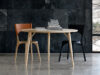
Branchmark Table Collection by Gert Wingårdh & Sara Helder for Zanat
Branchmark Table Collection BRANCHMARK (O) TABLE Branchmark (O) is the round version of Branchmark (4). …

Boa by Gert Wingårdh & Sara Helder – Örsjö
New releases include architect Gert Wingårdh’s Boa, a funnel-shaped floor lamp, uplighter and pendant lamp …
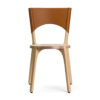
Café Tattoo Chair by Gert Wingårdh & Sara Helder for Zanat
Café Tattoo chair, designed by Gert Wingårdh & Sara Helder, is a charming, minimalist, and …

Wingårdh Architects and Ingegerd Råman launch a lighting collection for Örsjö
It all began as a joint project but culminated in two interrelated collections. Wingårdh chose …

Forms modenummer + boken Åtta projekt av Gert Wingårdh
Välkommen till tidskriften Forms releasefest för årets Modenummer, Form 4 /2018. Ur innehållet: opublicerade bilder …
Snapshots – Stockholm Furniture Fair & Northern Light Fair 2018
Snapshots – Stockholm Furniture Fair & Northern Light Fair 2018 Photo: Ola Marton & Maximilian …

Soundwave® Wicker by Gert Wingårdh & Erik Wikerstål for Offecct
Soundwave® Wicker, the prized and celebrated architects Gert Wingårdh and Erik Wikerstål have given the …
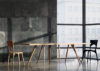
Branchmark (8) Table by Gert Wingårdh & Sara Helder for Zanat
In Branchmark (8) the dance of legs is created to celebrate the joy of vertical …

Hello! – Anatomy of Communication @ Stockholm Furniture & Light Fair 2013
Den 5 februari inleds den sista upplagan av Hello! på Stockholm Furniture & Light Fair. …

Klart för Wingårdhs Himmelstrappa på Österlen
Klart för Wingårdhs Himmelstrappa på Österlen arkitektur. 14 december, 2012 – 14:50 Förra året överklagade …

3DaysofDesign 2012 @ Pakhus 48
The 6-8th of June we welcome you here in Pakhus 48 to discover the novelties …
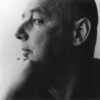
Gert Wingårdh – Eleven Houses Reflections on Architecture
Portrait Gert Wingårdh. Photo: Hans Gedda Golf course, Öijared. Photo: Stefan Hallberg Citadellbadet. Photo: Åke …