
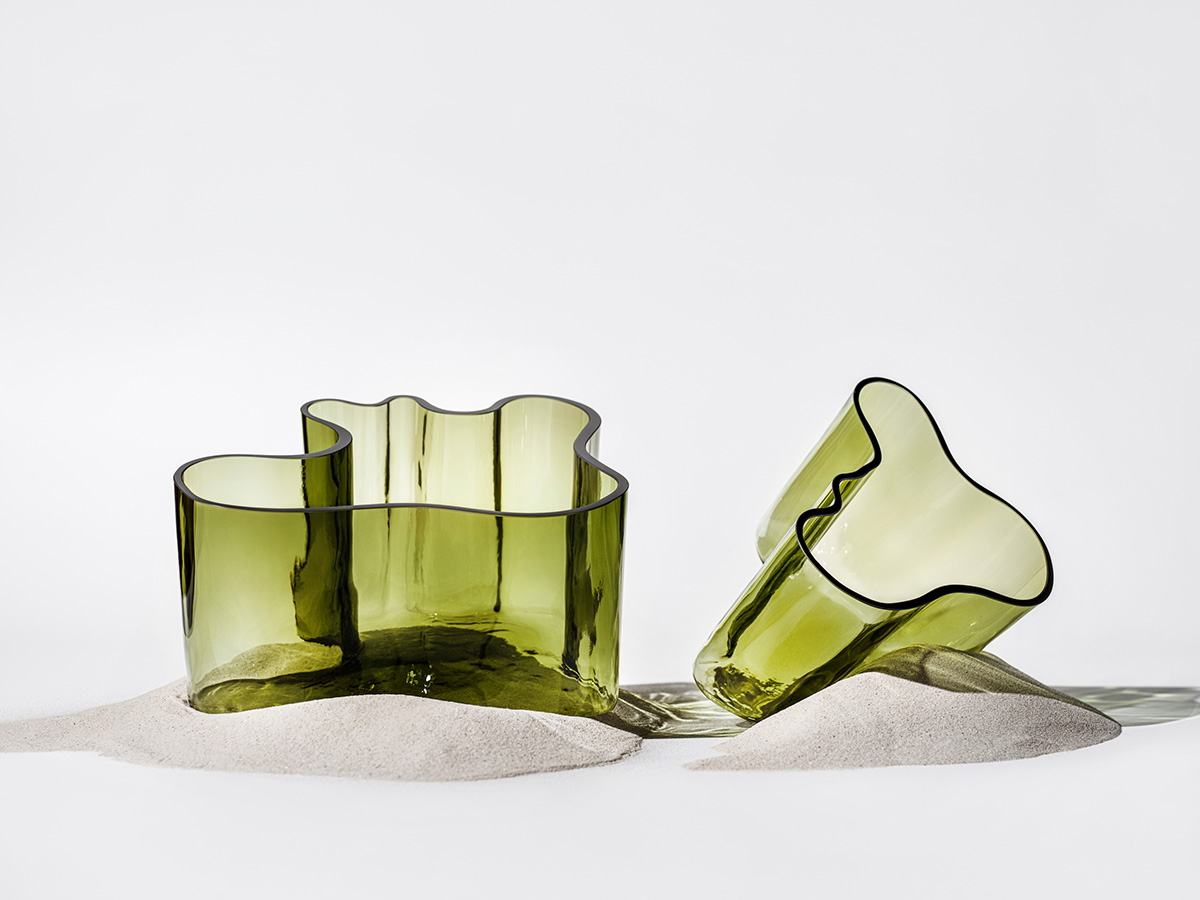
Since the founding of Iittala Glassworks in 1881, Iittala has been synonymous with expertise in glass manufacturing. Now, two unique Aalto vases are being launched in limited, numbered editions. The vases, available from September 9, are made from local sand from Finland, which gives the vases a beautiful natural green color without any added dyes. These special editions are a tribute to the Finnish glass craft tradition and reflect how Iittala draws inspiration from Finland’s nature. The vases are manufactured at Iittala Glassworks in Finland and are blown in wooden molds, hand-carved by the skilled carpenters at the glassworks.
At the heart of Iittala is a deep commitment to craftsmanship, innovation, and the exploration of glass as an artistic medium. Iittala’s glass, known for its exceptional quality and extensive color palette, embodies the brand’s commitment to pushing boundaries while preserving its rich heritage.
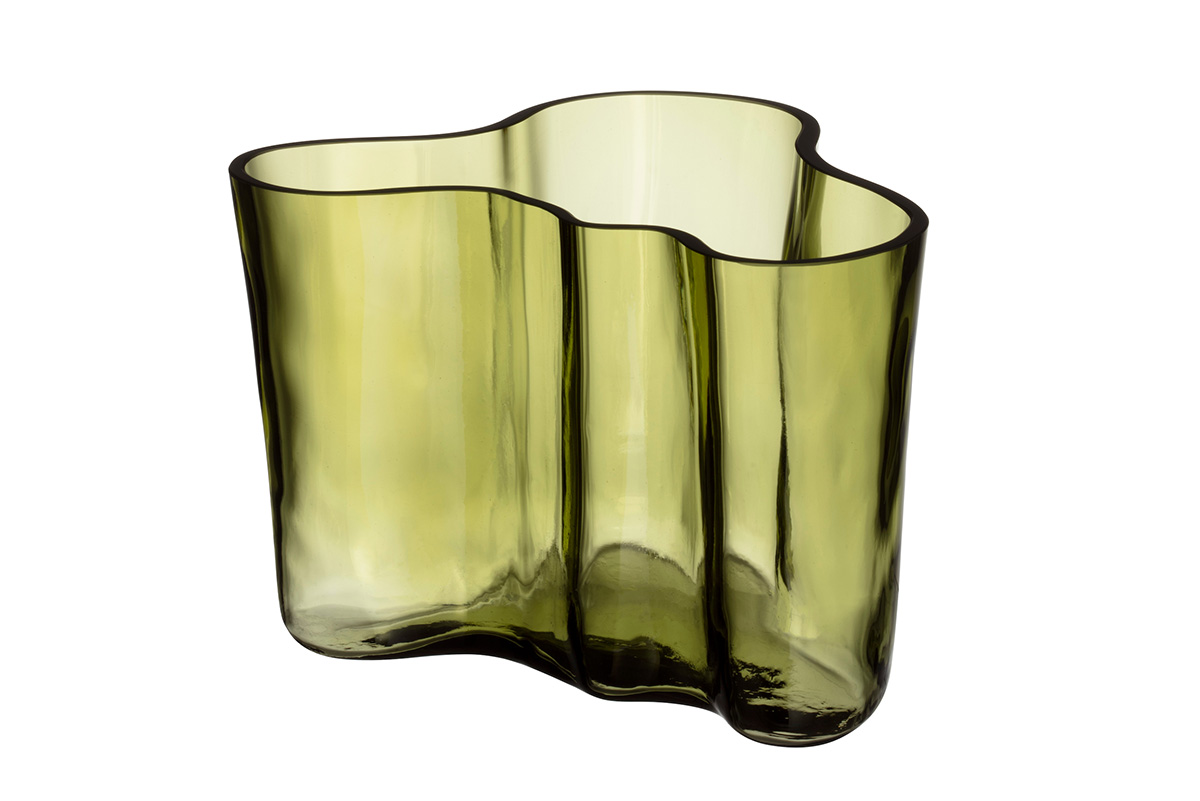
In September, Iittala is launching two unique Aalto vases, designed by Alvar Aalto in 1937, in limited, numbered editions made from local sand from Finland.
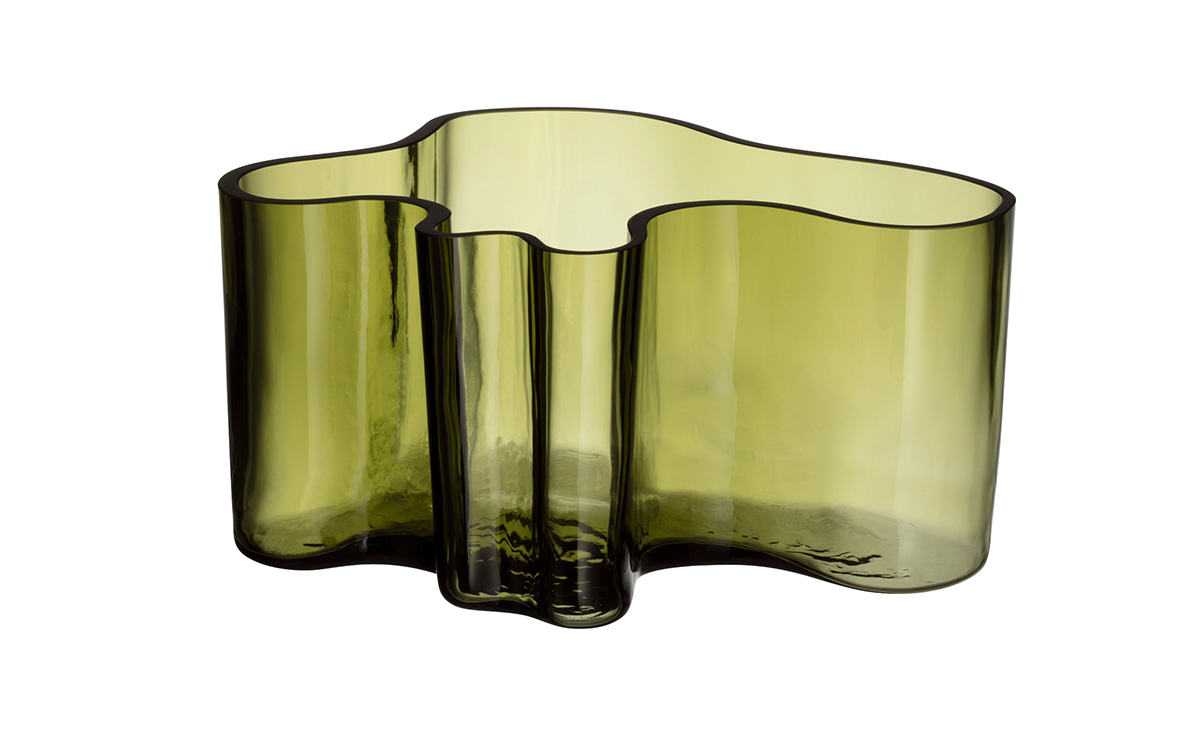
The limited editions are available in two different versions: the classic Aalto shape at 140 mm and a wider form at 145 mm. Both versions were part of Aalto’s original glass collection from 1937. The 140 mm vase was originally produced from 1937 until the early 1960s, and the 145 mm vase was produced during the 1930s and 1940s. Both have since been manufactured in certain special editions. The 140 mm vase is limited to 1000 pieces, while the 145 mm vase is an exclusive edition available in only 100 pieces. All vases are individually numbered.
The Chemistry of Colors
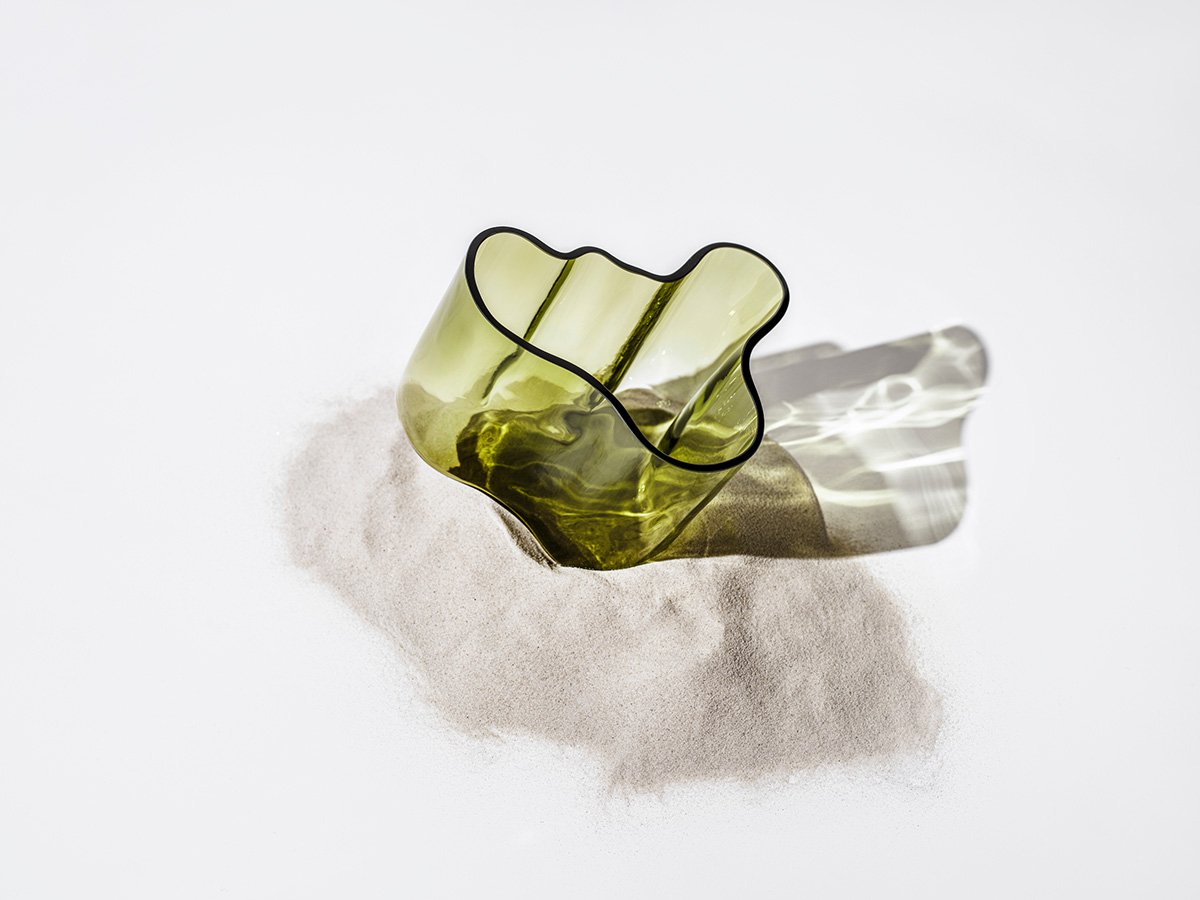
Iittala Glassworks has its own chemists who specialize in glass. Different colors of glass are achieved by adding various metal oxides and compounds during the manufacturing process. For example, cobalt gives blue glass, while selenium provides pink and dark orange shades. In the past, even gold was used to create deep red glass, which, of course, made it very valuable. Gold is no longer used in today’s production of red glass. Iittala usually buys its glass sand from Belgium due to its high purity, which is crucial for producing clear glass free from impurities that can alter the color and clarity. The use of Finnish sand in these special Aalto vases results in a unique green color, thanks to the natural iron content in the sand. The shades vary from light and muted to deep and rich green, depending on the sand batch.
A Tribute to Finnish Glass Craft
Each Aalto Finnish sand edition vase is mouth-blown in a traditional wooden mold, hand-carved by carpenters at Iittala Glassworks. Wooden molds give glass objects a lively surface and a unique finish that cannot be achieved in any other way. Wooden molds were used up until the 1950s but have since been reserved for special editions. Each time the hot glass mass touches the surface of the wooden mold, the shape changes slightly, limiting the number of objects that can be made with a single mold. This traditional method contrasts with metal molds, where the glass cools in the mold. With a wooden mold, the object is lifted out of the mold and blown again several times to gradually cool the glass mass while retaining the object’s shape.
“The use of Finnish sand gives the Aalto vase a unique character. Combined with traditional wooden molds and expert glassblowing skills, these limited edition objects become true works of art. The naturally green hue of the vases, a surprise created by the sand’s composition, is enchanting. There’s something magical about it, just like with glass as a material and the art of glassblowing itself,” says Janni Vepsäläinen, Creative Director at Iittala.

Pioneer in Finnish Design
Alvar Aalto (1898-1976) is a true master of modern architecture and design. Aalto began making his mark in design shortly after graduating from the Helsinki Polytechnic School of Architecture in 1921. In 1924, Aalto married fellow architect Aino Marsio, and together they created a partnership that gave rise to an international design legacy. During his long and successful career, Aalto designed large public buildings, including concert halls, museums, universities, libraries, and private homes worldwide. Aalto’s design of furniture and household items was an organic result of his architectural work.
Nature, Function, and Beauty
Aalto’s unique aesthetics helped define Finnish design and introduce it to a global audience. Aalto’s designs are characterized by a harmonious relationship with nature, functionality combined with beauty, great attention to detail, and innovative use of materials. Aalto’s designs were exhibited internationally as early as 1937, including at the Museum of Modern Art in New York, where Iittala’s Aalto vase is part of the permanent collection. In 1936, Alvar Aalto’s series of glass vases won first prize in the Karhula-Iittala Glass Design Competition. The simple yet dynamically flowing design was revolutionary compared to the highly decorative objects of the time – ideal for flower arrangements but also a sculptural object in itself, fascinating the viewer through the way light reflects in the glass. When the vase collection was first showcased at the World Exhibition in Paris in 1937, it became an immediate global sensation. Today, the iconic vase is one of the world’s most famous glass objects and a beloved masterpiece from Iittala. Each vase in the Alvar Aalto collection continues to be mouth-blown at Iittala Glassworks in Finland. The collection is a cornerstone of modern Finnish design and Iittala’s most iconic series. The 140 mm vase will be available in Iittala’s own stores and web shop, and the 145 mm vase will be available in Iittala’s flagship stores (Iittala Esplanadi, Iittala Design Centre, and Iittala Outlet in Iittala Village in Finland, as well as Iittala Omotesando in Tokyo, Japan) and in Iittala’s web shop from September 9, 2024.
More from Alvar Aalto:

Exhibition Architecture of Light @ Alvar Aalto Museum
Architecture of Light 22/11 2026 – 14/3 2027 The darkest time of the year is …

Artek presents Zebra – a classic textile in a new colourway
A softer interpretation broadens the textile’s appeal across upholstered furniture and lifestyle accessories. In Autumn …

Alvar Aalto Week 2026
Alvar Aalto Week is to take place in Oulu, European Capital of Culture 2026, on …

Paul Smith and Artek release a third limited-edition Stool 60
Artek Reimagined by Paul Smith, Edition 3 is out now Artek reimagined by Paul Smith …

Paimio Sanatorium becomes a UNESCO World Heritage Site
Paimio Sanatorium has been inscribed on the UNESCO World Heritage List as part of the …

Snøhetta reveals new masterplan for Paimio Sanatorium
As part of a new future vision for Aino and Alvar Aalto’s iconic masterpiece in …
All design & news from Alvar Aalto: Bending Wood into Modernism →