
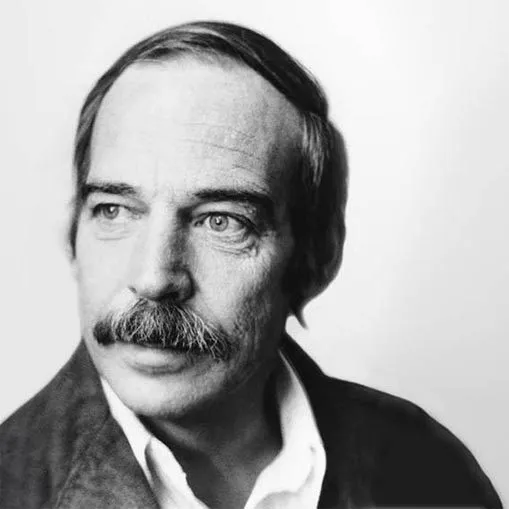
Poul Kjærholm (1929–1980) occupies a singular position in twentieth-century furniture design. Where his Danish contemporaries — Hans Wegner, Børge Mogensen, Finn Juhl — worked primarily in wood, Kjærholm committed to steel. His furniture, produced in collaboration with manufacturer E. Kold Christensen and later Fritz Hansen, represents a sustained inquiry into minimal form, industrial materials and the possibility of mass production without compromise in quality.
Training and Early Formation
Kjærholm trained as a cabinetmaker before studying furniture design at the School of Arts and Crafts in Copenhagen, graduating in 1952. This dual foundation — workshop craft and formal design education — shaped his approach. He understood joinery, material behaviour and structural logic from direct making experience, but applied that knowledge to materials outside the Danish craft tradition. His graduation project, the PK0 chair in steel and flag halyard, established the trajectory: refined geometry, industrial materials, meticulous detailing.
The PK Series — A Systematic Exploration
Kjærholm’s furniture is designated by the prefix ‘PK’ followed by a chronological number. This nomenclature system, adopted by E. Kold Christensen, reinforces the systematic nature of his practice. Each piece builds on preceding work, refining proportions, testing material combinations, pursuing ever-greater formal reduction. The PK22 easy chair (1956), PK24 chaise longue (1965) and PK80 daybed (1957) represent the series at its most realised — furniture that achieves structural and visual clarity through precisely calibrated relationships between steel frames and leather or cane surfaces.
The PK22, in particular, established Kjærholm’s international reputation. Its chromed steel frame supports a woven leather seat and back, the construction wholly visible and legible. The chair demonstrates how industrial fabrication — welding, chrome plating, precision metalwork — can produce an object as considered in its details as any piece of traditional cabinetry. It remains in continuous production and is held in museum collections internationally.
Material as Discipline
Kjærholm’s insistence on steel was both aesthetic and philosophical. He argued that steel was as noble a material as wood — that its precision, strength and visual lightness offered expressive possibilities equal to any natural material. This position required him to develop manufacturing relationships capable of executing his designs to the tolerances he demanded. E. Kold Christensen, a Copenhagen-based manufacturer, became his primary collaborator from the mid-1950s until the company’s closure in 1982. The partnership between designer and maker was essential: Kjærholm’s furniture depends on exact dimensions, flawless chrome plating and meticulous assembly. Production shortcuts were incompatible with the work.
His material palette was deliberately restricted: chromed or stainless steel for frames, leather (woven or upholstered) for surfaces, occasionally marble or glass for table tops, cane for specific chair models. This restraint focused attention on proportion, line and the relationship between supporting structure and supported surface. The effect is furniture that reads as a series of controlled tensions — the compression of leather against steel, the cantilever of a tabletop over its base, the visual lightness of a frame that is structurally more than adequate for its load.
Relationship with Manufacturers
Kjærholm’s career was shaped by his production partnerships. E. Kold Christensen manufactured the majority of his designs from the 1950s through the early 1980s, operating at a scale that allowed for careful quality control. Following the company’s closure, Fritz Hansen acquired the rights to Kjærholm’s work and resumed production of selected pieces in 1982. This transition represented a shift from a smaller specialist workshop to a larger industrial manufacturer, raising questions about how Kjærholm’s exacting standards could be maintained at greater scale. Fritz Hansen’s approach — treating the PK collection as a prestige line within their catalogue, maintaining tooling and training craftspeople specifically for the work — has proved successful in sustaining the designs in production while preserving their character.
Teaching and Influence
From 1959 until his death, Kjærholm taught at the Royal Danish Academy of Fine Arts, School of Architecture. His position there gave him sustained contact with successive generations of Danish architects and designers. His influence extended through built example and through pedagogical approach — an insistence on rigour, on understanding materials through direct engagement, on refusing compromise between industrial production and design quality. Students absorbed these principles whether or not they followed him into steel furniture. The effect was a general raising of standards, a resistance to decoration-as-compensation-for-weak-form, and a belief that modern materials deserved the same level of consideration as traditional ones.
Legacy and Continued Production
Kjærholm died in 1980, aged 50, leaving a body of work that amounts to fewer than fifty furniture designs. This relatively small output — particularly when set against contemporaries who designed prolifically — reflects the deliberative nature of his practice. Each piece was thoroughly considered, prototyped, refined. Many went through multiple iterations before production. The result is a collection without weak entries, without obvious stylistic shifts, without concessions to fashion.
The PK furniture remains in production through Fritz Hansen and continues to find placement in residential, institutional and commercial interiors internationally. Vintage examples, particularly those from the E. Kold Christensen period, command substantial prices at auction and through specialist dealers. This market recognition reflects more than scarcity — it acknowledges that Kjærholm succeeded in his stated aim of making furniture that could stand alongside the best work in wood while pursuing an entirely different material logic.
More design from Poul Kjærholm:

Poul Kjærholm Born This Day 1929: Pioneer of Steel in Danish Design
Born on 8 January 1929, Poul Kjærholm is known for his precise, material-driven approach to …

Poul Kjærholm’s PK1 chair and PK52 desk | Carl Hansen & Søn
Two times 70 years Poul Kjærholm’s iconic PK1 chair and PK52 desk are turning 70 …
PK23 lounge chair by Poul Kjærholm
Introducing the front-upholstered PK23™ lounge chair by Poul Kjærholm an homage to the early career …
PK3, a previously unrealised by Poul Kjærholm | Fritz Hansen
Fritz Hansen Unveils Lost Poul Kjærholm PK3 Chair from 1954 Fritz Hansen proudly introduces the …
Poul Kjærholm’s PK54™ dining table in a new height
Iconic Design Meets Modern Functionality Fritz Hansen now presents Poul Kjærholm’s legendary PK54™ dining table …
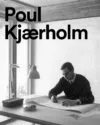
Born 8th January 1929, Danish designer Poul Kjærholm referred to himself as a “furniture architect”
CLEAR, SIMPLE AND ELEGANT Born 8th January 1929, Danish designer Poul Kjærholm referred to himself …

PK23™ lounge chair design by Poul Kjærholm for Fritz Hansen
A VISION BROUGHT TO LIFE Fritz Hansen is pleased to announce the launch of the …
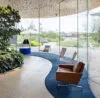
PK23 armchair from Poul Kjærholm by Fritz Hansen
In a dedicated area, the spotlight was turned on the masterpieces of Poul Kjærholm – …
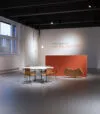
Poul Kjærholm, Natural Simplicity @ Dansk Møbelkunst Gallery
We are very pleased to present our current Gallery exhibition Poul Kjærholm (1929-1980) was born …
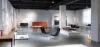
Poul Kjaerholm exhibition Natural Simplicity @ Dansk Møbelkunst Gallery
17 NOVEMBER – 20 DECEMBER 2023 Poul Kjærholm (1929-1980) was born in Øster Vrå, a …
Fritz Hansen Presents Poul Kjærholm’s PK15 Chair: A Woodworking Masterpiece
Fritz Hansen is proud to introduce the PK15 chair by Poul Kjærholm, the last chair …
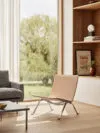
Poul Kjærholm’s Masterpieces PK22 and PK33 Return in Exclusive Fritz Hansen Edition
PK22 & PK33 SPECIAL EDITION The PK22™ chair exemplifies Poul Kjærholm’s vision for the ideal …
PK1 scaled up by 6% by Poul Kjærholm – Carl Hansen & Søn
PK1 is available in steel and woven paper cord and scaled up by 6% by …

Fauske marble tabletops for Kjærholm collection – Fritz Hansen
Fritz Hansen is pleased to introduce Fauske marble as a new material option for the …

PK4™ – a modern and relaxed lounge chair by Poul Kjærholm – Fritz Hansen
PK4™ – LAIDBACK LOUNGING This spring, Fritz Hansen is pleased to present the PK4, completing …

Fritz Hansen Anniversary Collection Forever New
How do you introduce something that needs no introduction? To commemorate Fritz Hansen’s first 150 …
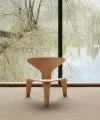
PK0 A™ Chair by Poul Kjærholm for Fritz Hansen
Poul Kjærholm’s one-of-a-kind PK0 chair was designed in 1952, at the very beginning of the …
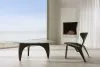
PK60 Coffee Table by Poul Kjærholm for Fritz Hansen
A work of applied art, decorative and functional, Poul Kjærholm’s PK60™ is a significant piece …
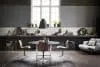
PK54™ new marble – Fritz Hansen
MAJESTIC MARBLES The PK54™ dining table and the PK61™ coffee table are among the most …
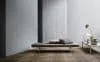
PK80™ Daybed by Poul Kjærholm celebrates its 60th anniversary
Poul Kjærholm’s sculptural PK80™ Daybed celebrates its 60th anniversary One of the most iconic furniture …
The Legends of Danish Design @ Pushkin State Museum
Legends of Danish design 12.04.2017 – 11.06.2017 On April 12, 2017 “The Legends of Danish …
PK22 by Poul Kjærholm – Fritz Hansen
POUL KJÆRHOLM The man behind masterpieces like the PK22™ had a fascination for steel and …
Fritz Hansen — 144 Years of Danish Design, 1872 to 2016
The History of Fritz Hansen: From Craft Workshop to Design Legend Fritz Hansen was founded …

The Danish Chair @ Design Museum Danmark
The Danish Chair is a wunderkammer of chairs. In the exhibition, Designmuseum Danmark tells the …
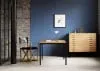
Poul Kjærholm’s 1955 table designs to be rereleased by Carl Hansen & Søn
POUL KJÆRHOLM’S ICONIC TABLE SERIES Salone del Mobile Milano 2016: Poul Kjærholm’s thoughtfully crafted tables, …
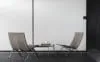
Celebrating the Master of ”Less is More” – Poul Kjærholm
Two of modernism’s most iconic pieces of furniture – the PK22™ lounge chair and the …
Poul Kjaerholm @ Jacksons Berlin – 30/4–30/7 2016
Jacksons Berlin is pleased to announce our 2016 Summer Exhibition, showcasing works by Danish furniture …

PK80 and PK91 in limited edition with Kvadrat/Raf Simons
Fritz Hansen launches fashionable, limited editions from the Poul Kjærholm Collection with Kvadrat/Raf Simons upholstery …
PK80 & PK33 in Canvas design by Poul Kjærholm – Fritz Hansen
Introducing PK80 and PK33 in Canvas For the first time, Fritz Hansen now introduces the …

Poul Kjaerholm – Danish Furniture Designer and Minimalist Pioneer
Poul Kjærholm (1929–1980) occupies a singular position in twentieth-century furniture design. Where his Danish contemporaries …
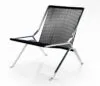
PK25 as a special version in black halyard by Poul Kjærholm – Fritz Hansen
Poul Kjærholm’s furniture design has a special place in Fritz Hansen’s heart Fritz Hansen now …
Bruno Mathsson Prize 1996 awarded to Ejnar Pedersen
Bruno Mathsson Prize 1996 to Ejnar Pedersen This year’s Bruno Mathsson Prize goes to one …