
Seven Decades of Form, Function and Material Excellence
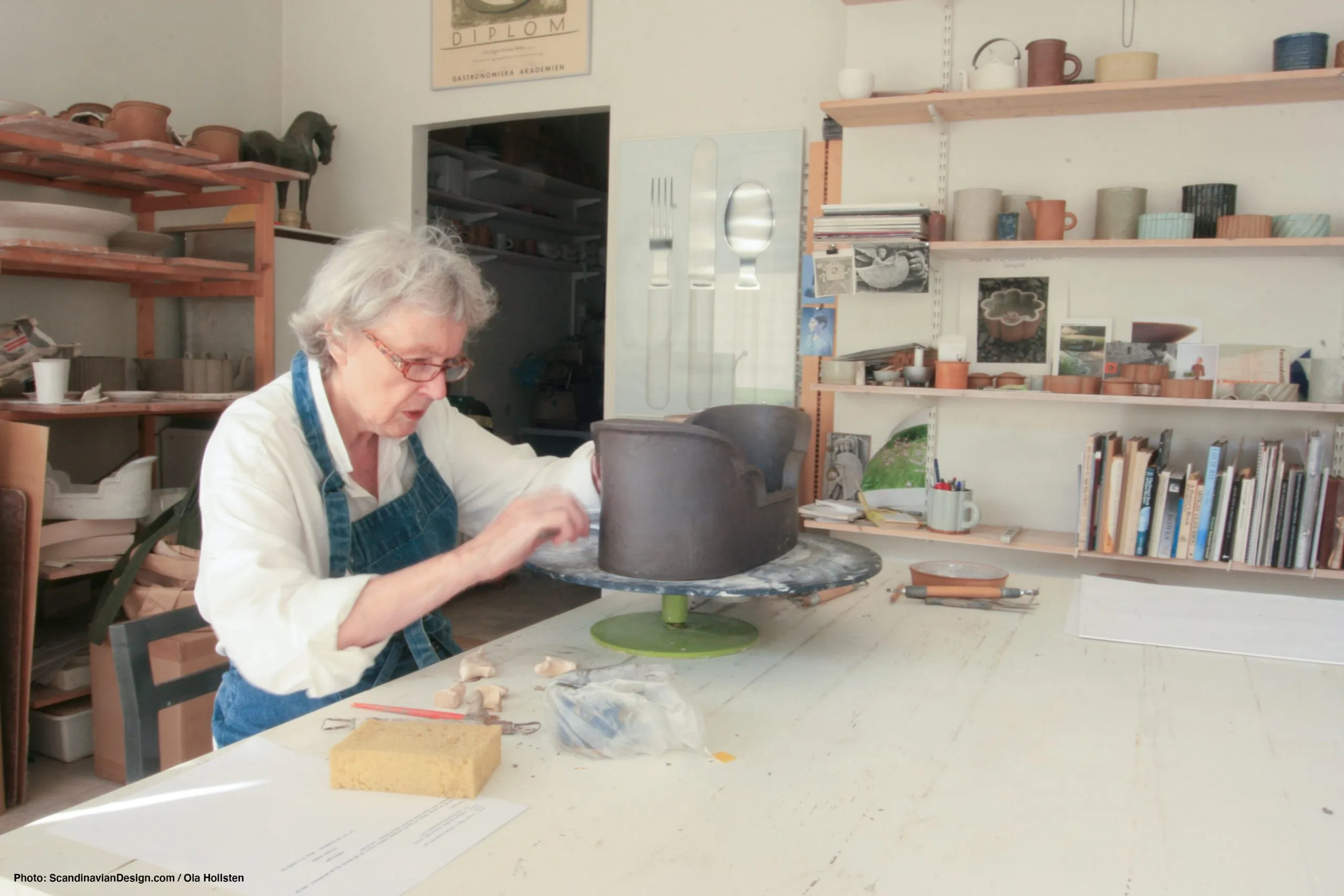
Signe Persson-Melin (1925–2022) was a Swedish ceramic and glass designer whose career spanned seven decades and whose work exemplified the Swedish design tradition of merging functional clarity with sculptural form.
Working primarily with Boda Nova, Kosta Boda and other Swedish manufacturers from the 1950s onward, she created tableware, vessels and decorative objects that demonstrated how everyday domestic items could achieve aesthetic refinement without compromising utility.
Her designs — characterised by clean lines, restrained ornament and careful attention to how objects perform in daily use — represent sustained engagement with functionalist principles applied through deep material understanding and craft knowledge.
Formation and Craft Foundation
Persson-Melin was born in 1925 and received her design education during the 1940s, a formative period for Swedish design when functionalism was establishing itself as the dominant approach to domestic objects. Her training emphasised both conceptual design skills and direct material engagement — students learned to throw clay, understand glaze chemistry, work with kilns and finishing processes. This dual foundation — design thinking combined with workshop craft — characterised Swedish design education and distinguished it from more academically oriented programmes elsewhere.
Following her education, Persson-Melin established herself within Sweden’s ceramic industry, working with manufacturers who were seeking designers capable of creating tableware appropriate to postwar Swedish domestic life. The period demanded practical, durable, affordable items suitable for smaller apartments and everyday use rather than formal occasions. This context shaped her design approach: forms needed to stack efficiently, survive dishwashing, function across multiple uses, and remain visually coherent when combined with other tableware. These constraints — far from limiting creativity — focused attention on proportion, ergonomics and material behaviour.
Boda Nova and Functionalist Tableware
Persson-Melin’s longest and most productive collaboration was with Boda Nova, the tableware division of Swedish glass manufacturer Kosta Boda. The partnership, which extended over several decades, resulted in numerous tableware collections that achieved both commercial success and design recognition. Her work for Boda Nova demonstrates systematic exploration of how ceramic and glass vessels could serve practical dining needs while maintaining formal clarity and visual interest.
Her tableware designs prioritise functional performance: plates with rim profiles that facilitate stacking, bowls with bases stable enough for mixing, cups with handle sizes and angles suited to comfortable grip. These practical considerations are integrated with formal decisions about proportion, surface treatment and visual rhythm when pieces are arranged together. The result is tableware that functions reliably in daily use while creating coherent visual environments on tables and in storage.
This functional orientation reflected broader Swedish design philosophy — the conviction that everyday objects deserved as much design attention as luxury items, that mass production could maintain quality standards, and that good design was measured by sustained utility rather than novelty. Persson-Melin’s Boda Nova collections embody these principles: they were designed for serial production, priced for middle-class households, and intended for daily rather than occasional use.
Material Exploration Across Ceramic and Glass
While ceramic design formed the core of Persson-Melin’s practice, she also worked extensively in glass, exploring how the material’s particular properties — transparency, refraction, weight, surface finish — created different design possibilities than ceramic. Her glass work for Kosta Boda demonstrates understanding of how glass behaves when molten, how it can be blown, pressed or cast, and how its optical qualities can be exploited through form and surface treatment.
The shift between materials required different technical knowledge and design approaches. Ceramic allows for precise formal control during throwing or moulding, accepts surface decoration through glazes or slips, and develops character through firing processes. Glass demands different handling — working with molten material’s viscosity, understanding how forms cool and potentially crack, controlling bubbles and optical effects. Persson-Melin’s ability to work across both materials demonstrated versatility and technical range unusual even among Scandinavian designers known for material expertise.
Her designs in both materials share formal characteristics: geometric clarity, restrained ornament, proportions calibrated to use. Whether designing a ceramic bowl or glass vase, she pursued similar principles — forms reduced to essential elements, surfaces that revealed material qualities, objects scaled to domestic contexts. This consistency across materials reflected a design approach grounded in underlying principles rather than in material-specific techniques.
Domestic Scale and Everyday Use
Persson-Melin’s practice focused almost exclusively on domestic-scale objects — tableware, serving vessels, vases, bowls — intended for household use rather than institutional contexts or purely decorative purposes. This domestic orientation positioned her work within Swedish design’s democratic tradition: creating well-designed objects accessible to ordinary households rather than pursuing luxury markets or artistic expression disconnected from utility.
Her designs demonstrate sustained attention to how objects perform in actual use: how a pitcher pours, how a bowl feels when held, how plates nest in cupboards, how glasses balance weight and capacity. These performance criteria shaped formal decisions as much as aesthetic preferences. A handle’s curve resulted from ergonomic testing as well as visual judgment; a vessel’s wall thickness balanced weight, durability and heat retention; surface finishes needed to withstand repeated washing without degradation.
This user-centred approach distinguished Persson-Melin from contemporaries who emphasised formal experimentation or artistic expression. Her work rarely pursues novelty for its own sake or explores form independently of function. Instead, it demonstrates how careful attention to use conditions, combined with refined formal sense and material understanding, could produce objects that served daily needs while achieving aesthetic quality that rewarded sustained engagement.
Recognition and Continued Production
Persson-Melin received recognition through professional awards, museum acquisitions and sustained commercial success of her designs. Her work entered collections including the National Museum in Stockholm and other institutions documenting Swedish design history. More significantly, many of her tableware designs remained in production for decades — some pieces continuing manufacture forty or fifty years after initial introduction. This commercial longevity reflected both sound design decisions that transcended fashion and manufacturers’ recognition that her work maintained market relevance across changing tastes.
The sustained production of her designs — relatively unusual in an industry characterised by seasonal collections and frequent style changes — validated her functionalist approach. Tableware that served practical needs well, that was proportioned for comfortable use, that could be manufactured consistently and affordably, proved more durable commercially than designs pursuing formal novelty or stylistic trends. Persson-Melin’s career thus demonstrated that design quality measured through utility and longevity could achieve commercial success equal to or exceeding more fashion-oriented production.
Legacy and Swedish Design Continuity
Persson-Melin died in 2022 at age 97, having sustained design activity across seven decades. Her longevity allowed her to witness not only the peak of Swedish functionalist design in the postwar period but its evolution, challenges from alternative approaches, and eventual revalidation as subsequent generations rediscovered mid-century Scandinavian design principles. Her work provided continuity with founding figures of Swedish functionalism while remaining actively engaged with changing production technologies and market conditions.
Her contribution to Swedish ceramic and glass design operates through accumulated example rather than dramatic innovation. She did not revolutionise materials, invent new production methods or establish radically different formal languages. Instead, she demonstrated sustained excellence within established parameters — functionalist principles, material honesty, attention to utility — proving that disciplined work within constraints could produce designs of enduring value. This approach, characteristic of Swedish design culture more broadly, positioned quality as emerging through refinement and accumulated knowledge rather than through rupture or novelty.
Contemporary Swedish designers working in ceramic and glass continue to engage with principles Persson-Melin exemplified: material understanding, functional performance, formal restraint, democratic accessibility. Her work remains referenced as demonstrating how these principles can be applied successfully across changing contexts, maintaining relevance through sustained attention to fundamental design concerns rather than through adaptation to fashion. This legacy — less about specific forms than about design approach and professional commitment — establishes Persson-Melin as a foundational figure whose practice modelled how serious design engagement with everyday objects could constitute a complete and valuable career.
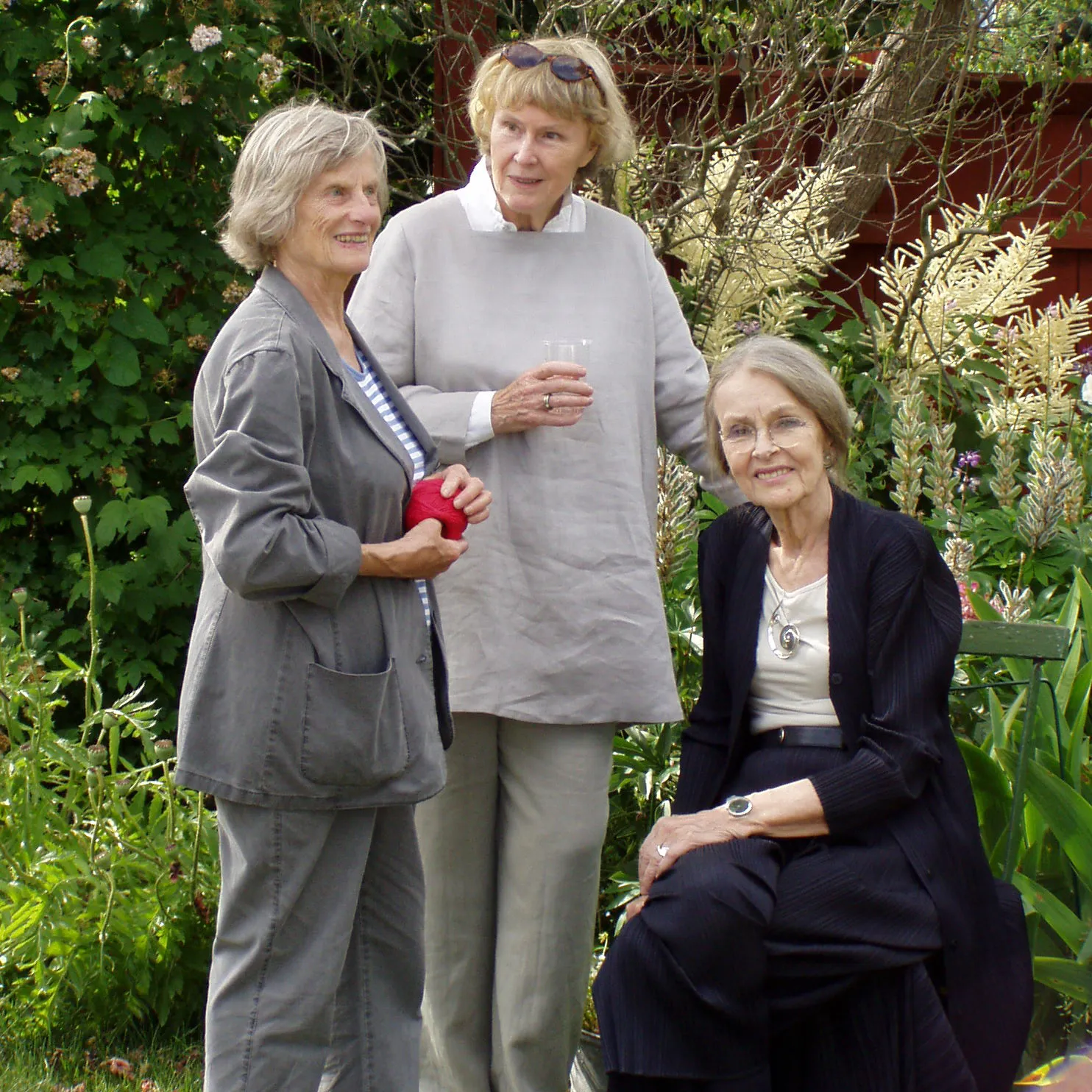
Top image:
Textile designers Ulla Kandell, Signe Persson-Melin and Jewelery artist/silversmith Vivianna Torun Bülow-Hübe.
Photo: Ola Marton, scandinaviandesign.com
More info and design by Signe Persson-Melin:

Celebrating a Century of Design Excellence, Fjällsippa planter honoring Signe Persson-Melin – Byarums Bruk
In honor of what would have been Signe Persson-Melin’s 100th birthday in 2025, we present …
Signe Persson-Melin – Swedish Ceramic and Glass Designer
Seven Decades of Form, Function and Material Excellence Signe Persson-Melin (1925–2022) was a Swedish ceramic …
Signe Persson-Melin 1925 – 2022
Signe Persson-Melin, ceramist, designer and artist, passed away on 31 August 2022 at the age …

Signe Persson-Melin: Things must have charisma! @ Landskrona Art Gallery
3 july – 3 october 2021 Signe Persson-Melin has been one of Sweden’s most influential …

Sigill by Signe Persson-Melin – Byarums Bruk
Sigill – function and beauty with own expression Sigill is a product new designed by …

R.I.P Oiva Toikka 1931 – 2019
Finnish glass artist Oiva Toikka has died at age 87 The designer, whose career spanned …

Signe Persson-Melin @ Vandalorum
SIGNE PERSSON-MELIN Tingen måste ha utstrålning! Utställning i Formladan, 2 juni–21 oktober 2018 Vandalorums stora …

Signe Persson Melin – keramik. 29/8–1/11
29/8–1/11 Signe Persson Melin – keramik Signe Persson Melin är en av våra mest kända …

Palissad design by Signe Persson-Melin – Byarums Bruk
It’s funny when a collaboration results in a product that brings happiness and pride among …

Årets Formbärare 2013 – SPM
ÅRETS FORMBÄRARE 2013 Svensk Form firar sin födelsedag över hela landet genom en gemensam aktion …