

Waves of Courage and Change
The bike shed Våg was born from a site-specific project at the MAX IV research facility in Lund, Sweden. A collaboration between Nola and Snøhetta, where creativity was both method and goal. At the heart of the story is landscape architect Jenny B. Osuldsen, who takes us from the undulating fields of southern Sweden to the rooftop of the Oslo Opera House – and onward into the future of public space.
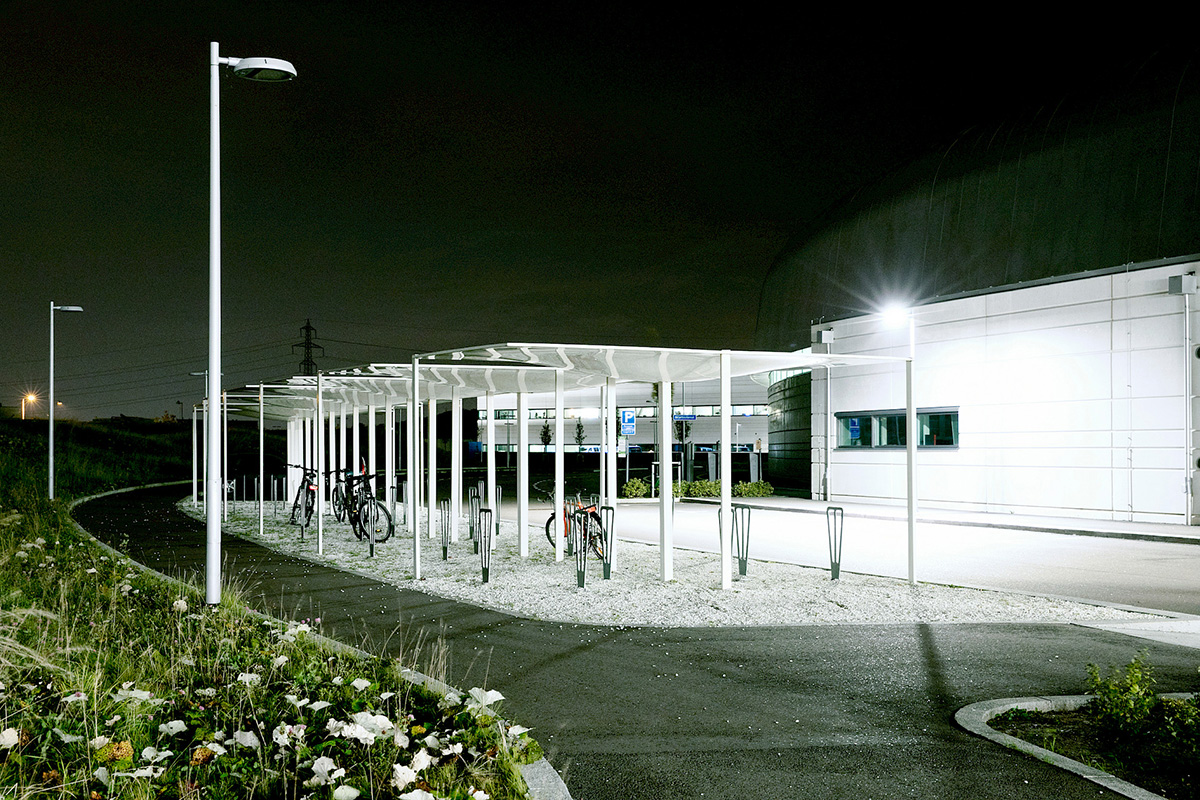
Photo: Tobias Selnaes Markussen
When Snøhetta was commissioned to design the landscape architecture for MAX IV, they faced an unusual but critical challenge: the ground needed to absorb vibrations to protect the sensitive research being conducted below.
To minimize disturbances, including those from nearby traffic on the E22 highway, the team shaped the terrain into large, irregular waves based on measured vibration wavelengths in the ground. The more variation and surface area created, the better the vibrations dispersed and softened. The result was a pattern of wave formations spanning 10–40 meters, designed using parametric principles and carefully adapted to the site’s material balance. Despite the facility’s high-tech function, the landscape offers something else entirely: a sense of calm, a harmonious flow. A seamless integration of form and function.
Inspired by this, the Våg bike shed emerged. “We wanted to take the same wave expression and translate it into a new scale,” says Jenny B. Osuldsen, Professor of Landscape Architecture and Partner at the Norwegian architecture firm Snøhetta.
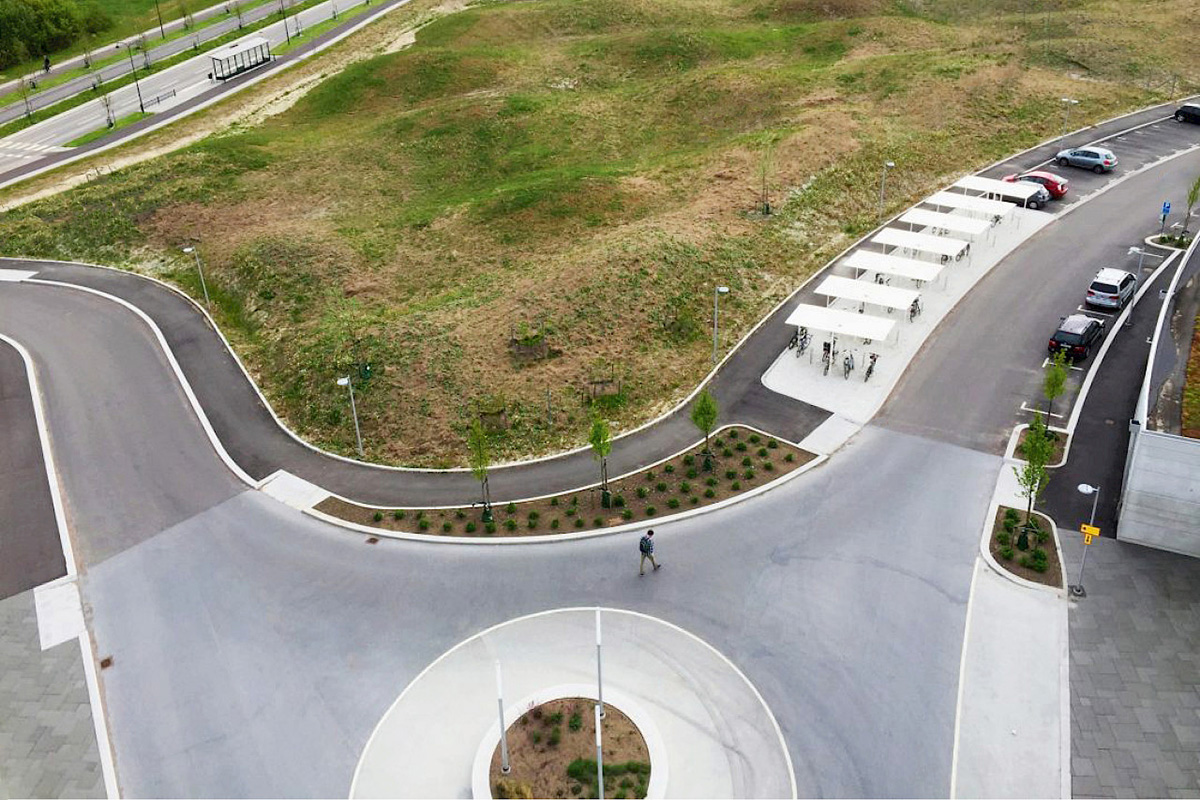
Photo: Tobias Selnaes Markussen
What began as a site-specific solution evolved into something more. Through a close collaboration with Nola, it became possible to transform the idea from a unique installation into a product available to others. The fiberglass shelter was manufactured by a boatbuilder in Bohuslän – a completely new type of assignment that demanded collaboration between material expertise, craftsmanship, and vision.
“Normally, they only build boats. They thought this was a fresh and exciting challenge for both design and production,” Jenny explains. “We could never have shaped it the way we wanted without that partnership.”
Jenny describes the outcome as proof that good design doesn’t have to remain an isolated concept. “We often start from the needs of a place, but when we work with clients who give us the freedom to shape something entirely new, and with companies like Nola, ideas can truly take flight.”
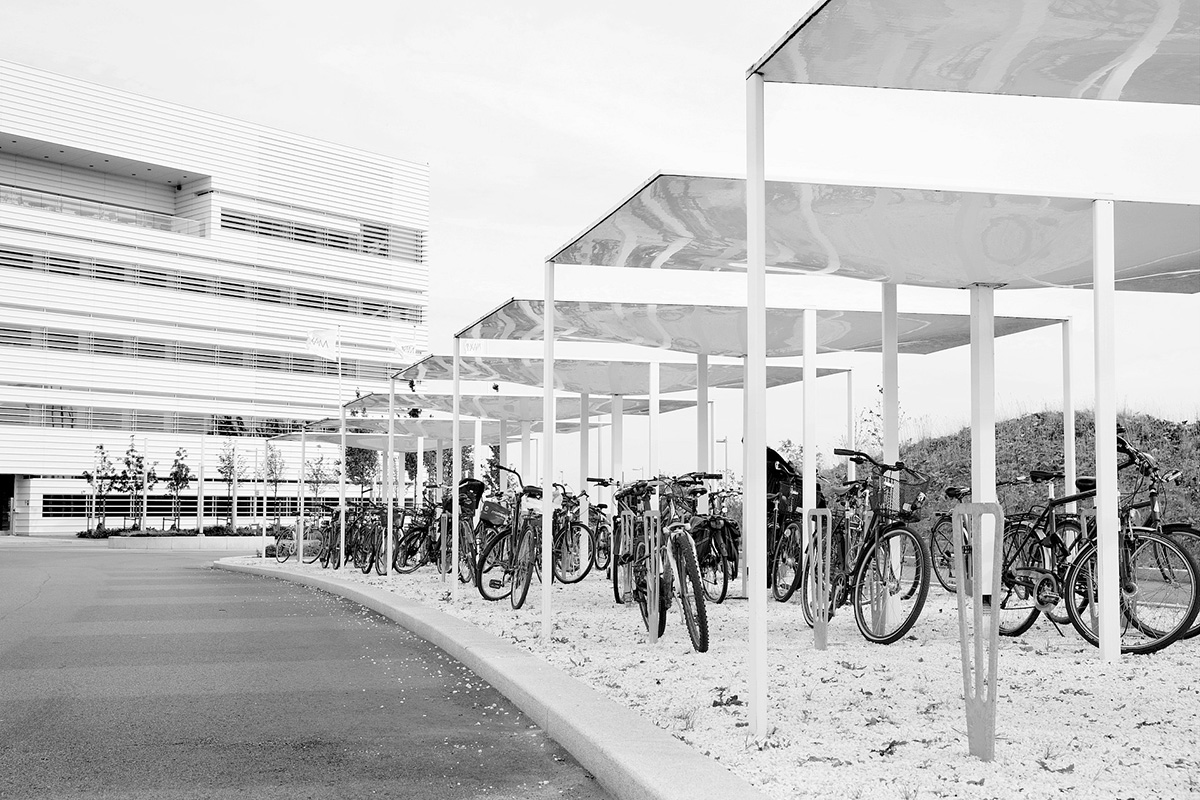
Photo: Tobias Selnaes Markussen
The result is a bike shed that offers more than protection; it carries a story. About the place it grew from. About the will to create something that means more than its function.
In the end, it all comes down to courage. The courage to ask: Do we really need this? The courage to think differently. The courage to look beyond regulations – like when Snøhetta faced the challenge of mandatory contrast markings on the iconic marble roof of the Oslo Opera House. A requirement that would have disrupted the carefully curated monochromatic landscape. Jenny recounts, with a mix of pride and playfulness, how they redefined the stair edges as art. And art, as we know, is not bound by the same rules.
“It took a bit of finesse, but it worked,” Jenny says, smiling. A small anecdote – but one with a big message: design is also negotiation. For Jenny, this is where the real skill of the profession lies – finding ways between regulations, needs, and vision.
The Oslo Opera House rooftop is a clear example: a public space that must be both visually welcoming and accessible without barriers. The same applies to urban furniture, bike sheds, and public spaces everywhere.
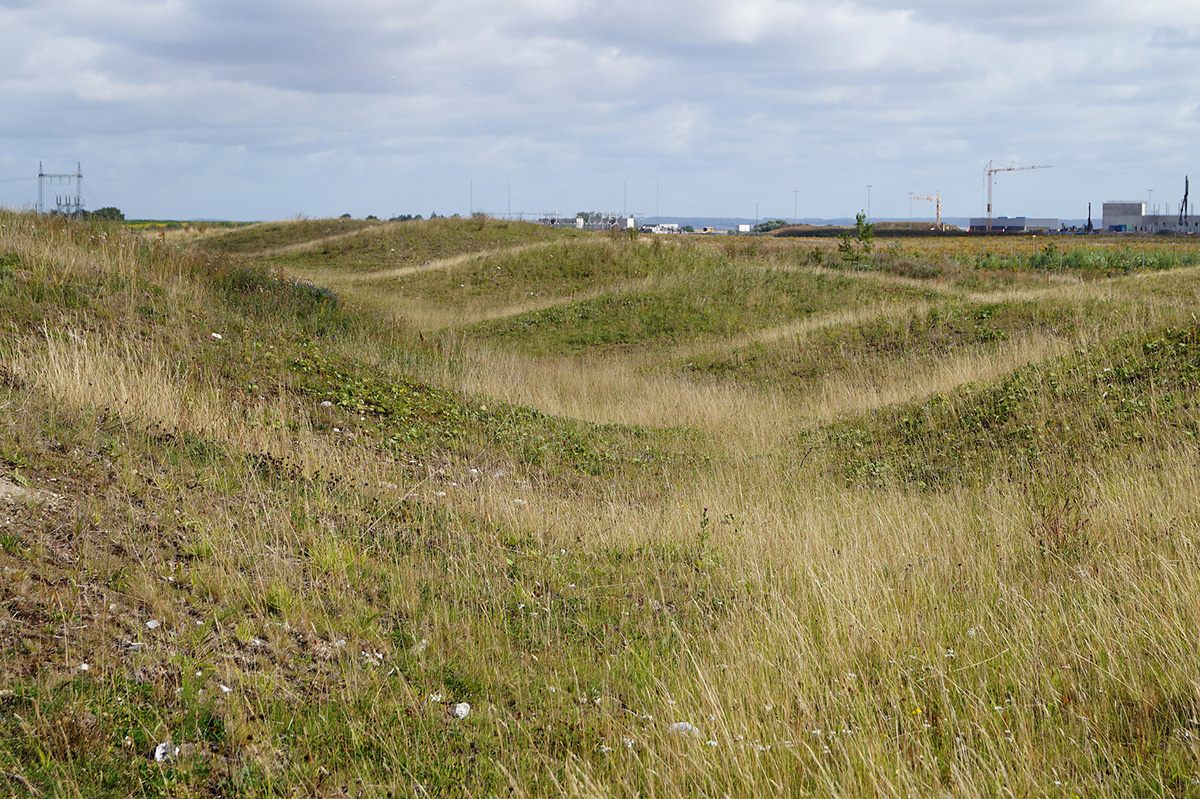
Photo: Cecilia Holm
“We can’t just design things that look good in pictures. They must work in real life, for real people, in environments that can withstand the demands of everyday life in the public realm. Safety, accessibility, and a sense of belonging – these are what define a successful place. And to achieve that, we must create spaces where people feel ownership. When something feels like it belongs to you, you take care of it. That’s when responsibility naturally follows.” Creating such environments demands more than skill – it demands courage. Courage to question habits. Courage to challenge standard solutions. Courage to think anew, even within tight constraints.
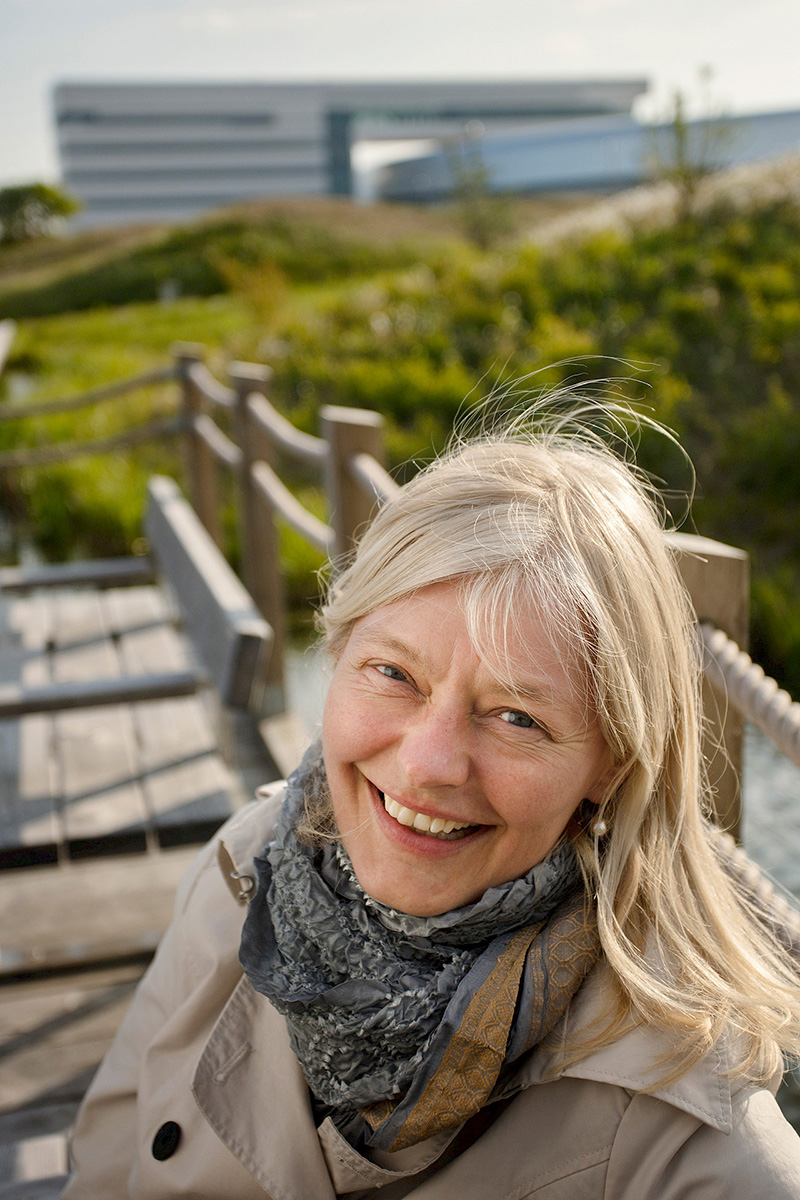
Photo: Mikal Schlosser
“Doing something new always involves risk. But if we don’t dare to change, we won’t be able to improve either,” Jenny concludes. And perhaps that’s exactly what Våg symbolizes. A place, a structure, and a collaboration that show what happens when creativity and courage meet in the public realm.
Topp image photo: Mikal Schlosser

Nola Stockholm
Nola Industrier AB, Box 17701, Repslagargatan 15b, 118 93 Stockholm
T: 08-702 1960, F: 08-702 1962, headoffice@nola.se
Nola Malmö
Nola Industrier AB, Neptunigatan 74, 211 18 Malmö
T: 040-17 11 90, F: 040-12 75 45, offert@nola.se, order@nola.se
More news from Nola:
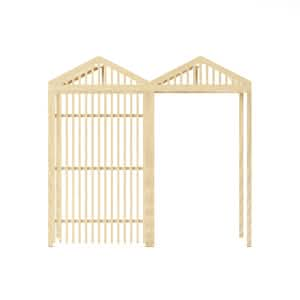
Canopy and Weather Protection design by Pia Kerber for Nola
Imago – New Product! Canopy and Weather Protection Design Pia Kerber Imago is a canopy …
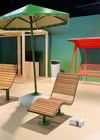
Parco – now with a Sunchairs by Broberg & Ridderstråle for Nola
Parco Sun Lounger – New Product! Sunchair Design Broberg & Ridderstråle The Parco sun …
New wall-top seating River timber seats by Nola in collaboration with S:t Eriks
Together with S:t Eriks, Nola are launching a new wall-top seating solution. The new River timber …

Nola Presents Outdoor Furniture @ Scandinavian Design Embassy
Nola Brings Inclusive Urban Design to Scandinavian Design Embassy in Stockholm During Stockholm Design Days …

Nola and Wihlborgs Create Sustainable Office Terraces at Vista in Hyllie
Vista is a new office building in Hyllie, Malmö — designed to support a work …

Jonas Bohlin’s Bakgård and the Idea of a Public Space Without Noise
In a time marked by noise and visual clutter, Jonas Bohlin sees design as a …