
From Block Lamp to Contemporary Finnish Design Leadership
Harri Koskinen (b. 1970) represents the generation of Finnish designers who inherited mid-century modernist traditions — the material intelligence of Tapio Wirkkala, the systematic thinking of Kaj Franck, the sculptural ambition of Timo Sarpaneva — and adapted those principles to contemporary production contexts and global markets.
His practice, established in the mid-1990s and spanning glass, furniture, lighting and industrial products, demonstrates how Finnish design’s characteristic material focus and formal restraint can operate within current manufacturing realities and commercial structures.
His Block Lamp, designed in 1996 while still a student, remains among the most recognised Scandinavian design objects of the past three decades and established his reputation internationally.
Formation and Educational Context
Koskinen was born in 1970 and studied at the University of Art and Design Helsinki (now Aalto University), graduating in the mid-1990s. His education coincided with significant shifts in Finnish design culture: the decline of traditional glass and ceramic industries that had sustained earlier generations, the emergence of new manufacturers and distribution channels, and increasing integration into global design markets. These changes required different strategies than those available to predecessors — designers needed to work with international manufacturers, navigate licensing agreements, and establish practices less dependent on long-term relationships with single Finnish companies.
His training emphasised material understanding, prototype development and engagement with production realities — continuities with earlier Finnish design education. Students learned to work directly with glass, metal, wood and plastics, to understand manufacturing processes and constraints, and to conceive designs that could be realised industrially rather than remaining conceptual exercises. This practical orientation, characteristic of Finnish design pedagogy, equipped Koskinen to develop designs that could move from concept to production efficiently.
Block Lamp and International Recognition
The Block Lamp, designed in 1996 as Koskinen’s graduation project, achieved immediate recognition and commercial success unusual for student work. The design’s concept — a light bulb cast inside a solid glass block — possessed clarity that translated across cultural contexts and appealed to both design professionals and general consumers. The lamp operates through simple principle: electrical components sealed within glass create an object that is simultaneously functional light source and sculptural form. The glass block becomes both housing and optical element, refracting and diffusing light while protecting the bulb.
The design was put into production by Design House Stockholm, a Swedish publisher and distributor that had emerged as an alternative to traditional Scandinavian manufacturers. This partnership model — designer retaining rights, manufacturer handling production and distribution, relationship based on licensing rather than employment — represented new commercial structures that would become increasingly common. The Block Lamp’s success validated this approach and established Koskinen’s international profile while he was still in his twenties.
The lamp’s formal simplicity — a rectangular glass block with visible bulb and minimal electrical components — aligned with Scandinavian design traditions of material honesty and restrained form. But its production method and distribution channel reflected contemporary realities: the lamp was manufactured in China rather than Finland, distributed globally through design retailers rather than department stores, and marketed through visual communication and design press rather than traditional advertising. This combination of traditional design values and contemporary production strategies characterised Koskinen’s subsequent practice.
Material Intelligence and Glass Design
Koskinen’s work with glass extends the Finnish tradition established by Wirkkala, Sarpaneva and others while addressing current manufacturing contexts. His glass designs for Iittala and other producers demonstrate understanding of how glass behaves — its optical properties, its forming possibilities, its surface treatments — applied through forms appropriate to contemporary production methods and market expectations. Unlike mid-century predecessors who often worked with unique or limited-edition pieces, Koskinen designs primarily for serial production, creating objects that can be manufactured consistently at scale.
His Lantern series for Iittala (2003) comprises pressed glass vessels that function as both functional containers and light holders. The pieces employ simple geometric forms — cylinders, spheres — with thick glass walls that create optical effects through refraction and reflection. The designs acknowledge historical glass traditions — particularly Finnish pressed glass production from earlier decades — while avoiding direct quotation or nostalgic reference. This approach — respecting material history without replicating past forms — characterises much of Koskinen’s glass work.
His material focus extends beyond glass to include metal, wood, plastics and textiles. For each material, he pursues similar principles: understanding material properties and production methods, developing forms that exploit those properties, creating objects that can be manufactured reliably. This systematic approach reflects Finnish design education’s emphasis on material knowledge as foundation for design practice.
Furniture and Product Design Range
Beyond lighting and glass, Koskinen maintains a diverse product design practice encompassing furniture, domestic accessories, electronics and graphic applications. His furniture designs for Artek, Woodnotes and other manufacturers demonstrate similar formal restraint and material focus as his glass work. The pieces typically employ simple constructions, visible joinery and honest material expression — continuities with Finnish furniture traditions while addressing contemporary production capabilities and market conditions.
His Muu collection for Woodnotes (2010), for instance, comprises furniture woven from paper yarn — a traditional Finnish material that Koskinen employed in contemporary forms. The collection demonstrates how vernacular materials and techniques can inform current production without resulting in pastiche or craft revivalism. The furniture functions in contemporary interiors while acknowledging regional material traditions.
This range across product categories — lighting, glass, furniture, accessories — reflects Koskinen’s training and the breadth expected of Finnish designers. Unlike systems that encourage narrow specialisation, Finnish design culture has historically valued designers who could work across materials and scales. Koskinen’s practice continues this tradition, moving between projects requiring different material knowledge and production methods while maintaining consistent formal approach.
Practice Structure and International Collaboration
Koskinen established his own design studio in Helsinki in the late 1990s, structuring his practice around project-based collaborations with multiple manufacturers rather than long-term employment with single companies. This model — now common among Scandinavian designers — represented departure from earlier generations who often worked exclusively for single manufacturers over decades. The shift reflected changed industry structures, globalised production and distribution, and designers’ desire to maintain creative control and diversified client bases.
His collaborations span Finnish manufacturers (Iittala, Artek), other Scandinavian companies (Design House Stockholm), and international producers. This geographical range required adapting to different production capabilities, market expectations and commercial structures. Working with a Japanese manufacturer demands different approaches than working with a Finnish glass factory or Swedish design publisher. Koskinen’s ability to navigate these varied contexts while maintaining design coherence demonstrates professional adaptability beyond pure design skill.
The studio also undertakes commissioned projects outside product design: exhibition design, interior architecture, graphic identity programmes. This diversification provides financial stability and creative variety while allowing the practice to maintain independence from any single client or product category. The model has proved sustainable over two decades, supporting a small team and continuous project flow.
Contemporary Finnish Design Leadership
As one of the most internationally recognised Finnish designers of his generation, Koskinen functions as both practitioner and representative figure for contemporary Finnish design. His work appears in museum collections, design publications and commercial contexts internationally, positioning Finnish design within current global discourse. This visibility brings opportunities but also responsibilities: his work is read as indicating directions and values within Finnish design culture more broadly.
His designs demonstrate how Finnish material traditions — particularly in glass — remain relevant when adapted to contemporary production and distribution realities. They show that formal restraint and material honesty can succeed commercially in markets often characterised by rapid stylistic change. And they validate educational approaches emphasising material knowledge and production understanding over purely conceptual or artistic design development.
Koskinen also contributes to Finnish design culture through teaching, serving on juries and boards, and participating in professional discourse. This engagement extends beyond individual practice to include responsibility for maintaining and evolving the institutional and educational structures that support Finnish design. His generation faces particular challenges: sustaining design traditions while acknowledging changed industrial landscapes, maintaining quality standards amid globalised production, and establishing viable professional models for subsequent designers.
Legacy and Continuing Practice
At approximately fifty years old, Koskinen represents mid-career achievement rather than completed legacy. His practice continues actively, producing new designs while earlier work remains in production and enters museum collections. The Block Lamp, now approaching thirty years since its creation, has achieved canonical status within contemporary Scandinavian design — a position suggesting that certain designs from his generation have achieved the longevity previously associated only with mid-century classics.
His contribution to contemporary Finnish design operates through sustained demonstration that material intelligence, formal restraint and production realism can generate commercially successful, culturally significant work. He has shown that Finnish design traditions established in the mid-twentieth century can inform current practice without requiring nostalgic replication or rejection of contemporary production realities. And he has established practice models — independent studio, multiple manufacturer relationships, international distribution — that prove viable for subsequent designers navigating similar contexts.
The question of influence remains open: whether Koskinen’s work will shape subsequent Finnish design practice as substantially as mid-century predecessors shaped his generation depends on factors beyond individual achievement. But his demonstration that serious material engagement and formal discipline can operate successfully within current commercial structures provides validation for designers pursuing similar approaches and suggests that core Finnish design values maintain relevance despite transformed industrial and market conditions.
https://www.harrikoskinen.com
More design by Harri Koskinen:
Harri Koskinen Designs Palapeli Shelf for Durat
Durat Unveils Palapeli Shelf by Harri Koskinen — Made from Recycled Offcuts Finnish manufacturer Durat …

The Zanat Ten product collection
The Zanat Ten product collection On the occasion of Zanat’s 10th anniversary, we invited our …
Celebrating an Icon – Block Lamp 30 Years design by Harri Koskinen
When we first met Harri Koskinen, he was still an unknown student, but he had …
Woodnotes K Chair in new “Sky” colorway by Harri Koskinen
“Colours of Water 2025” collection launched at Habitare 2025 Harri Koskinen’s iconic design classic from …

Harri Koskinen´s Magnitude exhibition @ Galerie Forsblom
Harri Koskinen: Magnitude Galerie Forsblom, August 22–September 21, 2025 Harri Koskinen one of Finland’s most …

A New Life for a Classic – The k Chair’s Removable Covers Are Easy to Install – Woodnotes
A New Life for a Classic – The k Chair’s Removable Covers Are Easy to …

Harri Koskinen and the Poetry of Industrial Production — Glass, Light and Form
From Block Lamp to Contemporary Finnish Design Leadership Harri Koskinen (b. 1970) represents the generation …

Aarni X Alvar & Aino Aalto watch collection design by Harri Koskinen
Aarni X Alvar & Aino Aalto watch collection Alvar and Aino Aalto. A power couple …

The S 12 wall hook was created for Thonet by Finnish designer Harri Koskinen
The new S 12 wall hook A room’s overall appearance is determined by the sum …

K Chair 20 years Special Edition by Harri Koskinen @ Habitare
This autumn, we are celebrating the 20th anniversary of our beloved k chair, designed by …
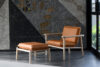
Igman Lounge Chair +Ottoman design by Harri Koskinen for Zanat
With the design of Igman Lounge Chair, Harri Koskinen, successfully bridged Bosnian and Finish craftsmanship …

“Room for Thoughts” by Harri Koskinen – Henki Furniture
Room For Thoughts Charging Cabinet A designer charging cabinet to store and charge digital devices. …

Reflextion 1_3 is a table mirror from left over material by Harri Koskinen – Wooden Oy
Reflextion 1_3 is a table mirror made for Wooden. Wood is gathered from Wooden’s left …
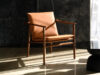
Igman Mini Lounge design by Harri Koskinen for Zanat
Igman Mini Lounge Chair by Harri Koskinen is a final edition to the Igman family …

Woodnotes News @ Salone Del Mobile in Milan 2023
Milan calling! At this year’s Salone Del Mobile in Milan, we will share a stand …

Pilke Lamps by Tuukka Halonen, Harri Koskinen & Janne Uusi- Autti
Pilke Signature Collection’s Pendant 60 and Pendant 28 are now coming in a new dark …
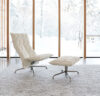
k Char with a star base by Harri Koskinen for Woodnotes
The k chair family is growing: the newcomer with a star base The first version …

Harri Koskinen – Finnish Designer
Harri Koskinen: The Architect of Modern Finnish Aesthetics A Philosophy of Purpose and Longevity Harri …

Chroma by Harri Koskinen for Memo Furniture
Chroma is an ensemble of Lounge Seating designed by Harri Koskinen, produced by Memo, a …
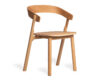
NUDE Dining Chair design by Harri Koskinen for Made by Choice
NUDE Dining Chair design by Harri Koskinen The Nude chair was originally tailored for one …
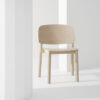
The White Chair design by Harri Koskinen for Billiani
The White chair is inspired by sixties Nordic design The White chair is inspired by …
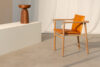
Igman Chair design by Harri Koskinen for Zanat
“Modernism is about how we understand humanity and relate to nature.” Igman dining chair is …

The Swivel k Chair design by Harri Koskinen – Woodnotes
WOODNOTES COLLECTION 2015 ON SHOW IN STOCKHOLM k CHAIR WITH ARMRESTS The swivel k chair …

The Ilmari Tapiovaara collector coin designed by Harri Koskinen
Mint of Finland is planning to release silver 10- and 20-euro collector coins in honour …

Lento Lounge chair – received the 2012 GOOD DESIGN™ design by Harri Koskinen
The Lento Lounge easy chair has received the 2012 GOOD DESIGN™ Award and the Interior …

Nordic Design Today 2013 @ Vandalorum
Exhibition of the World’ s Largest Design Prize at Vandalarum VANDALORUM is honared to …

January Tables by Harri Koskinen for Nikari
The Nikari January Tables by Harri Koskinen exemplify Finnish design excellence. Originally evolved from a …
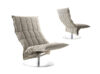
The Swivel K Chair design by Harri Koskinen for Woodnotes
A Harri Koskinen Interior Innovation Award winning design from 2004, the k chair is now …
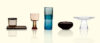
Art Works design by Harri Koskinen for iittala
New concept from Iittala – ART WORKS by Harri Koskinen as the first artist In …
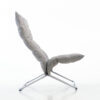
k chair design by Harri Koskinen – Woodnotes
THE SWIVEL K CHAIR A Harri Koskinen Interior Innovation Award winning design from 2004, the …
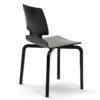
Lento Chair designed by Harri Koskinen for Artek
Lento designed by Harri Koskinen in 2006/2009, the lento chair is made of pressed birch …

Artek in the beginning of the next seventy years
Artek in 2006 is a combination of old and new Artek in Glossy Black This …
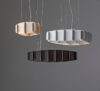
Ristikko Lamp design by Harri Koskinen for Pilke
Handmade birch pendant lamp Harri Koskinen’s Ristikko lamp collection for Pilke combines geometric minimalism with …
Artek launching new collection of rugs by six designers
Artek is launching a new collection of wool rugs created by six talented Finnish designers: …
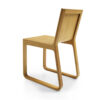
MUU Chair design by Harri Koskinen for BBB
“Recognizing needs is a pre-condition for design.” The Muu chair, designed by Harri Koskinen for Montina and …
Källemo presented during the Furniture Fair 2000 – Hommage 1900 Källemo
HOMMAGE 1900 KÄLLEMO Looking in the rearview mirror, among the multitude of furniture through the …