
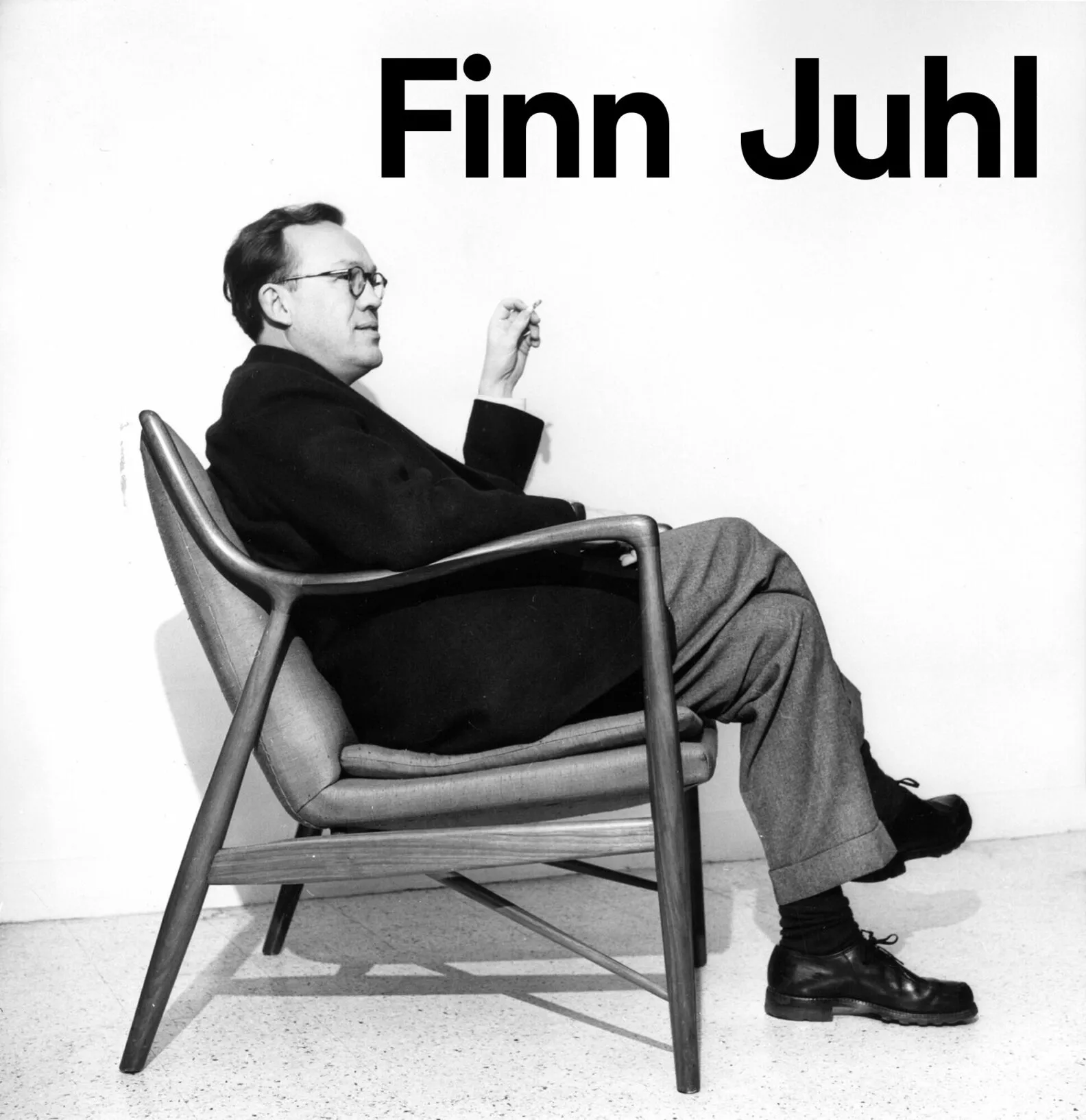
Finn Juhl (1912–1989) approached furniture the way a sculptor approaches stone: with a primary interest in form, weight, and the relationship between object and space. Trained as an architect, self-taught as a furniture designer, he introduced a formal language to Danish design in the 1940s that had no direct precedent — organic, light-defying, and deeply influenced by the modern art he collected and admired. He is widely credited as the designer who brought Danish Modern to American audiences, and his work remains in production through House of Finn Juhl today.
Architecture Before Furniture
Juhl studied architecture at the Royal Danish Academy of Fine Arts from 1930 to 1934 under Kay Fisker, then joined the office of Vilhelm Lauritzen — where he worked on major projects including Radiohuset (the Danish Broadcasting Corporation building) and Copenhagen Airport. He never completed his formal architectural studies, but the training shaped his thinking about interior space as architecture’s primary subject. By 1945 he had left Lauritzen to establish his own studio at Nyhavn 33, specialising in interior and furniture design. The same year he became head teacher at the School of Interior Design, a position he held until 1955.
Niels Vodder and the Cabinetmakers’ Guild
Juhl made his debut at the Copenhagen Cabinetmakers’ Guild Exhibition in 1937, beginning a collaboration with master cabinetmaker Niels Vodder that would last until 1959. The Guild shows were the primary proving ground for new Danish furniture, and Juhl’s early pieces — the Pelican Chair (1940), the Poet Sofa (1941), the Bone Chair (1944) — attracted both controversy and attention. Critics found the Pelican Chair in 1940 described as a ‘tired walrus’; Juhl’s response was to continue. The collaboration with Vodder was essential: Juhl’s formal ambitions regularly pushed the limits of what joinery could achieve, and Vodder’s craft made the impossible buildable. Because the Guild exhibitions prioritised artisan work over mass production, the early pieces were made in very small quantities — eighty at most per design.
The Floating Seat — A Formal Breakthrough
The formal idea that most distinguishes Juhl’s furniture is the separation of the seat and back from the frame: upholstered elements that appear to float above or alongside the wooden structure rather than resting on it. This ‘carrying and carried’ relationship — as Juhl described it — was unprecedented in Danish furniture and created a visual lightness that contrasted sharply with both the heavy historical tradition and the structural transparency of functionalism. The 45 Chair (1945) is the purest statement of the idea: the seat appears suspended, the back an independent form. Juhl described his inspiration directly: ‘Art has always been my main source of inspiration. I am fascinated by shapes which defy gravity and create visual lightness.’
America and the Good Design Exhibition
In 1948 Juhl met Edgar Kaufmann Jr., director of the Department of Industrial Design at the Museum of Modern Art in New York, beginning a friendship that would prove decisive for his international career. In 1951, Juhl made his American debut at the Good Design Exhibition in Chicago — organised by MoMA — and simultaneously exhibited at the IX Triennale di Milano. The American reception was enthusiastic in a way his Danish reception had never quite been: he was immediately positioned as the defining figure of Danish Modern, a movement that had barely been named in Denmark itself. His furniture began to be produced for the American market by Baker Furniture, significantly expanding his commercial reach.
The United Nations Trusteeship Council Chamber
The commission Juhl consistently described as the highlight of his career was the interior of the Trusteeship Council Chamber at the United Nations Headquarters in New York, designed in 1951–52. The chamber required a room that could project Danish design on the world’s most literal international stage: furniture, panelling, textiles and fittings all by Juhl, realised at a scale and with a formality that tested his practice beyond any previous commission. The chamber has subsequently been restored to its original appearance. Later in his career, SAS also commissioned Juhl to redesign the interiors of its air terminals in Europe and Asia.
Finn Juhl’s House — The Total Interior
In 1942 Juhl designed and built a house for himself in Ordrup, north of Copenhagen, using an ‘inside-out’ method: planning the interior of each room before deciding on the exterior. The house was conceived as a total interior — furniture, art (he was a collector of Danish modern painters), textiles and fittings all integrated. After Juhl’s death in 1989, his partner Hanne Wilhelm Hansen maintained the house unchanged until her own death in 2001, when it was incorporated into the adjacent Ordrupgaard Art Museum as a historic house museum. It is among the best-preserved designer interiors in Denmark.
House of Finn Juhl and Ongoing Production
House of Finn Juhl — formerly Onecollection — has held exclusive rights to Juhl’s work since Hanne Wilhelm Hansen’s death in 2001, operating in close collaboration with the Wilhelm Hansen Foundation. The company produces a collection of over 40 relaunched pieces, prioritising material quality and fidelity to the original designs. Wooden frames for the more technically demanding pieces — including the Chieftain Chair — are made by skilled craftspeople in Yamagata, Japan, a choice that reflects both the precision required and the global reach of Juhl’s legacy. 2025 marks 80 years since the 45 Chair and 45 Sofa were designed, with the sofa being relaunched as a limited First Edition of 80 numbered pieces.
More design by Finn Juhl:
Architectmade FJ Clock by Finn Juhl – Sculptural Teak Wall Clock Since 1950
A Paradox in Time Have you ever gazed at a design and felt it bridged …
Original 1950s Chieftain Chair by Finn Juhl Captivates Collectors
Finn Juhl Chieftain Chair Achieves 650,000 DKK at Bruun Rasmussen Auction Danish furniture design continues …

Finn Juhl’s 45 Sofa is Reborn by House of Finn Juhl
80 Years After its Breakthrough, Finn Juhl’s 45 Sofa is Reborn With its sculptural lightness, …
Finn Juhl lamp from 1963 is back inspired by art and the abstract
Be Bold With Finn Juhl Inspired by art and the abstract, the Danish architect Finn …
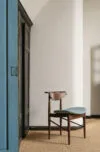
Finn Juhl’s Reading Chair – crafted entirely in walnut – House of Finn Juhl
Finn Juhl’s Reading Chair Refined Classic Introduced Entirely in Walnut Finn Juhl’s distinctive Reading Chair is …
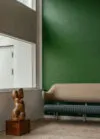
Finn Juhl’s Extended Aubertin Wall Sofa Returns in a New Conceptual Realm
In 1951, Finn Juhl designed an extra-long version of his asymmetrical and sculptural Wall Sofa …
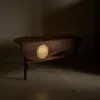
The Butterfly Table by Finn Juhl in 1949 – House of Finn Juhl
The Butterfly Table | Finn Juhl | 1949 The Butterfly Table, designed by Finn Juhl …
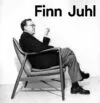
Exhibition OneCollection & Finn Juhl – Anarchy, Legacy and Vision
Anarchy, Legacy and Vision A special exhibition at Ringkøbing Museum tells the story of how …

Finn Juhl’s American Dream: The Relaunch of the Kettelhut Chair
As with many of Finn Juhl’s designs, this year’s relaunch is surrounded by a certain …
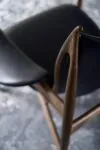
House of Finn Juhl Limited Anniversary Edition of the Chieftain Chair
75th Anniversary: House of Finn Juhl Draws Inspiration from Rediscovered Watercolour for Limited Anniversary Edition …
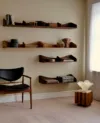
House of Finn Juhl Revives the Hulsø Shelf
House of Finn Juhl will make their first appearance at the Maison & Objet fair …
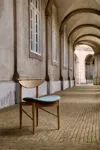
House of Finn Juhl Presents All-Oak Version of Legendary Reading Chair
Finn Juhl’s Reading Chair is now being introduced in a new version entirely in oak. The …
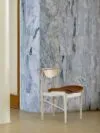
Reading Chair in Light Ash by Finn Juhl | House of Finn Juhl
During 2023, House of Finn Juhl presents the Reading Chair by Finn Juhl in a selection …
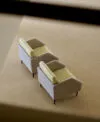
House of Finn Juhl Resurrects Rare Chair Design at 3DaysOfDesign
Finn Juhl is renowned for his iconic furniture designs and for revolutionising the Danish furniture …
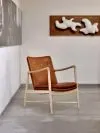
Fireplace Chair relaunch by House of Finn Juhl
House of Finn Juhl is delighted to announce the relaunch of the Fireplace Chair, a …
Bone Chair by Finn Juhl reintroduced | House of Finn Juhl
Bone Chair – FinnJuhl’s Personal Favourite is reintroduced Finn Juhl’s 44 Chair, also known as …

Finn Juhl’s Whisky Chair Relaunched – House of Finn Juhl
The Whisky Chair was designed by Finn Juhl in 1948 and is characterized by the …
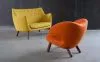
Kjellerup Væveri develop a collection of textiles for House of Finn Juhl
In collaboration with the Danish weaver, Kjellerup Væveri (Kjellerup Weavers), House of Finn Juhl has …
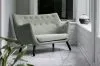
80th Anniversary: The Poet is Relaunched in a Limited Nubuck and Suede Edition – With Legs in Wenge
Finn Juhl presented the Poet Sofa for the first time at the Cabinetmakers’ Guild Exhibition in the autumn of 1941. To …
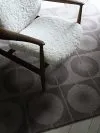
Circle Rugs design Finn Juhl by House of Finn Juhl
In 1963, Finn Juhl designed a series of characteristic circle patterns for the Danish company …
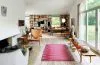
Finn Juhl’s Own House Reopens on the 25th of June
One can argue that Finn Juhl’s most extraordinary piece is his own home, situated in …
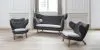
Record Sale at Bruun Rasmussen: Most Expensive set of Finn Juhl Furniture
A sofa and two chairs, designed by Finn Juhl and nicknamed “The Elephant Furniture”, have …
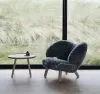
Finn Juhl’s Pelican Chair in Sheepskin by House of Finn Juhl
When Finn Juhl’s Pelican Chair first saw the light of day at the Cabinetmakers’ Guild …
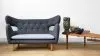
Finn Juhl’s Lost Furniture Found After 80 Years – Bruun Rasmussen Auctioneers
Finn Juhl’s one-of-a-kind sofa (estimated price EURO 210,000-330,000 // 1,500,000-2,500,000 DKK) alongside vases and bowls …
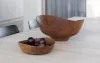
Every bowl is hand turned and crafted from a single piece of wood by Finn Juhl
Finn Juhl designed the teak bowls in 1951 After several years of preparation, we are …
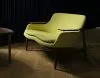
The 53 Series Relaunches at 3 Days of Design by Finn Juhl
When Finn Juhl’s widow, Hanne Wilhem Hansen, granted Onecollection (with the sub-brand House of Finn Juhl) …
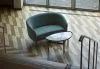
The Little Mother is being relaunched – House of Finn Juhl
After Copenhagen Cabinetmaker’s Guild Exhibition in 1945, joiner Niels Vodder, who produced Finn Juhl’s furniture, …
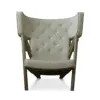
The Grasshopper Chair – House of Finn Juhl
The Grasshopper Chair is being relaunched at Salone del Mobile – 81 years after Finn Juhl designed it …

Finn Juhl @ nationalmuseum
March 14–September 22, 2019 An exclusive selection of furniture, artwork and art handicraft. The exhibition …
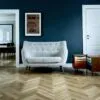
Poet sofa – House of Finn Juhl
Poet sofa 1941 This small two-seater sofa first saw the light of day at the …
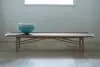
Cocktail Bench – House of Finn Juhl
Cocktail Bench 1951 In 1951, Finn Juhl designed the bench for Baker Furniture in USA, …
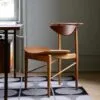
Reading Chair by Finn Juhl – House of Finn Juhl
Reading Chair – Veneer Seat 1953 The Reading chair is one of Finn Juhl’s more …
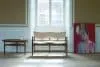
48 Sofa-Bench – House of Finn Juhl
48 Sofa-Bench 1948 The 48 Sofa-Bench is part of the 48 Series which was presented …
The Legends of Danish Design @ Pushkin State Museum
Legends of Danish design 12.04.2017 – 11.06.2017 On April 12, 2017 “The Legends of Danish …

The Danish Chair @ Design Museum Danmark
The Danish Chair is a wunderkammer of chairs. In the exhibition, Designmuseum Danmark tells the …
Finn Juhl – a Danish design icon exhibition 2014
Finn Juhl – a Danish design icon – exhibition at Falkenbergs Museum – Design Museum …
Finn Juhl – centenary exhibition @ Trapholt
Finn Juhl was both a pioneering furniture designer and a respected architect, sensitive to the …
Finn Juhl lamp Table/Pendant/Wall lamp back in production
Finn Juhl Wall lamp – Pendant – Table lamp FJ Lamps that are made of …

Furniture for the senses – Finn Juhl 100 @ Designmuseum Danmark
Special exhibition 10 February – 31 December 2012 Designmuseum Danmark celebrates the 100th anniversary of …
World news by Finn Juhl @ Code 09 from Onecollection
Onecollection takes, of course, part in CODE 09 – Copenhagen Design Festival – and for …
Finn Juhl’s Inspiration from Japan The Japan Series – House of Finn Juhl
The Japan Series, designed by Finn Juhl in 1957, represents his inspired interpretation of Japanese …
Finn Juhl — The Architect Who Taught Danish Furniture to Defy Gravity
Finn Juhl (1912–1989) approached furniture the way a sculptor approaches stone: with a primary interest …