
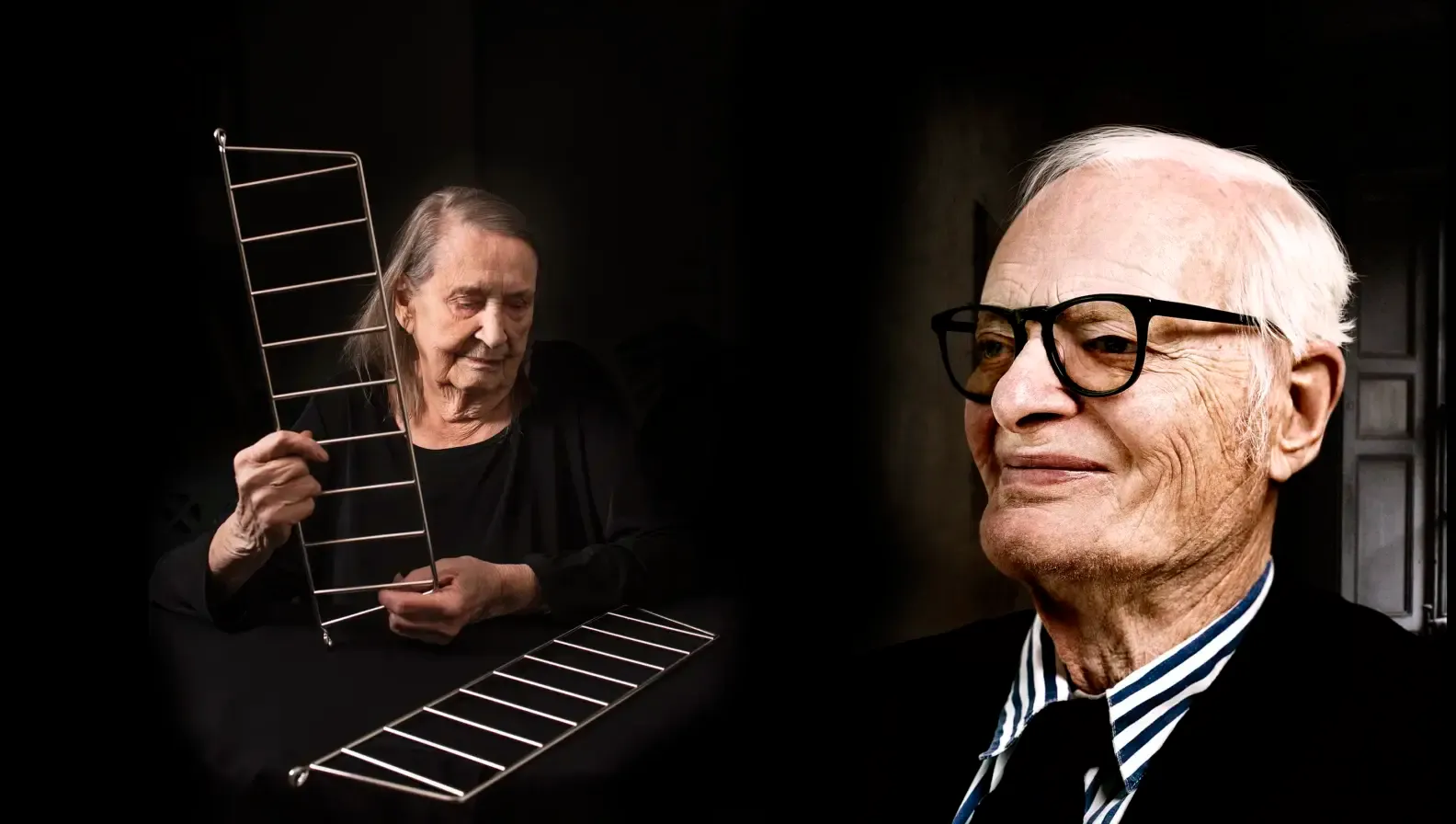
Nisse Strinning – Solving Everyday Problems Through Form and Function
Nils Erik “Nisse” Strinning (1917–2006) was a Swedish architect and designer whose work epitomised the principle that form should follow function. Over a career spanning six decades, working primarily in partnership with his wife Kajsa Strinning (1922–2017), he designed storage systems, household objects and furniture that addressed practical everyday problems with minimal means and maximum efficiency. His String® shelf system, created in 1949, remains in continuous production and is recognised internationally as both a commercial product and a work of art — a rare achievement that reflects Strinning’s ability to merge industrial production with enduring design quality.
Formation and Early Innovation
Strinning was born on 8 December 1917 in Gudmundrå parish, Kramfors, in northern Sweden. He studied architecture at the Royal Institute of Technology (Kungliga Tekniska högskolan) in Stockholm during the 1940s, a period when Swedish design was establishing its postwar identity through functionalism and engagement with industrial production. While still a student, Strinning designed a dish drainer constructed from plastic-coated steel wire — a simple solution to a mundane domestic problem that demonstrated his characteristic approach: identify a practical need, reduce the solution to essential elements, execute through readily available industrial materials.
The dish drainer was produced by Elfa AB, a newly established company that would become a major Swedish storage systems manufacturer, and marketed under the name Elfa. The product achieved substantial commercial success and established Strinning’s reputation as a designer capable of creating practical, affordable household objects. More significantly, the wire construction method developed for the dish drainer became the technical foundation for his most famous design: the String® shelf.
The String® Shelf and Bonnier Competition
In 1949, Bonnier Folk Library organised a design competition seeking a simple, affordable bookshelf suitable for Swedish homes. Nisse and Kajsa Strinning’s submission — the String® shelf — won the competition and immediately entered production. The design’s innovation lay in its reduction of the bookshelf to fundamental components: steel wire side panels that mounted to the wall, and wooden shelves that hooked onto the wire supports. The system was modular, allowing users to configure arrangements according to available space and storage needs. It was lightweight, economical to manufacture, and could be shipped flat — crucial advantages in postwar Sweden where housing was expanding rapidly and affordability was paramount.
The String® system’s formal clarity — visible structure, no extraneous elements, honest materials — aligned with broader Scandinavian design principles emerging in this period. But Strinning’s achievement was translating those principles into a product that genuinely served mass-market needs. The shelf was not designed for design enthusiasts or wealthy clients; it was conceived for ordinary households requiring flexible, affordable storage. This democratic orientation distinguished Strinning from contemporaries who pursued more artisanal or exclusive markets.
International Recognition and Milan Triennale
The String® shelf’s significance was recognised internationally when it received a gold medal at the 1954 Milan Triennale, the prestigious exhibition that served as the primary forum for postwar design discourse. This award positioned the shelf alongside work by leading European and American designers and confirmed that functional, affordable design could achieve the same cultural recognition as more luxury-oriented production. The Triennale success opened international markets: String® began exporting to Europe, North America and Japan, becoming one of the most widely distributed Swedish furniture products of the postwar period.
The shelf’s longevity proved even more remarkable than its initial success. Where most mid-century furniture designs eventually went out of production or were substantially modified, String® remained essentially unchanged. As recently as 2020, the system received the Long Life Design award in Japan — recognition that a product designed in 1949 remained commercially viable and formally relevant seventy years later. This continuity reflects design decisions that transcended period taste: the system’s modularity allowed it to adapt to changing domestic needs, its material honesty avoided stylistic datedness, and its proportions worked across different spatial contexts.
Partnership with Kajsa Strinning
Nisse Strinning’s practice was inseparable from his partnership with Kajsa Strinning, whom he married in the 1940s. While Nisse generated ideas and concepts — often impatiently, eager to move from problem to solution — Kajsa ensured those ideas were thoroughly developed, refined and documented. She produced construction drawings, worked through technical details, and managed the translation from sketch to manufacturable product. This division of labour was essential: Nisse’s inventive capacity required Kajsa’s systematic approach to reach realisation.
Their collaboration represents a pattern common in mid-century design partnerships where women’s contributions were often marginalised or attributed solely to male partners. Kajsa Strinning’s role was not subordinate assistance but co-authorship — the String® shelf and other Strinning designs exist as they do because both partners brought distinct capabilities to the work. Contemporary reassessment of their practice increasingly acknowledges this joint authorship and recognises Kajsa’s contribution as equal rather than supplementary.
Expanded Practice and String Design AB
In 1952, Strinning established two companies: String Design AB and Swedish Design AB, vehicles for developing and commercialising his designs. Through the 1950s, 1960s and 1970s, the Strinnings designed numerous plastic household objects — storage containers, organisers, waste bag holders — that extended the practical orientation of their furniture work into smaller domestic accessories. These products demonstrate the same formal restraint and functional clarity as the String® shelf: minimal forms, honest use of materials, solutions calibrated to actual use rather than decorative effect.
Strinning also worked extensively with Grythyttan stålmöbler (Grythyttan steel furniture), designing multiple furniture models over several years. His High-Tech chair, constructed entirely in metal, exemplifies his approach to furniture design: visible structure, no unnecessary ornament, durability through material choice and sound construction. The chair remains in production, testament to design decisions that prioritised longevity over fashion.
Design Philosophy and Everyday Problem-Solving
Strinning’s approach to design was fundamentally pragmatic. He sought problems in everyday life that other designers overlooked or considered too mundane for attention — where to stack dishes to dry, how to organise shelves efficiently, how to manage household waste. His solutions were characterised by economy of means: the minimum number of components, the simplest feasible construction, the most readily available materials. This parsimony was not driven by cost reduction alone but by conviction that good design meant eliminating everything unnecessary.
His impatience — noted by colleagues and collaborators — reflected this orientation. Once a problem was understood and a solution conceived, Strinning saw little value in extended development. Kajsa’s temperament complemented this: her willingness to work through technical details and document solutions properly ensured that his quick insights became manufacturable products. The partnership’s productivity — dozens of products over six decades — resulted from this complementary dynamic.
Final Work and Legacy
Strinning continued designing until his death on 10 May 2006 at age 89. His final project, completed in 2005, was String® Pocket — a compact version of the original String® shelf system designed for smaller spaces and specific storage needs. The design demonstrated that even after fifty-six years of working with the same basic system, refinement and adaptation remained possible. String® Pocket entered production through String Furniture, a company founded in 2004 by design enthusiasts Peter Erlandsson and Pär Josefsson to continue manufacturing and developing the Strinning legacy.
Strinning is represented in museum collections including the Nationalmuseum in Stockholm, where the String® shelf is held as both a design object and a document of postwar Swedish functionalism. He is buried at Skogsö cemetery. Kajsa Strinning continued working after Nisse’s death, maintaining involvement with String Furniture until her own death in 2017 at age 95.
The Strinnings’ legacy lies in demonstrating that practical, affordable design could achieve cultural recognition and commercial longevity without compromise. Their work proved that serving everyday needs through honest materials and clear construction was not a limitation but an opportunity — that solving ordinary problems well was as worthy of design attention as creating luxury objects or pursuing artistic expression. This democratic orientation continues to influence Scandinavian design practice and positions the Strinnings as foundational figures who showed that good design was a matter of necessity rather than privilege.
Images courtesy of String Furniture.

More designs from String Furniture:
Anna von Schewen and Björn Dahlström Bring Glass to the Pira Shelving System
Glass Enters the Pira System – Single and Double-Sided Sliding Doors for Wall and Room …
TAF Studio Museum Trolley & Pedestal for String Furniture
Museum Trolley and Pedestal Join String Furniture Collection by TAF TAF Studio is expanding String …
Stockholm Creative Edition – February 3–7, 2026
Stockholm Creative Edition 2026: A Renewed Vision for Swedish Design Stockholm Creative Edition returns with …

The Building Unites Seven Nordic Brands for Stockholm Design Days 2026
Seven of the most respected Nordic design brands will present a collaborative exhibition titled The …
Scandinavian Design Embassy launch in Paris
The Scandinavian Design Embassy—a bold new initiative uniting Nordic nations in a shared mission to …
String Pocket celebrates 20 years with four new colours inspired by Stockholm
String Pocket celebrates 20 years with four new colours This year String Pocket marks its …
String Furniture has introduced an elegant magazine shelf for the Pira G2 shelving system
String Furniture presents a new magazine shelf addition to the Pira G2 shelving system With …

Relief a modular system by TAF Studio for String
RELIEF – ORGANISATION WITH STYLE 2024’s new product from String Furniture is called Relief – …

Museum collection by TAF Studio, expanding side table in Red Rust – String
STRING FURNITURE LAUNCHES CELEBRATED MUSEUM TABLE IN RED RUST String Furniture’s acclaimed Museum collection, designed …
Center Center by Form Us With Love | String Furniture
STRING FURNITURE AND FORM US WITH LOVE PRESENT STORAGE SOLUTIONS FOR MODERN WORK LIFE String …
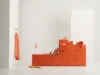
Relief by TAF Studio – String Furniture
RELIEF – ORGANISATION WITH STYLE 2024’s new product from String Furniture is called Relief – …

Museum Console Shelf by TAF Studio – String
MUSEUM NM&.045 CONSOLE SHELF Museum Collection was designed in 2018 by TAF Studio for the …

Museum Candle holder by TAF Studio – String Furniture
The Museum Candle holder is an adjustable candle holder in aluminium The candle holder has …
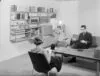
Beckmans Design school | String Furniture: A Home @ Vandalorum
A HOME Beckmans School of Design | String Furniture A project within Vandalorum’s Art and …

Pira G2 design by Olle Pira 1955 | String Furniture
The Pira shelf was design by the Swedish architect Olle Pira (1927 – 2018) especially …

Tiny Cabinet by Nisse Strinning – String Furniture
Designed by Nisse Strinning, the Tiny cabinet has a mirrored inner back wall and an …

Metal Outdoor String System now stands on its own feet
Metal Outdoor String Welcome to the great outdoors: with new galvanized posts and a rear …

Museum family is expanding Museum Sidetable by TAF Studio – String
Museum family is expanding with the height-adjustable Museum Sidetable by TAF Studio Museum™ in Stockholm, …
Museum by TAF – String Furniture
STRING FURNITURE PRESENTS MUSEUM – A SHELF FOR AN ENTIRE ART COLLECTION For the opening …
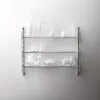
String limited edition by Mats Theselius
String celebrates 70 years – launching exclusive limited edition of String Pocket In 1949 Nisse …
Snapshots – Stockholm Furniture Fair & Northern Light Fair 2018
Snapshots – Stockholm Furniture Fair & Northern Light Fair 2018 Photo: Ola Marton & Maximilian …
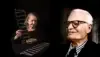
Nisse Strinning – Swedish Architect Behind the Iconic String® Shelf
Nisse Strinning – Solving Everyday Problems Through Form and Function Nils Erik “Nisse” Strinning (1917–2006) …