
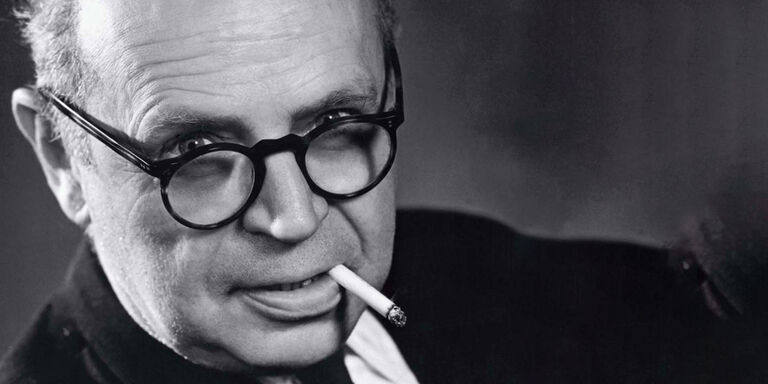
“From the age of 18, when I began to experiment with light,
I have been searching for harmony in lighting”
Poul Henningsen did not design a lamp. He worked out a rule, and the lamps followed from it. In 1926 he arrived at a system of three shades whose curves are cut from a logarithmic spiral, so that every point on the shade meets light from the bulb at the same relative angle. The bulb disappears from view at every normal sitting or standing position, the light lands where it is needed, and the shadows stay soft. That single piece of geometry has since produced roughly a thousand different models and has kept Louis Poulsen in business for a century.
He was also, for most of his adult life, one of the most disliked men in Denmark — a polemicist who attacked the country’s architecture, its cultural institutions, its sexual morality and its politics in print, on film and in cabaret song. The lamps and the arguments came from the same conviction: that ordinary life deserved better than it was being given, and that this was a technical problem before it was a matter of taste.
Ordrup, 1894
Poul Henningsen was born on 9 September 1894 in Ordrup, north of Copenhagen, the son of the writer Agnes Henningsen and the writer Carl Ewald. His parents were not married and he grew up outside the conventions of the Copenhagen bourgeoisie he would spend his career arguing with.
He studied at the technical school in Copenhagen and then at the Technical University of Denmark, but left without an architect’s degree. From 1919 he worked with the architect Kay Fisker; from 1920 he practised independently as an architect and designer. In 1921 the newspaper Politiken hired him to write about architecture, and he kept writing for the rest of his life.
Paris 1925
The turning point was the Exposition Internationale des Arts Décoratifs et Industriels Modernes in Paris in 1925. Henningsen showed a lamp developed with Louis Poulsen — the Paris Lamp — and it took a gold medal. Louis Poulsen then commissioned him to light the Forum exhibition hall in Copenhagen, and the partnership that began there ran unbroken until his death in 1967.
Electric light was still new enough in Danish homes to be badly done. The bare bulb was harsh, the fittings were adapted from oil lamps, and nobody had approached the problem from the physics. Henningsen was the first to work on light scientifically and to use the logarithmic spiral as the basis for a shade profile.
The three-shade system
What he produced in 1926 was not a product but a construction principle. Three shades in a fixed proportional relationship, each curve derived from the same spiral, screening the light source completely from view while redirecting it downward and outward. Change the diameters and you get a table lamp, a floor lamp, a wall bracket or a pendant, all obeying the same rule and all giving the same quality of light.
The reasoning behind it is straightforward once stated. A bare bulb is a small, extremely bright point; the eye adapts to it and everything else in the room goes dark by comparison. Screen it badly and you lose most of the light. Henningsen’s answer was to hide the source completely and use every shade surface as a reflector, so that light which would otherwise be absorbed is put back into the room from a large, dim surface instead of a small, fierce one. The result reads as more light, not less, and it falls on the table rather than in the eyes.
The PH 3/2 table lamp and the PH 3½-2½ floor lamp reached the catalogue in 1927. The three-shade family alone runs to some thirty fittings today. Early shades were metal, painted white, gold or silver underneath; glass came later, letting more light into the room without reintroducing glare. Across four decades the principle generated roughly a thousand models — pendants, table and floor lamps, wall brackets, chandeliers, street lighting and fittings made for single buildings.
He kept extending the range for four decades. PH Septima, with seven alternating clear and sandblasted glass shades, was in production from 1927 to 1931. The PH Grand Piano lamp came in 1930. The PH 1/1, first catalogued as the Bombardement chandelier, ran from 1933 to the mid-1960s, made for households that still wanted a chandelier now that the kerosene had gone. The Spiral lamp followed in 1943.
Kritisk Revy and the arguments
From 1926 to 1928 Henningsen edited Kritisk Revy, the journal that carried functionalism into Danish public debate and did it with a sharpness that made enemies quickly. He wrote and staged the PH revues between 1929 and 1932, published the polemic Hvad med kulturen? in 1933, and directed Danmarksfilmen in 1935 — a state-commissioned portrait of Denmark that showed a modern, industrial, unsentimental country and was attacked for it from every direction.
Politiken dismissed him in 1938 over his anti-Nazi writing. In 1940 he smuggled resistance verse into Kjeld Abell’s revue Dyveke. In 1943, with an assassination plot against him, he crossed to Sweden by rowing boat in the company of Arne Jacobsen. Both men spent the rest of the occupation in Stockholm. He returned to Denmark in 1945.
Tivoli and the late lamps
After the war he rebuilt Tivoli’s Glass Hall, destroyed in 1944, reopening it in 1946; his son Simon P. Henningsen would later become the garden’s architect and give it its own family of lamps.
He went on writing throughout. He reviewed everything from housing policy to radio cabinets, and his criticism carried enough weight that Danish manufacturers changed products because of it. He set children’s songs with the composer Bernhard Christensen. He remained, in a country that had by then adopted him as a national figure, reliably impossible to please.
The best-known fittings are all late work. PH Louvre arrived in 1957. Then, in a single year, 1958, came three: the PH 5, the PH Snowball and the PH Artichoke.
The PH 5 was a direct response to an industry problem. Bulb manufacturers kept changing the shape, size and colour of their lamps, wrecking the calculations behind the older fittings. Henningsen answered with a shade assembly that would handle any bulb put into it, plus small internal cones and a red and blue surface to correct the colour of the light. Its diameter in centimetres gave it its name, and it has been in continuous production ever since.
The PH Artichoke was designed for the Langelinie Pavillonen restaurant in Copenhagen — seventy-two copper leaves in twelve rows, each row staggered against the next, so the bulb is invisible from any angle in the room and every leaf reflects light onto the one below it. It is still made by hand.
The last years
Henningsen was diagnosed with Parkinson’s disease in 1963 and died on 31 January 1967 in Hillerød, aged 72. He is buried at Bispebjerg cemetery in Copenhagen.
The PH Prize was founded in his name and awarded for the first time the same year, to Verner Panton — a designer whose saturated plastics were about as far from Henningsen’s painted metal as Danish design could get, and who had understood the point anyway. In 2006 the PH lamp was entered into the Danish Culture Canon.
In production today
Louis Poulsen still makes the range, and the three-shade principle remains the company’s core design rule rather than a heritage line. The PH 5, PH Artichoke, PH Snowball and the glass three-shade fittings are all current. The centenary in 2026 brought a heritage collection in aged brass with mouth-blown shades and the return of the PH 1/1 chandelier in three-, six- and nine-arm versions, numbered by hand.
Henningsen’s own summary of the work is the one Louis Poulsen still quotes: once you have experienced good light, life is filled with new values.
Designs by Poul Henningsen
New additions to the Poul Henningsen Centenary Collection
Louis Poulsen has expanded its PH Centenary Collection with two new additions: the PH 3/3 …
PH Table Lamp launch in four new coloured stem and base by Poul Henningsen
HERITAGE IN RICH COLOURS For the first time, the original PH series, here including the …
Poul Henningsen’s PH 5 Returns in New Opal Shade from Louis Poulsen
Poul Henningsen’s design philosophy centered on a simple principle: light should enhance, never disturb. In …
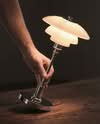
A Classic Goes Petite Portable by Poul Henningsen
This summer, Louis Poulsen introduces a mini version of the classic PH portable. The PH …

Poul Henningsen Centennial Shines at Louis Poulsen’s 3daysofdesign 2026
Louis Poulsen will open its doors at Kuglegården during 3daysofdesign 2026 (June 10–12) to celebrate …

Louis Poulsen celebrates 100 years of Poul Henningsen lighting design
As a tribute to the 100th anniversary of the iconic System PH, an innovative lighting …
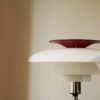
Poul Henningsen PH 80 Table & Portable Lamp by Louis Poulsen
Louis Poulsen PH 80: Poul Henningsen’s Posthumous Tribute to Glare-Free Light Created in 1974 as …
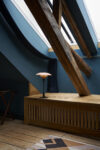
Poul Henningsen PH 3/2 Dusty Terracotta Table Lamp by Louis Poulsen
Poul Henningsen’s much-loved PH 3/2 Table Lamp helped set new standards for the effectiveness of …
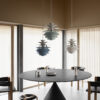
Poul Henningsen masterpiece PH Snowball – Louis Poulsen
Rediscover a Poul Henningsen masterpiece Louis Poulsen is thrilled to announce the launch of Poul …
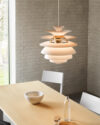
PH Snowball Anniversary Edition by Poul Henningsen – Louis Poulsen
PH Snowball Anniversary Edition The PH Snowball is presented with a new finish for the …
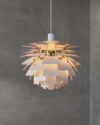
PH Artichoke Anniversary Edition design by Poul Henningsen – Louis Poulsen
PH Artichoke Anniversary Edition Among Poul Henningsen’s most iconic lighting designs is the PH Artichoke …
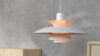
PH 5 in pale rose hue – Anniversary Edition | Louis Poulsen
PH 5 Anniversary Edition The PH 5 Anniversary Edition is a wonderful take on the …
Danish Design in the 20th Century @ Design Museum Danmark
Danish Design in the 20th Century – How Danish Design Became World Famous Danish Modern …
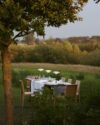
PH 2/1 portable version by Poul Henningsen | Louis Poulsen
Just in time for summer, Louis Poulsen launches the world’s first Poul Henningsen classic in …

PH Artichoke Pale Rose honours Poul Henningsen for Louis Poulsen
A classic hue When Poul Henningsen designed the PH Artichoke in 1958, the inside of …

PH Limited Edition 2022 by Poul Henningsen – Louis Poulsen
Elegant materials and a classic design The PH Limited Edition 2022 Collection adds a touch …

PH 5 Retake by Poul Henningsen – Louis Poulsen
The fixture provides a comfortable, glare-free light, based on the principle of Poul Henningsen’s reflective …

PH 2/2 The Question Mark by Poul Henningsen – Louis Poulsen
The fixture has been designed on the principle of a reflecting multi-shade system, emitting a …

PH Artichoke in Black by Poul Henningsen – Louis Poulsen
With a perfect matt black finish, this version consolidates a bold look for an edgier …

PH 2/1 Table Limited Edition of Poul Henningsen | Louis Poulsen
PH 2/1 Table lamp In the Limited Edition of Poul Henningsen’s PH 2/1 Table, the …

Louis Poulsen brings back Poul Henningsen’s seven-shade glass crown PH Septima
Louis Poulsen brings back Poul Henningsen’s sophisticated seven-shade glass crown, based on the PH Septima …

The PH 5 Family Goes Monochrome – Louis Poulsen
This autumn, Louis Poulsen introduces Poul Henningsen’s iconic PH 5 pendant from 1958 and PH …

Louis Poulsen celebrates Poul Henningsen’s 125th birthday
Louis Poulsen celebrates Poul Henningsen’s 125th birthday with new versions of the PH Artichoke, PH …

Poul Henningsen @ Woodhouse, Copenhagen
Celebration of Poul Henningsen’s 125th anniversary From February 1 – January 5 2019 Danish designer …

PH 3/2 Table Lamp – Limited Edition – Louis Poulsen
Limited edition PH 3/2 Table lamps feature Italian amber glass, creating warm ambience To honour …

PH 60th Anniversary – Louis Poulsen
Louis Poulsen celebrates 60th anniversary of Poul Henningsen icons Six decades ago, in 1958, lighting …

PH 5 Mini by Poul Henningsen — The Iconic Pendant Lamp Reimagined
Introducing PH 5 Mini The first ever resize of the world-famous PH 5 pendant. PH …
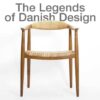
The Legends of Danish Design @ Pushkin State Museum
Legends of Danish design 12.04.2017 – 11.06.2017 On April 12, 2017 “The Legends of Danish …

PH glass lamp by Poul Henningsen – Louis Poulsen
Louis Poulsen revamps the PH glass lamp with new metal frames Louis Poulsen introduces seven …

PH 3½-2½ Copper Table by Poul Henningsen – Louis Poulsen
Limited Edition: PH 3½-2½ Copper Table You have probably been hoping and maybe even dreamed …

PH 3½-3 pendant by Poul Henningsen – Louis Poulsen
To mark Poul Henningsen’s 120th birthday on 9 September, Louis Poulsen is launching the new …

Toldbod design by Poul Henningsen – Louis Poulsen
Toldbod 120 Duo The popular Toldbod 120 pendant will soon be available in a variety …
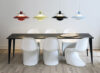
PH 5 in new, bright versions by Poul Henningsen – Louis Poulsen
PH 5 celebrates its 50th anniversary. Louis Poulsen commemorates the birthday by introducing PH 50, …