
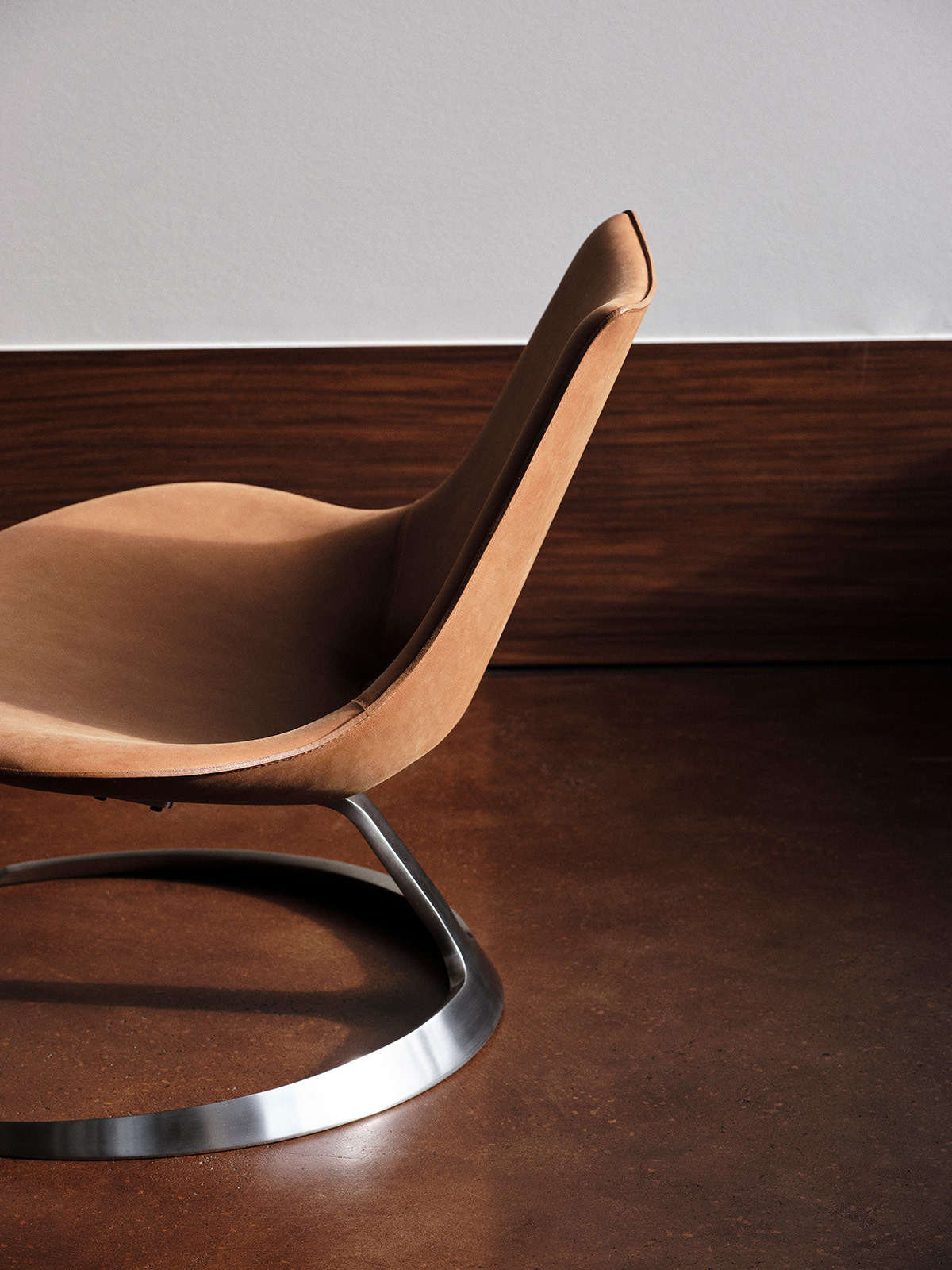
CARL HANSEN & SØN PRESENTS THE SCIMITAR CHAIR – A REMARKABLE DESIGN BY THE DANISH MODERNISTS FABRICIUS & KASTHOLM
First presented at the Cabinetmakers’ Autumn Exhibition in Copenhagen in 1963, the Scimitar Chair reflects a pivotal moment in Danish furniture history, where sculptural form and a functional precision came together in a new expression.
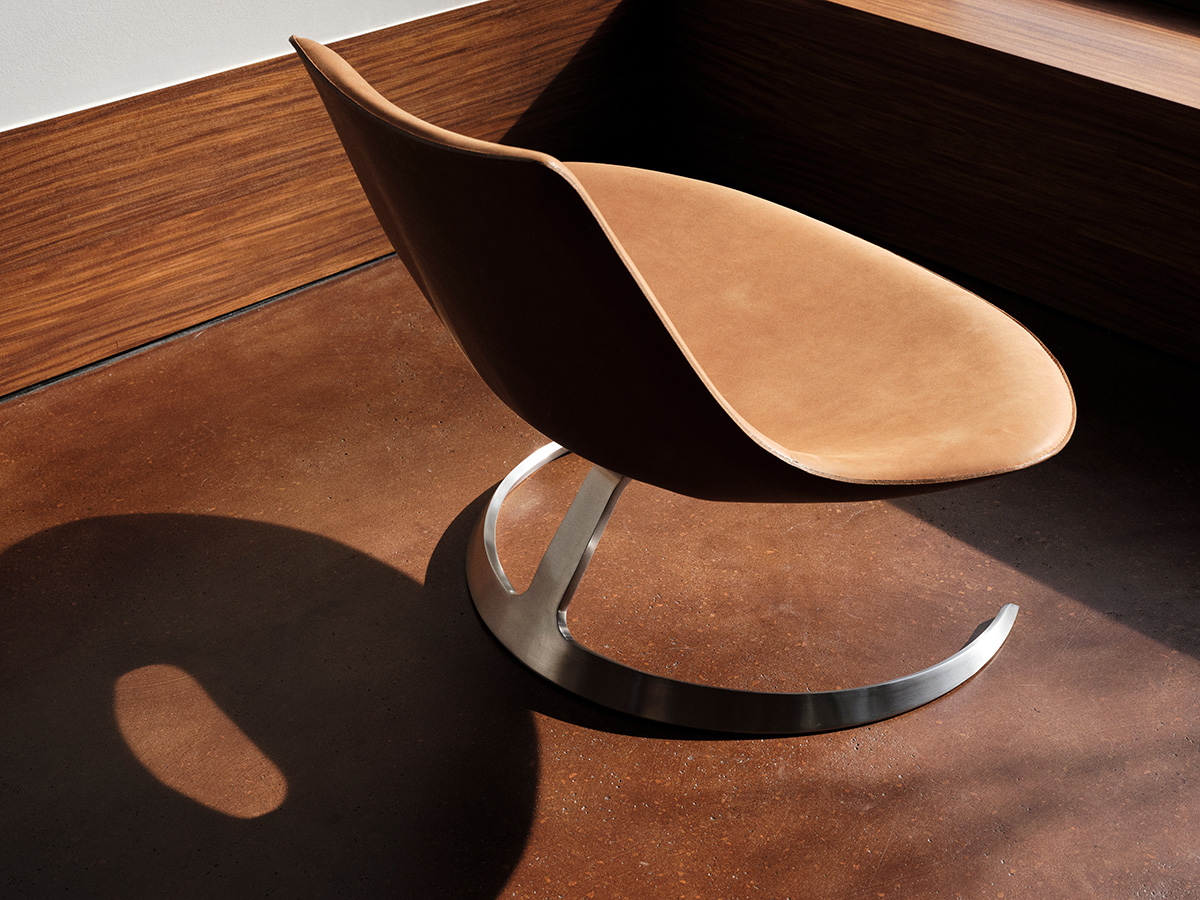
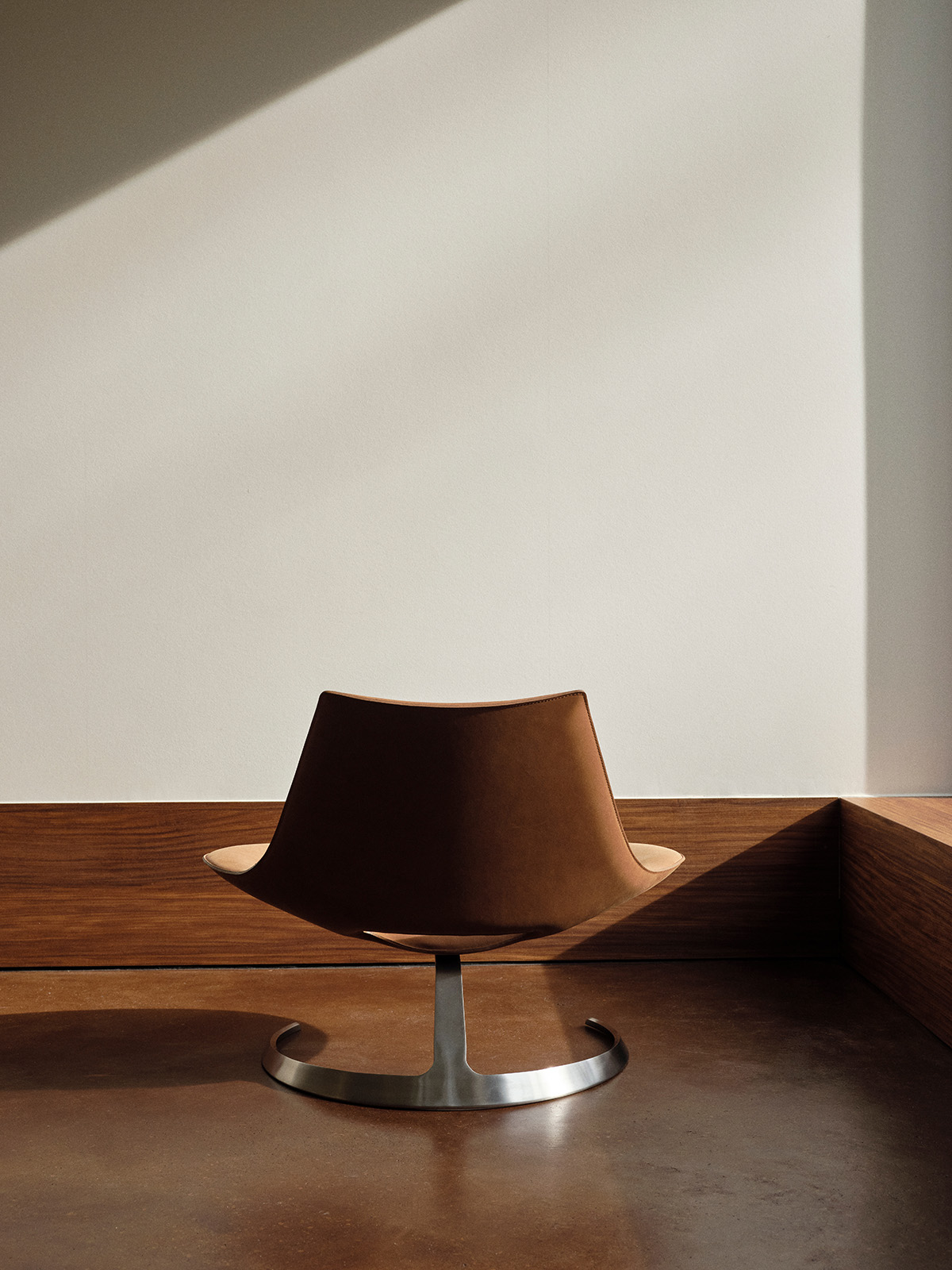
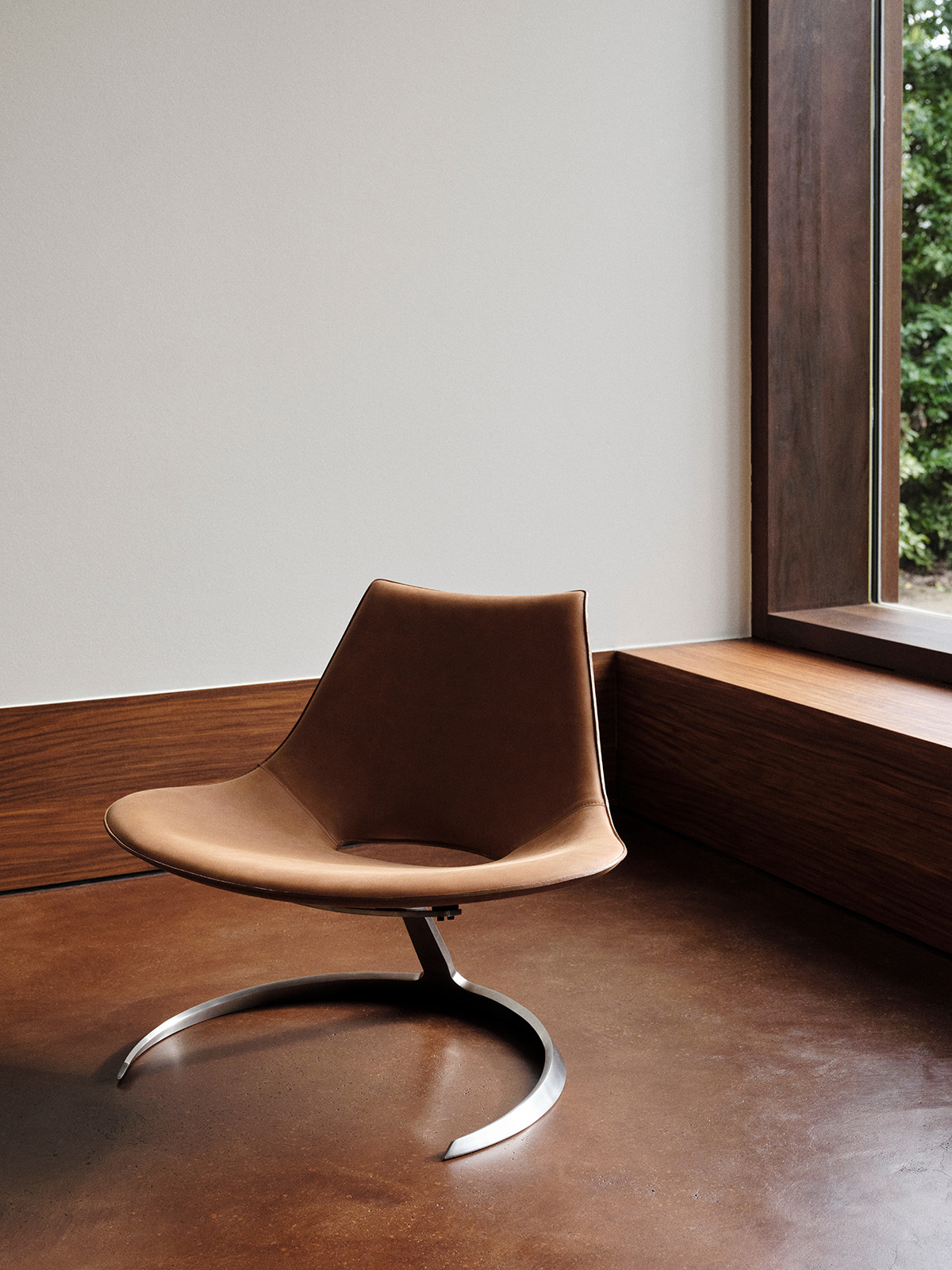
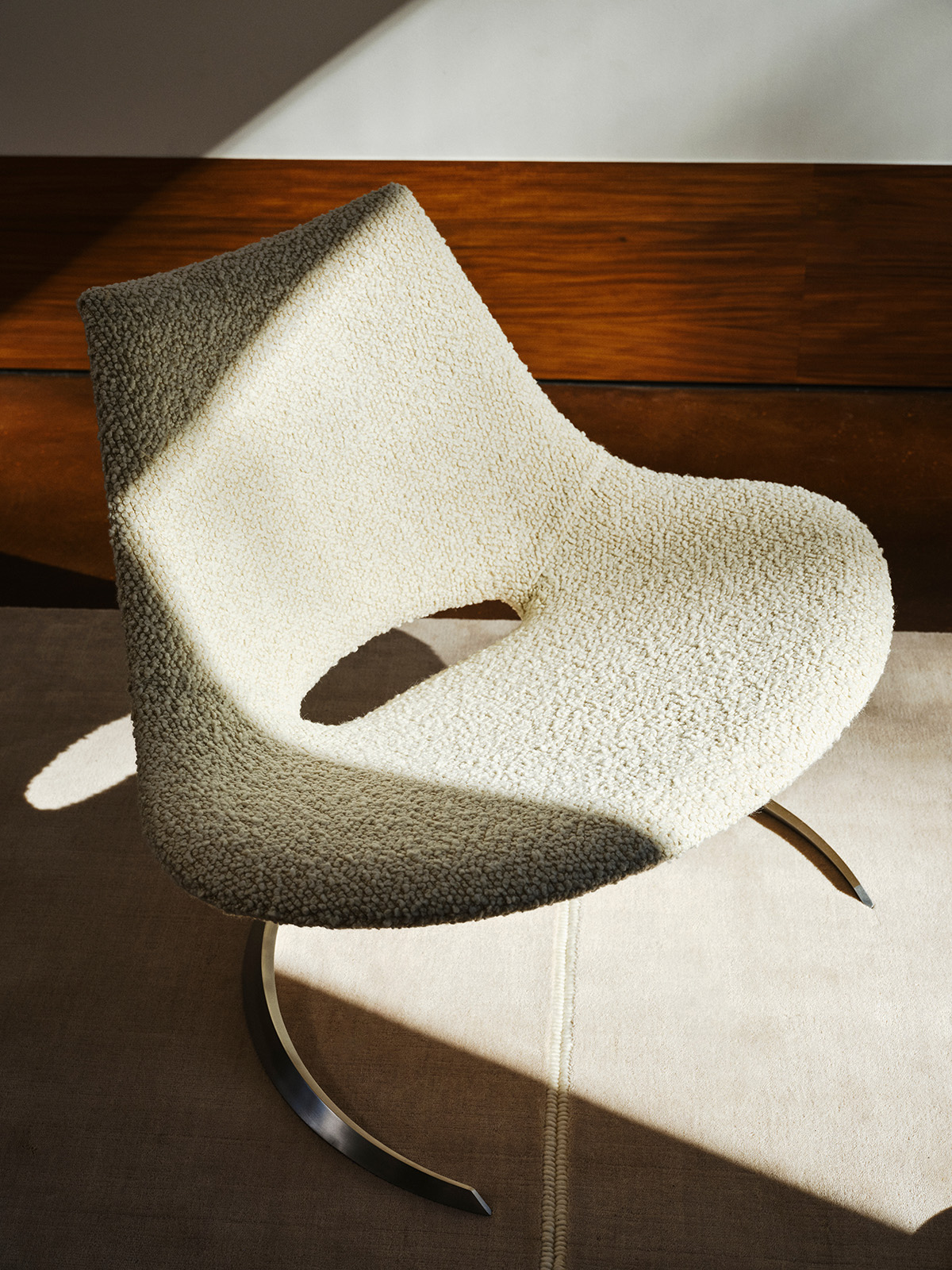
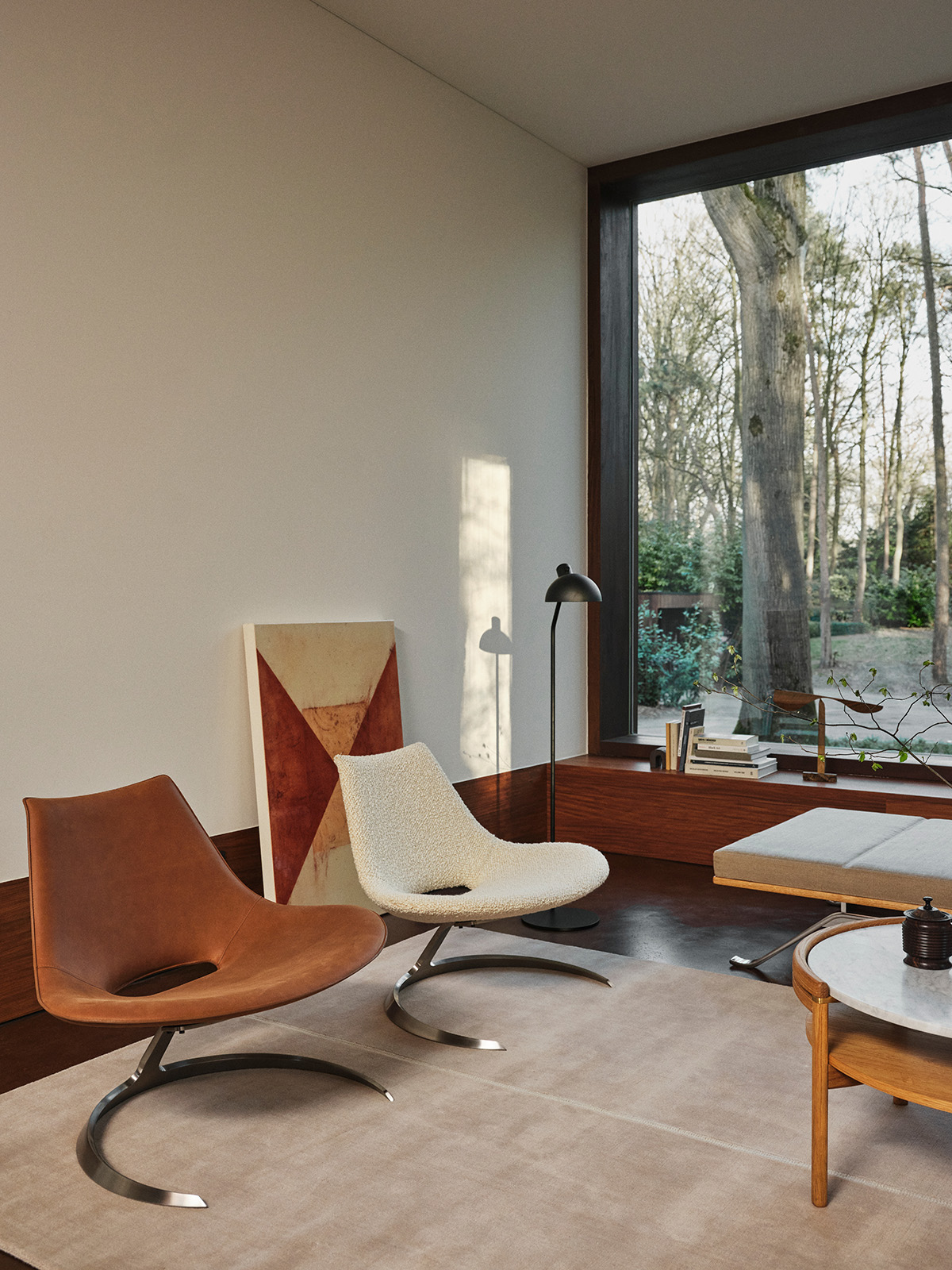
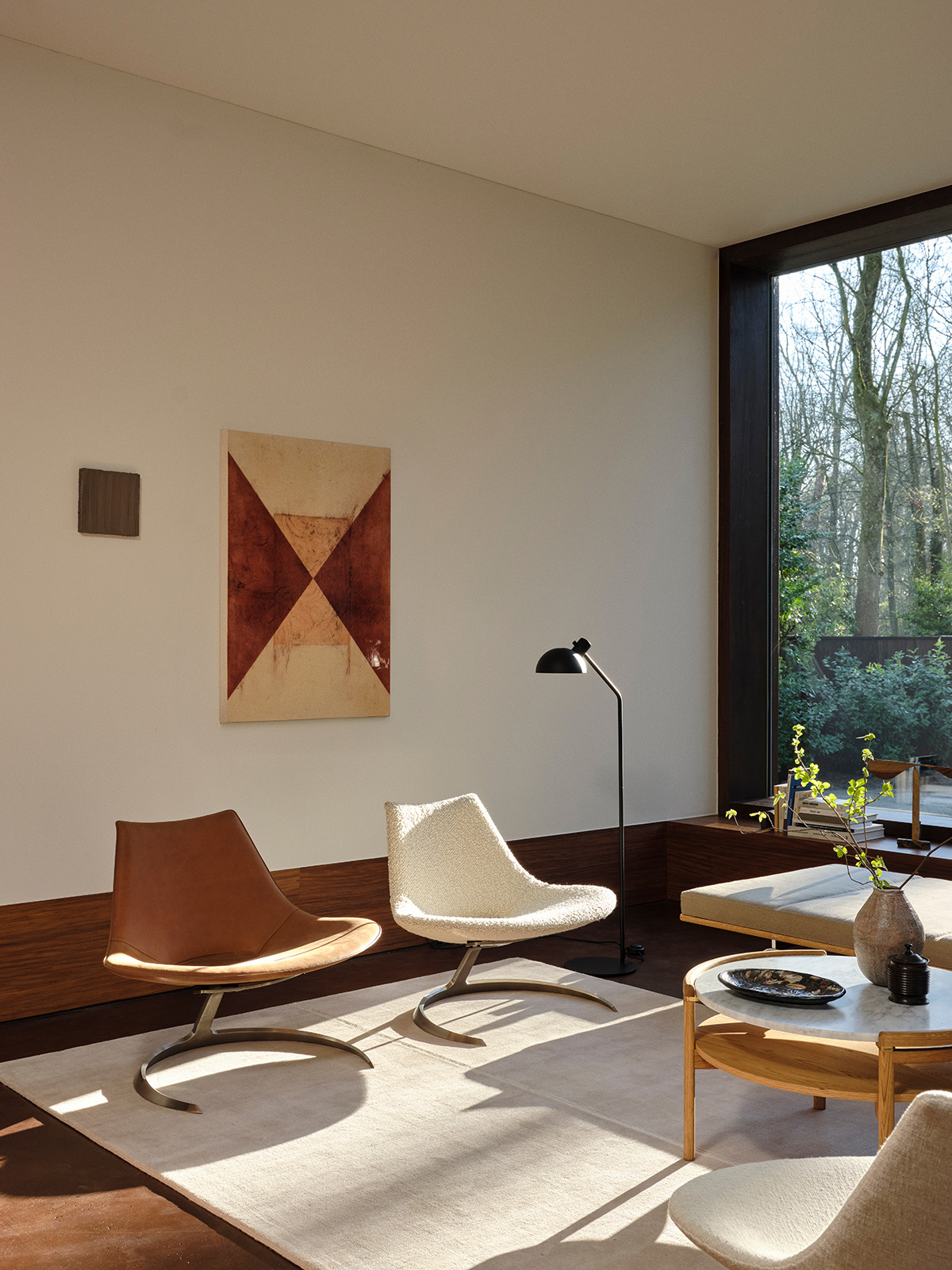
Named after the curved blade of a scimitar sword, the chair’s distinctive stainless-steel base defines its character. The design balances structural strength with visual lightness, creating an elegant presence that appears almost floating.
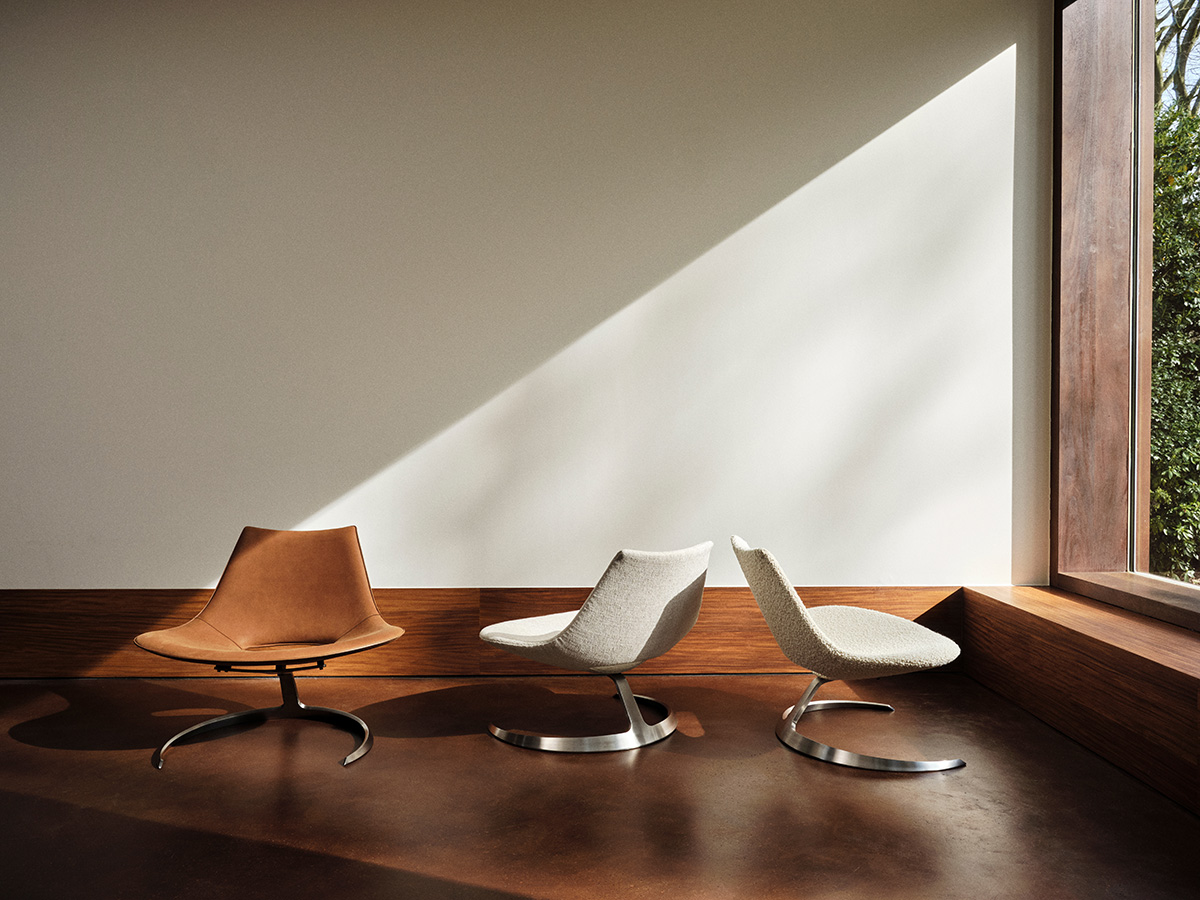
The origins of the Scimitar Chair date back to the late 1950s, when Jørgen Kastholm lived and worked in Lebanon. Observing how people sat close to the ground on rugs, with their legs tucked beneath them, he began developing sketches that explored a new, more organic sitting posture. These early ideas later formed the foundation of the chair.
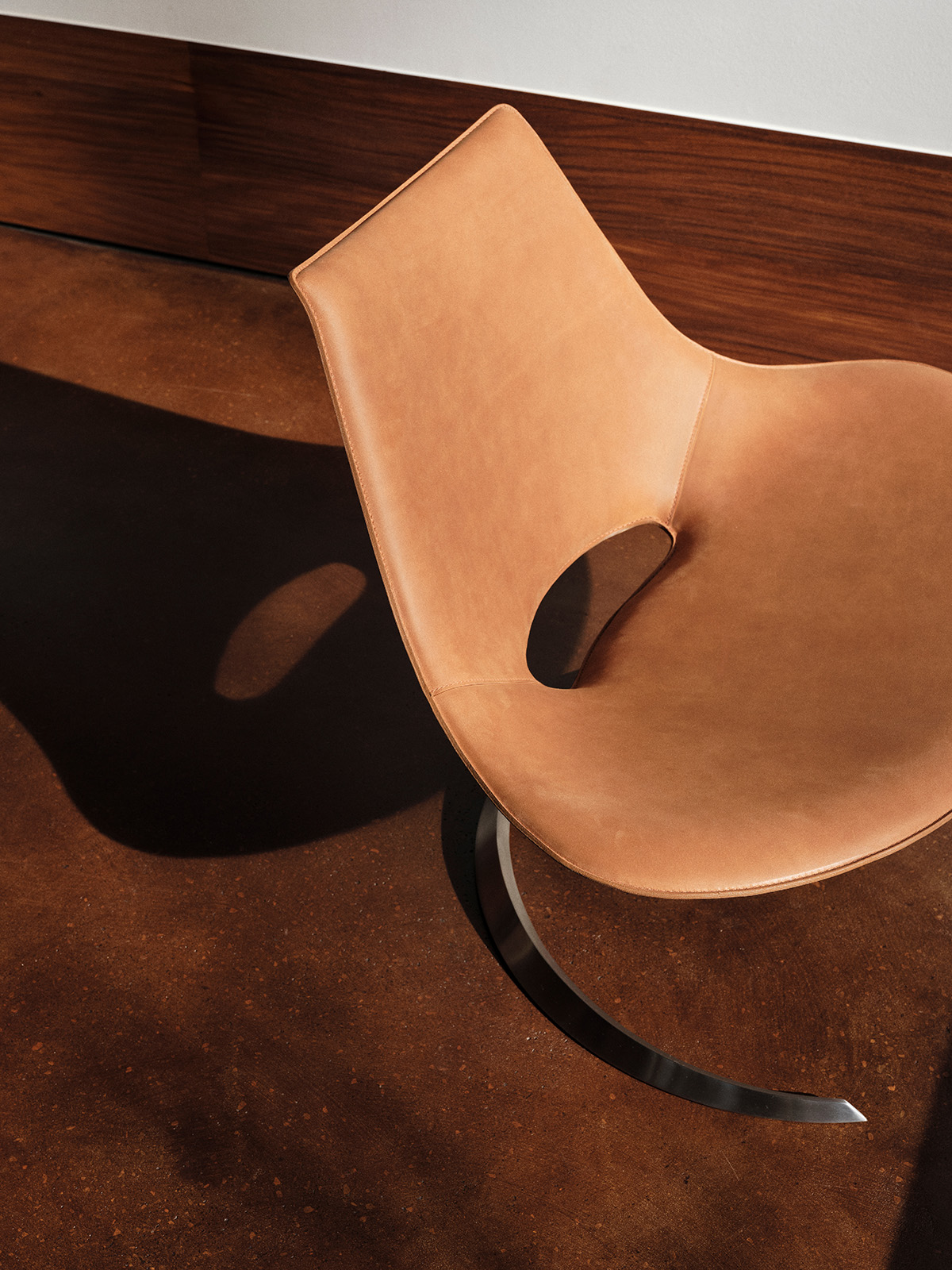
Back in Denmark, the design was refined and completed in close collaboration with Preben Fabricius. The softly contoured seat invites a relaxed, natural position, while the chair’s overall form reads as a carefully balanced composition of material, proportion and detail.
Since its debut, the Scimitar Chair has achieved international recognition and today stands as a strong example of Danish steel modernism – a period defined by experimentation, material innovation and a clear architectural approach to furniture design.
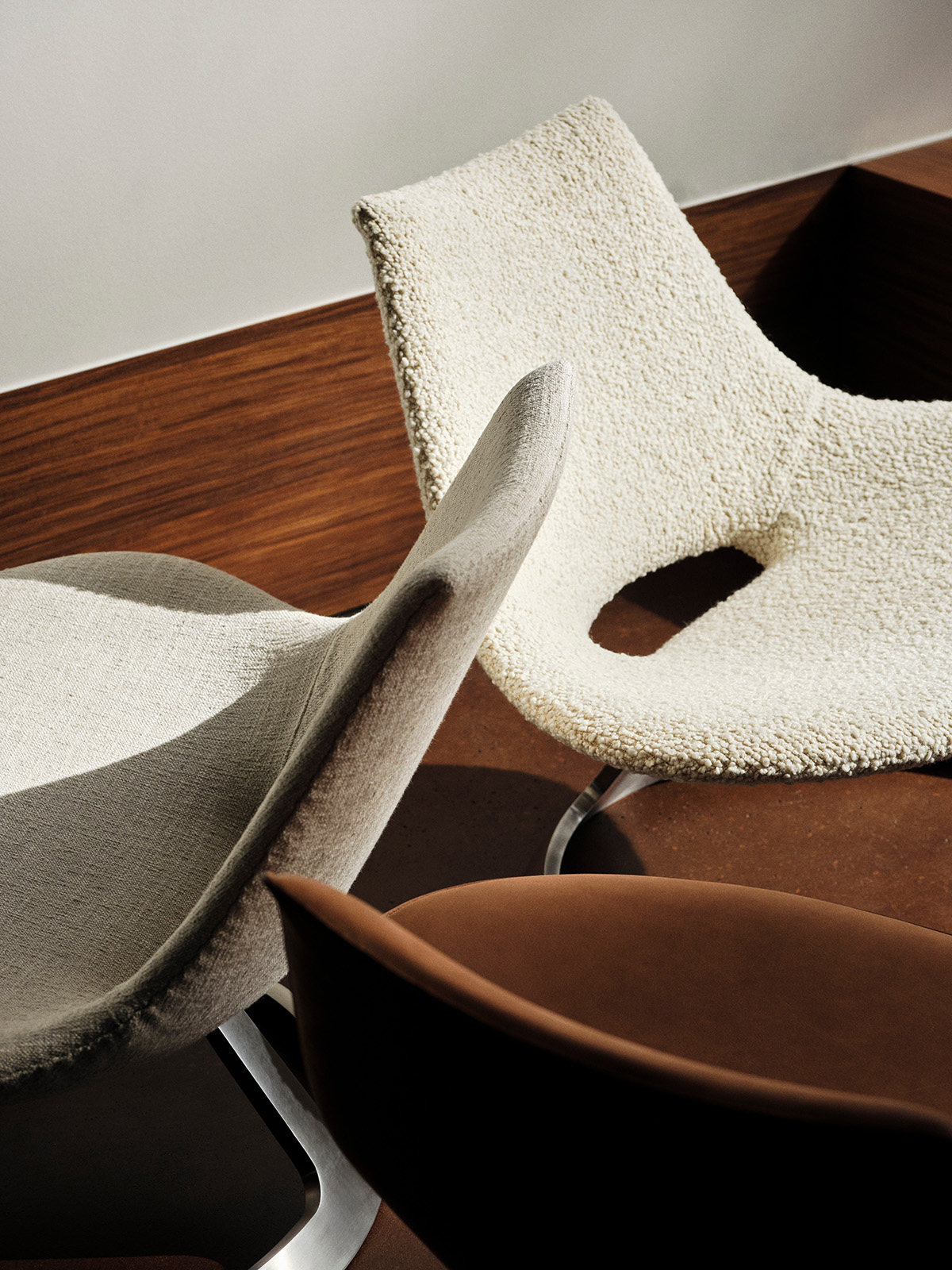
PRECISION AND POETRY IN STEEL AND LEATHER – NOW ALSO IN TEXTILE
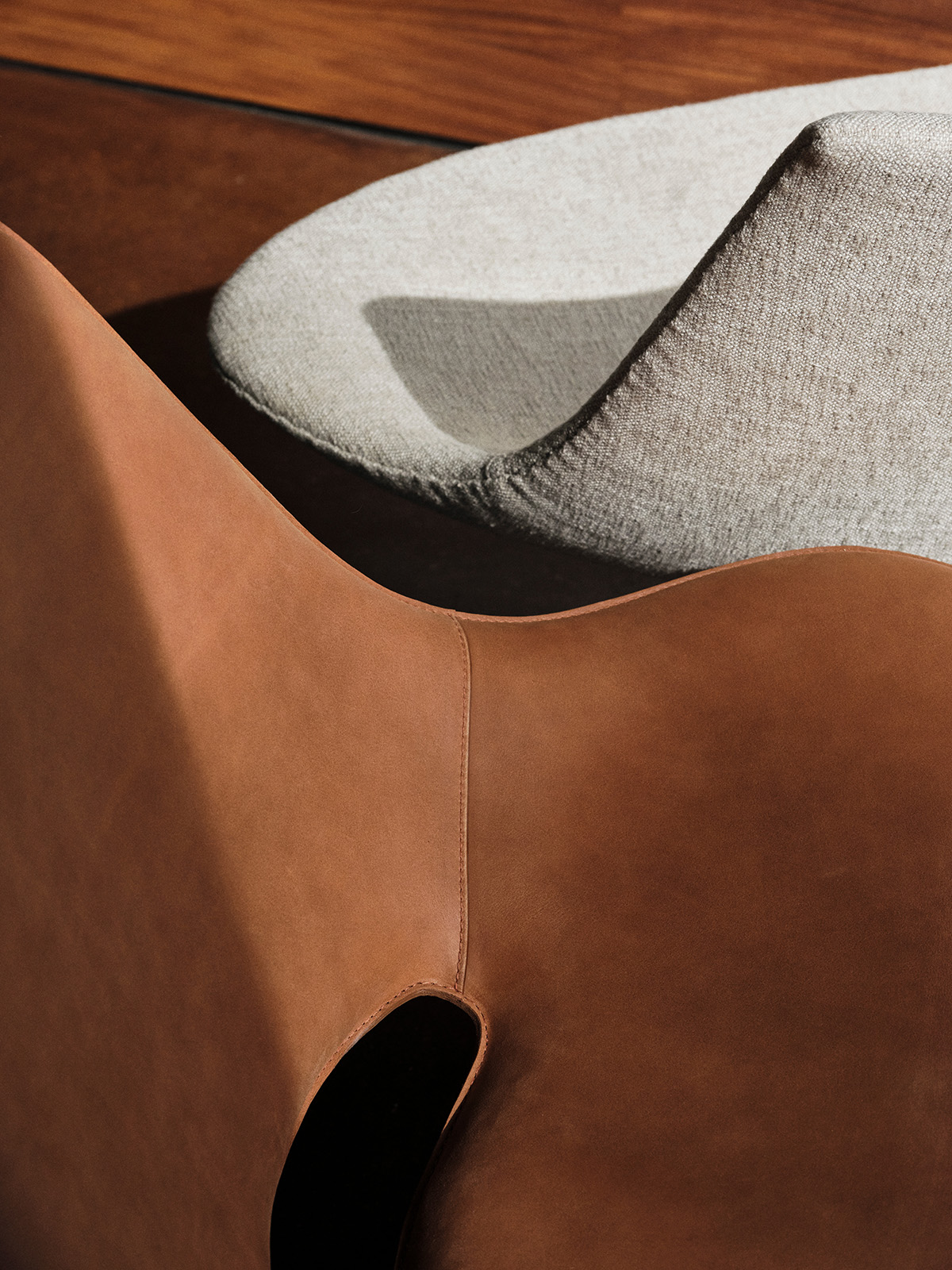
Fabricius & Kastholm were among the first Danish designers to work extensively with steel and leather, bringing an industrial material vocabulary into refined interior settings. The Scimitar Chair demonstrates their ability to combine technical complexity with visual clarity. The stainless-steel frame is cast with precise, angular transitions, while the thin, curved veneer shell is fully upholstered in leather or – now for the first time – textile.
The result is a chair that embodies Carl Hansen & Søn’s enduring commitment to craftsmanship, material honesty and longevity, blurring the line between sculptural expression and everyday comfort.
Knud Erik Hansen, third-generation owner-manager at Carl Hansen & Søn, says: “The Scimitar Chair represents a unique meeting of sculptural expression and uncompromising craftsmanship. We are proud to reintroduce this remarkable design and make it accessible to a new, international audience.”
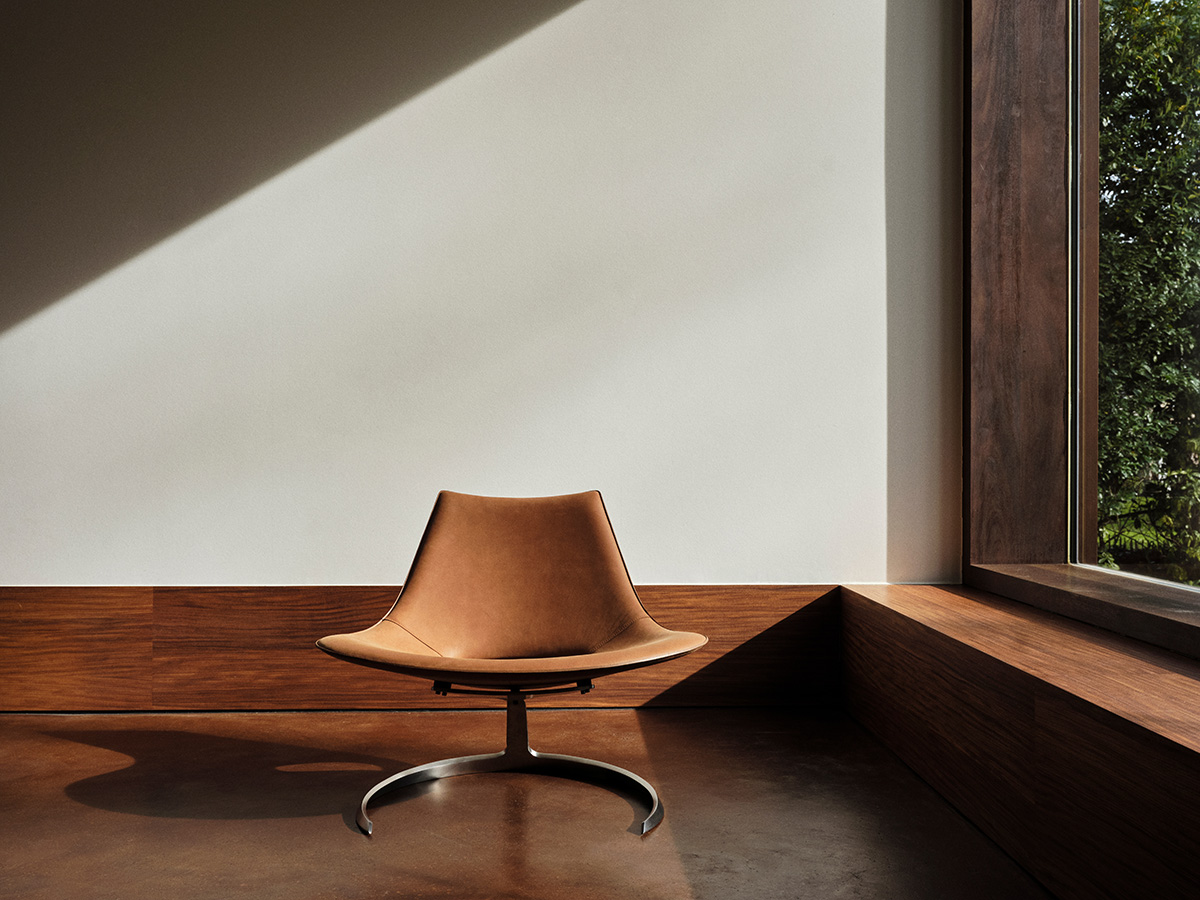
Dimensions (cm)
Seat height 35, height 66.5, depth 66, width 83
Materials Stainless steel, leather or fabric
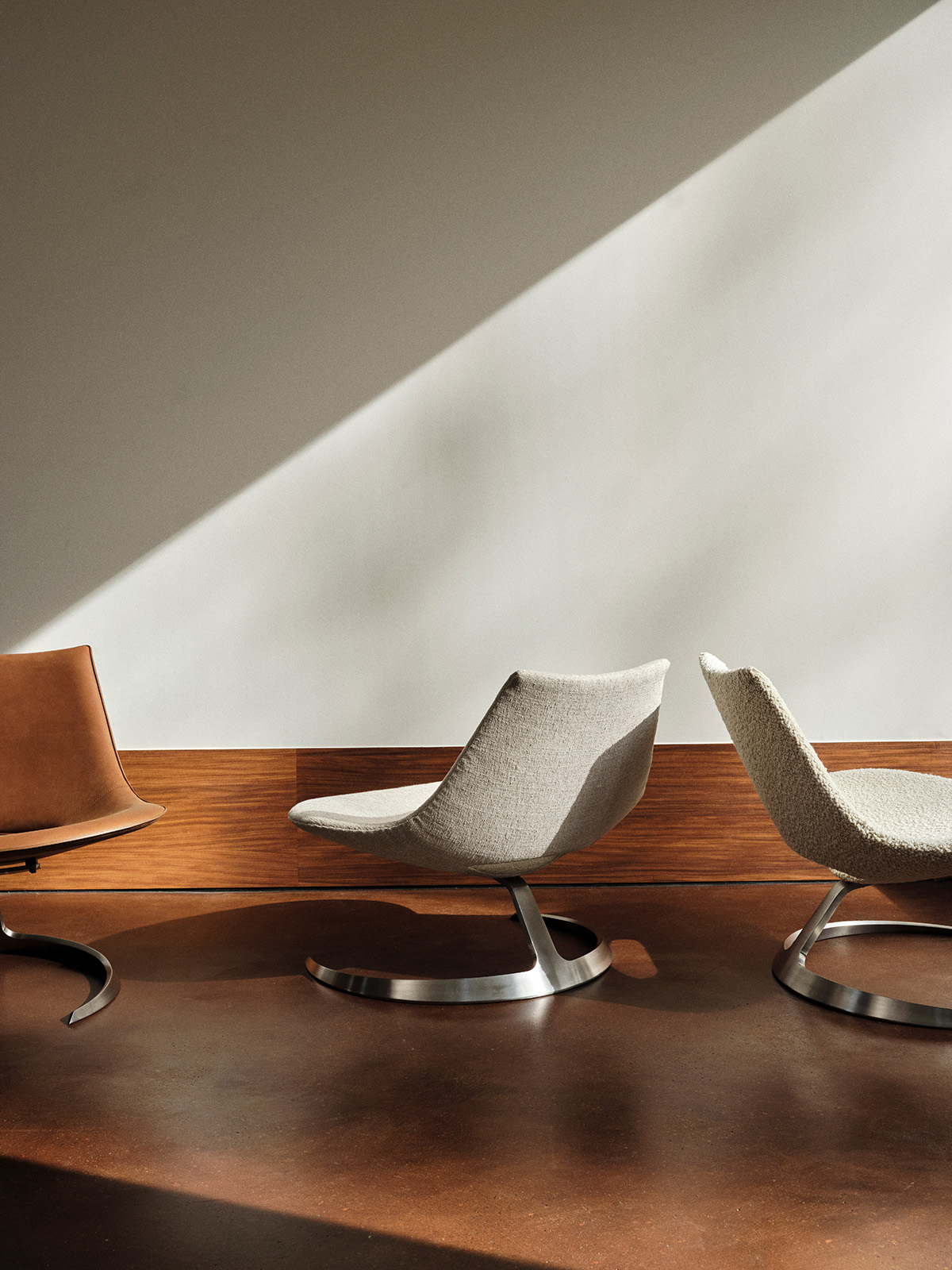
Images and content courtesy of Carl Hansen & Søn.

PREBEN FABRICIUS (1931–1984)
Preben Fabricius trained as a cabinetmaker in 1952 with Niels Vodder, one of the most prominent cabinetmakers of the time, and he continued to work for Niels Vodder for a couple of years before deciding to continue his studies at the School of Interior Design (now the Royal Danish Academy of Fine Arts Schools of Architecture, Design and Conservation). Here, Preben Fabricius studied under Finn Juhl, and it was also here that he first met Jørgen Kastholm. In 1957, Preben Fabricius was employed at Ole Hagen’s design studio, where he again met Jørgen Kastholm, and the two quickly realised that they shared an interest in elegant and refined design with a focus on functionality and minimalism. In 1961, Fabricius and Kastholm established their own design studio.
Together, they designed furniture in wood, and later also in steel and leather, taking advantage of Jørgen Kastholm’s experience and background as a smith. They drew their inspiration from luminaries of Danish design such as Hans J. Wegner and Arne Jacobsen, but also international names such as Charles and Ray Eames and Mies van der Rohe. During the design process, drawings were passed back and forth across the table between Fabricius and Kastholm until it was no longer possible to say who had drawn what, but the result was a joint effort. The design duo specialised in furniture design and single-family houses, and their designs were characterised by minimalism, sophistication, functionality, quality and their eye for detail.
After working with various Danish furniture manufacturers, Fabricius and Kastholm started collaborating with German furniture manufacturer Alfred Kill. In the end of 1968 they parted ways, and Preben Fabricius started his own design studio,
designing furniture for, among others, the German furniture manufacturer Walter Knoll. In 1978, Preben Fabricius became a teacher at the School of Interior Design, where he had studied himself, and here he remained until his death in 1984.
Preben Fabricius won several awards, both together with Jørgen Kastholm and in his own name, including the first German Gute Form (Good Design) prize in 1969 and the Illum Prize in the same year. Preben Fabricius and Jørgen Kastholm’s designs can be found in museums and design centres around the world, including at MoMA in New York and at the Louvre Museum in Paris.
JØRGEN KASTHOLM (1931–2007)
Jørgen Kastholm was born in 1931 and, as a young man, travelled to the USA to study at high school. This came to mark the start of a long life visiting and living in different parts of the world, and which created a world view that was unusual at the time. At the age of 19, Jørgen Kastholm returned to Denmark to train as a smith in his father’s company, and in 1955 he started his studies at the School of Interior Design (now the Royal Danish Academy of Fine Arts Schools of Architecture, Design and Conservation) where he met Preben Fabricius for the first time. He graduated in 1958 with distinction.
Jørgen Kastholm then continued his studies at Den Grafiske Højskole (now the Danish School of Media and Journalism), while also working for Arne Jacobsen, who would become a major source of inspiration for Jørgen Kastholm in his work as a furniture designer. In 1959, Jørgen Kastholm moved to Beirut, Lebanon, to work in a design studio, where he was involved in designing SAS lounges and palaces for the Saudi king, after which he returned to Denmark and got a job at Ole Hagen’s design studio. Here, Jørgen Kastholm once again met Preben Fabricius, and the two quickly found out that they wanted to form a partnership.
In 1961, Jørgen Kastholm and Preben Fabricius founded a design studio in their own name. In the early years of their partnership, the duo worked on furniture designs in wood, but later steel became their focus area as a result of Jørgen Kastholm’s metalworking background, but also their shared fascination with renowned international designers such as Charles and Ray Eames and Mies van der Rohe. During their seven-year partnership, Preben Fabricius and Jørgen Kastholm designed a large collection of minimalist and functionalist designs in wood, steel, leather and glass which achieved widespread recognition and established their names internationally.
In 1968, the design duo went their separate ways, and Jørgen Kastholm opened a design studio in his own name, where he continued to design furniture for large furniture manufacturers. At the same time, he also worked as an editor and writer. In 1971, Jørgen Kastholm moved to Düsseldorf in Germany and opened his own design studio, and where he designed furniture for large international furniture manufacturers until his death in 2007. In addition, from 1975 to 1996, Jørgen Kastholm was a professor at the University of Wuppertal (BUW) within the field of furniture design and product development.
Jørgen Kastholm’s designs include furniture, vases and lamps as well as curtain rods, wall tiles and car seats. In his own name and together with his colleague Preben Fabricius, Jørgen Kastholm won several international awards, including the first German Gute Form (Good Design) prize in 1969, the Illum Prize the same year, and the Red Dot Award in 1995. Preben Fabricius and Jørgen Kastholm’s designs can be found in museums and design centres around the world, including at MoMA in New York and at the Louvre Museum in Paris.

More design from Carl Hansen & Søn:

Hans J. Wegner icons, reimagines in monochrome hues
This autumn, Carl Hansen & Søn introduces a special campaign celebrating two of Hans J. …
Porcelain to Porcelight design Erik Magnussen by Carl Hansen & Søn
Carl Hansen & Søn presents the Porcelight pendant, welcoming the first design by Erik Magnussen …

Introducing Scimitar Chair – a sculptural masterpiece by Fabricius & Kastholm
CARL HANSEN & SØN PRESENTS THE SCIMITAR CHAIR – A REMARKABLE DESIGN BY THE DANISH …

Begonya pendant lamp by Øivind Slaatto for Carl Hansen & Søn
Carl Hansen & Søn presents Begonya – a new pendant lamp created in collaboration with …

Experience The Wishbone Chair with a leather seat
Hans J. Wegner’s timeless classic now meets exclusive leather craftsmanship. The Wishbone Chair was launched …

Balanced Principles by Carl Hansen & Søn @ 3daysofdesign
What to experience Visit our exhibition ‘Balanced Principles’ during 3 Days of Design in Copenhagen …